


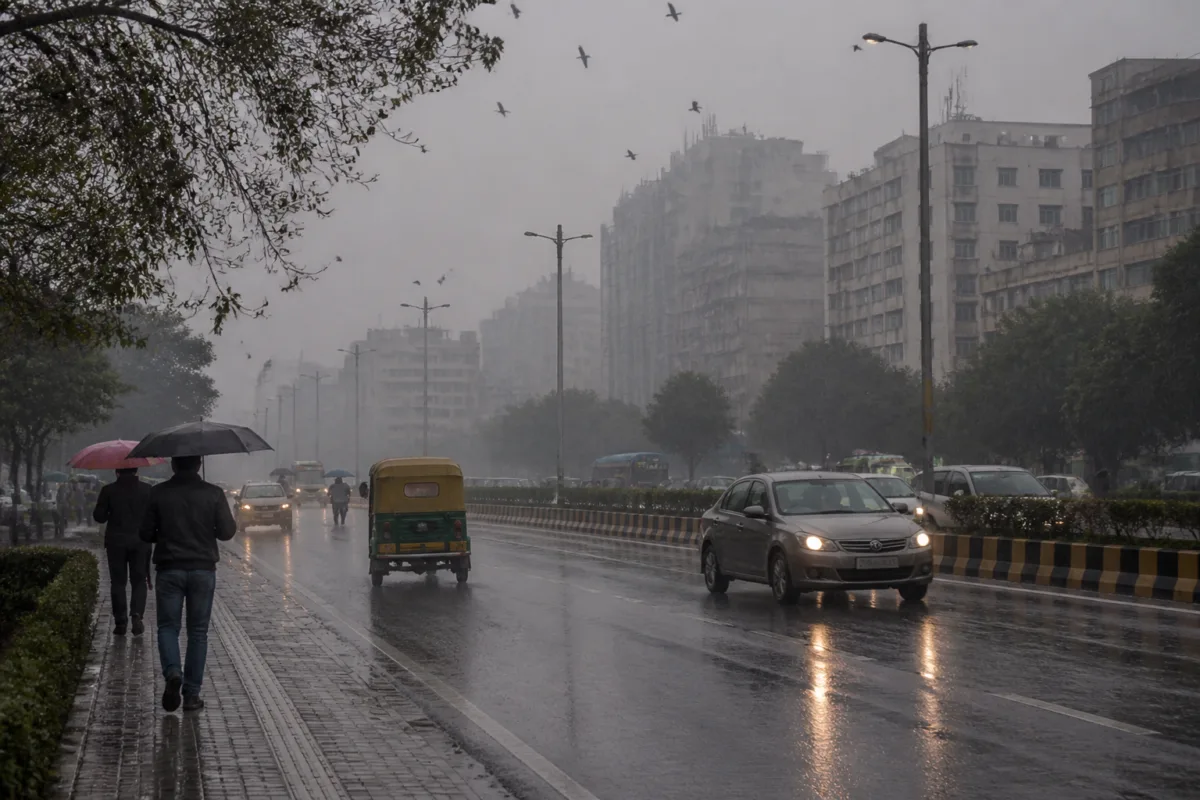
Delhi air pollution may see limited relief on Sunday as light drizzle is forecast in parts of the capital under the influence of a western disturbance affecting the higher Himalayan region. The improvement, however, will depend on how much rain falls and whether wind speeds increase enough to disperse pollutants.
The India Meteorological Department has forecast light drizzle in some parts of Delhi, as well as in parts of Punjab, Haryana, Rajasthan and western Uttar Pradesh. The weather system is currently active over the higher Himalayan areas and is expected to influence several plains regions in north India.
Delhi’s air remained in the severe category in several locations on Saturday. According to the Central Pollution Control Board, 17 areas recorded an air quality index above 400. The city’s average AQI was 367, compared with 373 a day earlier, representing an improvement of six points over 24 hours.
The AQI had been recorded at 348 at 8 am on Saturday, but pollution levels rose later after wind speeds weakened. The pattern highlights the importance of atmospheric conditions in determining whether emissions remain concentrated near the ground or are dispersed across the region.
Temperatures in the capital have also remained above normal. The Safdarjung weather station recorded a maximum temperature of 30.4 degrees Celsius on Saturday, which was 1.9 degrees above normal. The expected drizzle could bring a temporary change in weather conditions, but the report does not establish how long any improvement in air quality would last.
The latest pollution episode follows a sharp deterioration since the beginning of November. The report said air quality had remained comparatively better until October this year, before worsening rapidly in early November. The deterioration has left residents exposed to prolonged periods of polluted air across the capital and its surrounding urban region.
An analysis by Climate Trends of pollution data released by the CPCB found that Delhi’s air on Diwali was approximately five times above India’s 24-hour PM2.5 standard. The average PM2.5 concentration on November 8 was recorded at 290 micrograms per cubic metre, against the national 24-hour standard of 60 micrograms per cubic metre.
The analysis also found that the increase in PM2.5 after Diwali was lower this year than last year, although pollution levels had already been considerably high before the festival. PM2.5 rose by 57 points after Diwali this year, compared with a 146-point increase last year. The week-on-week increase was 25% this year, against 134% last year.
Climate Trends has suggested that authorities issue special health advisories around Diwali. The immediate weather outlook, meanwhile, remains dependent on the amount of drizzle and the movement of air over the capital. The forecast light precipitation is expected to bring only a possible, rather than guaranteed, improvement in Delhi’s air quality.

