


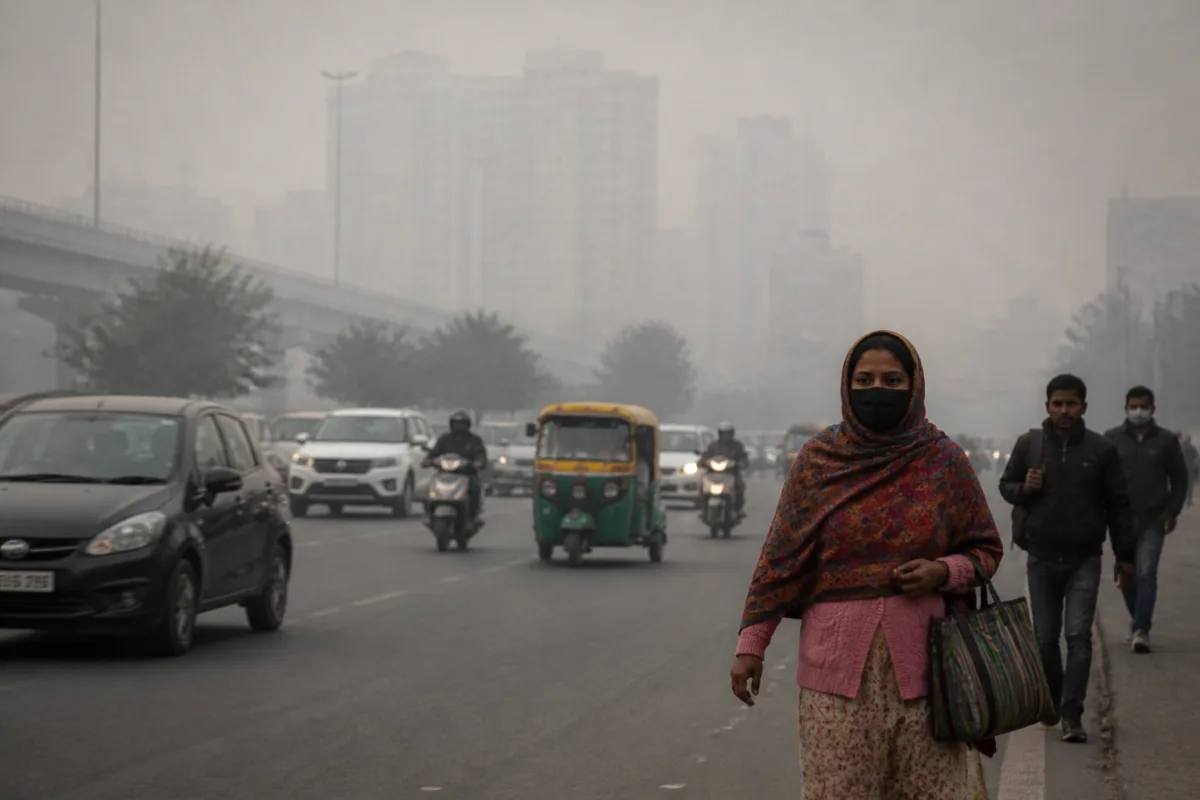
Delhi air pollution remained in the ‘very poor’ category on Saturday, with the city recording a 24-hour average AQI of 367, as AISA president Neha Bora questioned why Environment Minister Bhupender Yadav had not responded to her request for an urgent meeting on the worsening conditions.
Bora said she had written to Yadav and the Ministry of Environment, Forest and Climate Change on November 12 on behalf of a group of citizens living through severe air pollution. She said the request sought answers on why residents were being forced to breathe polluted air and what steps the ministry was taking to protect their right to breathe.
After two days without a response from the minister or his office, Bora released a video on Saturday asking ministers to keep their homes and offices open to citizens. “In a democracy, when citizens ask to meet their ministers, ministers should keep the doors of their homes and offices open,” she said in the video, according to the report.
Bora described the lack of a response during what she called a public-health emergency as a serious concern. She cited the Supreme Court’s recognition of the right to clean air as part of the right to life under Article 21 of the Constitution and said the ministry had both a constitutional and electoral mandate to protect that right.
In her letter, Bora said the air-quality crisis had reached a worrying level across Delhi and India. She also claimed that this year’s Diwali night in Delhi was the most polluted Diwali recorded in the city over the previous five years, and alleged that several official monitoring stations had stopped providing data during the peak pollution period. These claims were made in the letter quoted by the report and were not independently confirmed in the supplied material.
The report said the average AQI across Delhi-NCR had remained between 350 and 400 for several days, creating particular risks for children, older people, pregnant women and residents with respiratory illnesses. Bora also shared a post warning that temporary measures such as anti-smog guns and water spraying could not substitute for sustained action, while calling for citizen, scientific, medical and environmental voices to be considered in the government’s response.
The Delhi Air Quality Early Warning System was cited as forecasting a slight improvement in air quality over the following days, with particulate concentrations of PM2.5 and PM10 also expected to decline over the next two days. The supplied report does not include a response from Yadav or the environment ministry to Bora’s letter or video.

