


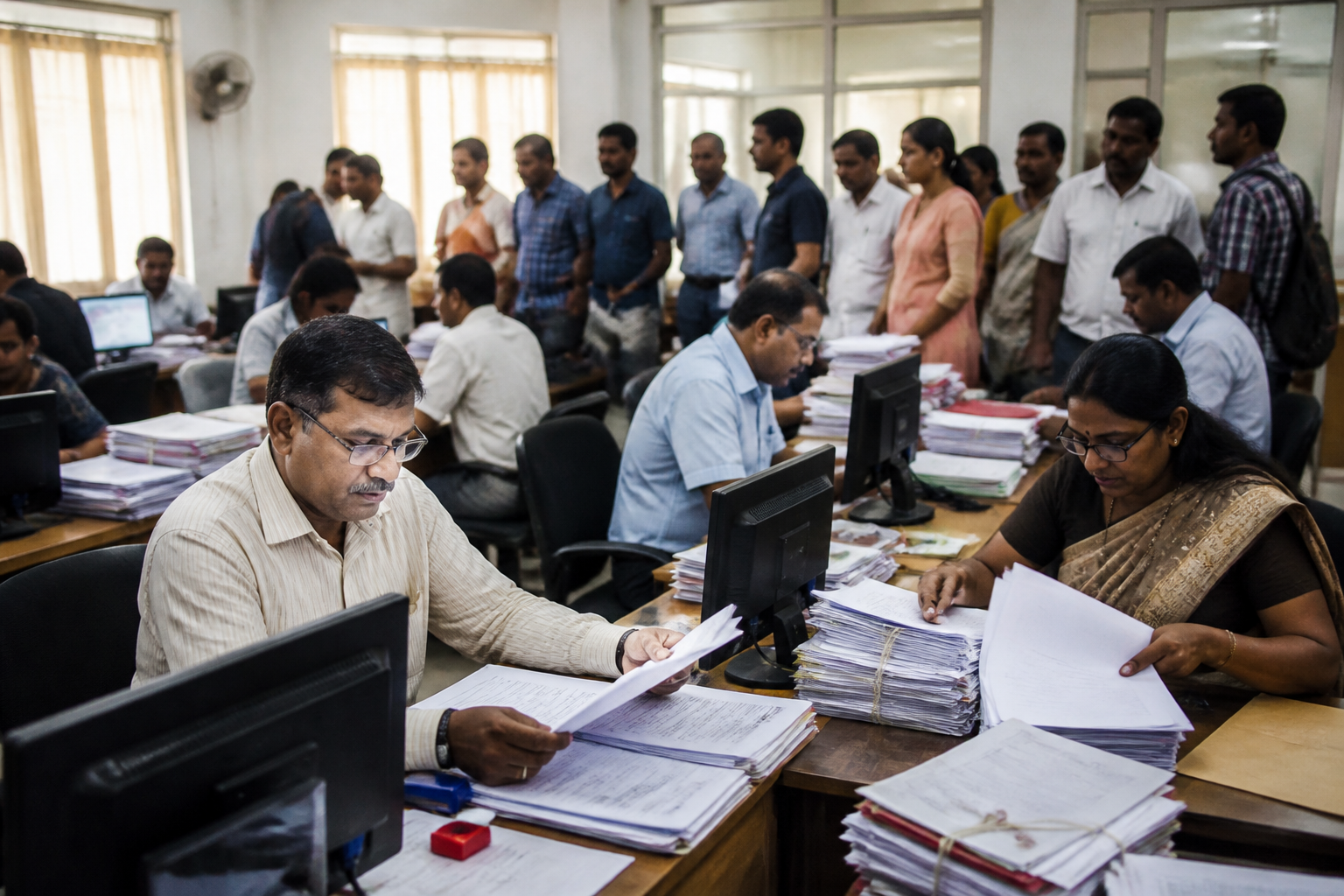
Telangana’s Special Intensive Revision (SIR) of electoral rolls is facing a major administrative backlog, with 40,77,727 hearing dates lapsed and 9.15 lakh notices still undelivered as of September 22, according to the latest status report reviewed by election officials. The Hyderabad metropolitan region accounts for a large share of the pending work.
The report said 92.88 lakh notices had been generated across the state, of which 83.72 lakh, or 90.1%, had been delivered by 2 pm on September 22. Despite the high delivery rate, 43.9% of all generated notices were linked to hearing dates that had already lapsed. A further 55,462 rescheduled hearing dates had also lapsed, while around 46 lakh hearings had been completed.
Rangareddy and Medchal Malkajgiri districts together accounted for 5.6 lakh of the 9.15 lakh undelivered notices statewide, representing nearly 61% of the pending delivery workload. Rangareddy had 2.8 lakh notices yet to be delivered, while Medchal Malkajgiri had 2.7 lakh pending notices.
At the Assembly constituency level, Serilingampally recorded the highest number of pending notice deliveries at 1.1 lakh. LB Nagar followed with 88,507 pending notices, while Medchal had 80,932. The concentration of the backlog in rapidly expanding parts of the Hyderabad metropolitan region places additional pressure on election officials working across large and mobile urban populations.
Hyderabad district recorded one of the state’s highest notice delivery rates at 96.1%. However, the district faced a significant bottleneck at the district election officer verification stage. Of the 5.5 lakh cases pending with DEOs across Telangana, Hyderabad alone accounted for 3.4 lakh. Around 2.1 lakh of the Hyderabad cases had remained pending for more than five days.
The status report indicates that delivery of notices is only one stage of the revision process. Cases must also move through hearings, document submission, anomaly and no-mapping checks, and verification by election officials. The pending workload therefore involves both reaching electors and completing the administrative review of their records.
Chief electoral officer C Sudharshan Reddy directed DEOs to accelerate the disposal of anomaly and no-mapping cases and meet daily targets. Officials were also instructed to clear pending Forms 6, 7 and 8, along with hearing-related cases, while ensuring that electors receive adequate time to submit supporting documents.
The CEO asked election officials to dispose of cases pending at the electoral registration officer level without delay and deploy additional computer operators wherever required. He also directed officials not to require senior citizens and persons with disabilities to attend hearings unnecessarily. Non-resident Indians may submit documents through authorised representatives wherever applicable, according to the directions.
Officials were further told to give special attention to cases involving allegedly ineligible voters and issue speaking orders after following due process. The next stage of the exercise will depend on the disposal of pending verifications, hearings and forms, particularly in Hyderabad, Rangareddy and Medchal Malkajgiri.
