


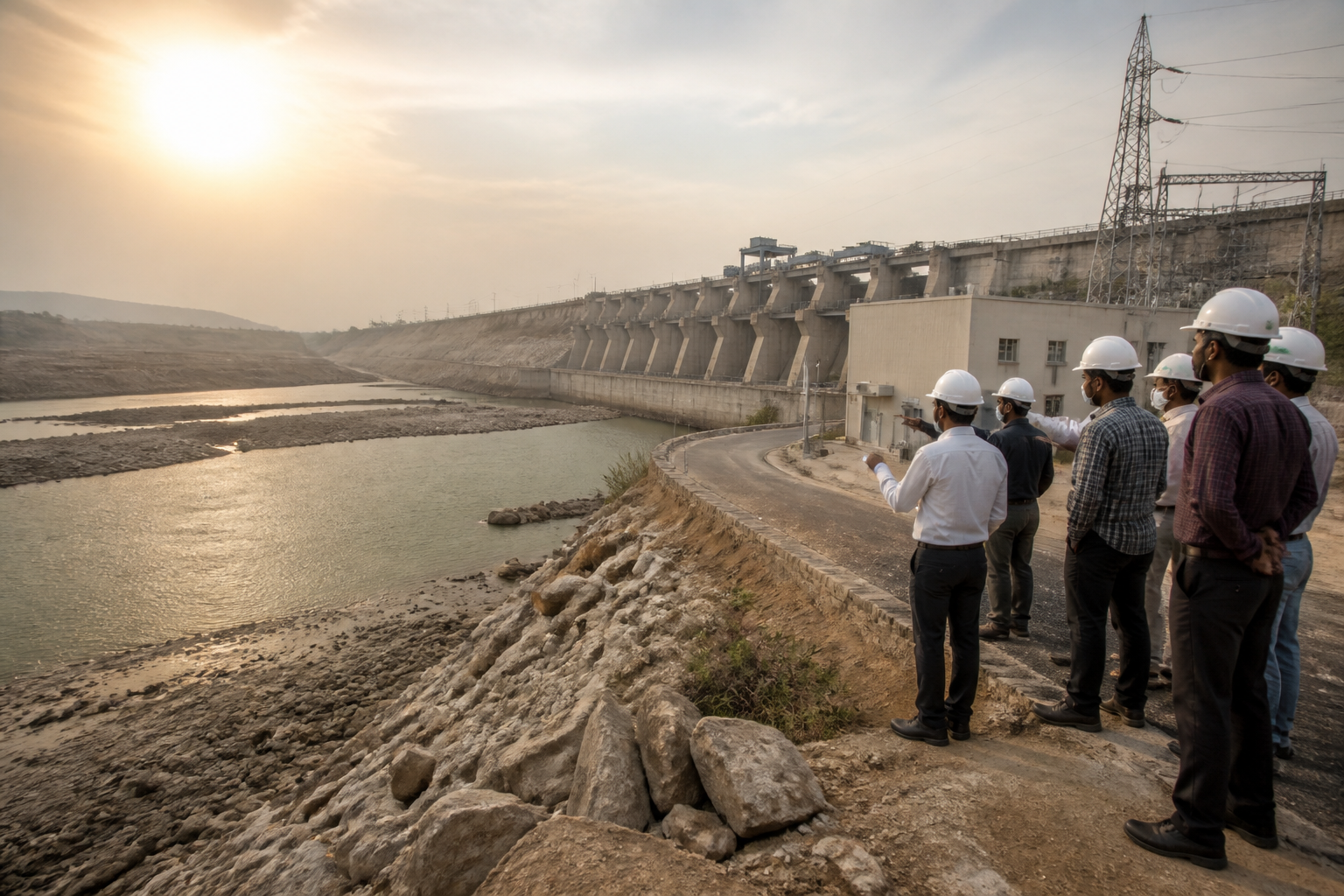
Telangana is maintaining uninterrupted power supply despite peak electricity demand rising to nearly 20,000 MW and hydel generation falling by about 4,000 MW, Deputy Chief Minister Bhatti Vikramarka said on October 6. He attributed the reduction in hydel output to drought-like conditions, declining water availability in rivers and reservoirs, and rising temperatures.
Bhatti said the state’s peak power demand had been around 15,000 MW during the same period earlier, but has now increased by nearly 5,000 MW to reach close to 20,000 MW. The government, he said, remained committed to providing 24-hour power supply to domestic consumers despite the increase in consumption.
The Deputy Chief Minister made the remarks after inspecting the Pulichintala Hydel Power Generation Centre along with Irrigation Minister Uttam Kumar Reddy. During the visit, he reviewed the facility’s power generation capacity, the electricity generated so far, the unit control room and a presentation by officials.
According to Bhatti, all hydel power projects in Telangana are equipped to generate electricity at their maximum capacity. The machinery and generating units are in operating condition, he said, but the availability of water has limited actual generation. He linked the decline to drought-like conditions associated with the El Niño effect and higher temperatures.
The shortfall in hydel generation has created an additional burden of nearly 8,000 MW, Bhatti said. The state’s transmission and distribution utilities, Transco, Southern Power Distribution Company of Telangana and Northern Power Distribution Company of Telangana, were functioning efficiently and continuing to supply electricity without interruption, he added.
Bhatti said the higher demand was particularly visible during night-time hours. Thermal power generation was being used to meet the additional requirement, he said, allowing the government to maintain its 24-hour supply commitment to domestic consumers. He assured consumers that there was no need to worry about power availability.
The Deputy Chief Minister compared Telangana’s demand with that of neighbouring states. Karnataka, despite being geographically larger, has a peak demand of around 20,000 MW, he said, while Telangana has reached a similar level. Andhra Pradesh’s peak demand, according to Bhatti, is around 12,000 MW.
The comments place water availability at the centre of the state’s electricity planning. Bhatti said experts and scientists had warned that water scarcity could emerge if the state did not receive the expected rainfall in the coming days. He appealed to residents to use available water carefully until the next monsoon, keeping drinking-water needs of people, livestock and birds in mind.
He also cautioned that drinking water could not simply be stored indefinitely for future use and urged people to conserve it and use it judiciously. Bhatti congratulated employees of Telangana State Power Generation Corporation for their efforts to maintain reliable generation and supply.
The government’s immediate approach, as described by Bhatti, is to use thermal generation to compensate for reduced hydel output while relying on existing hydel facilities to operate at full capacity when adequate water is available. No change to the state’s 24-hour domestic power-supply commitment was announced during the inspection.
