


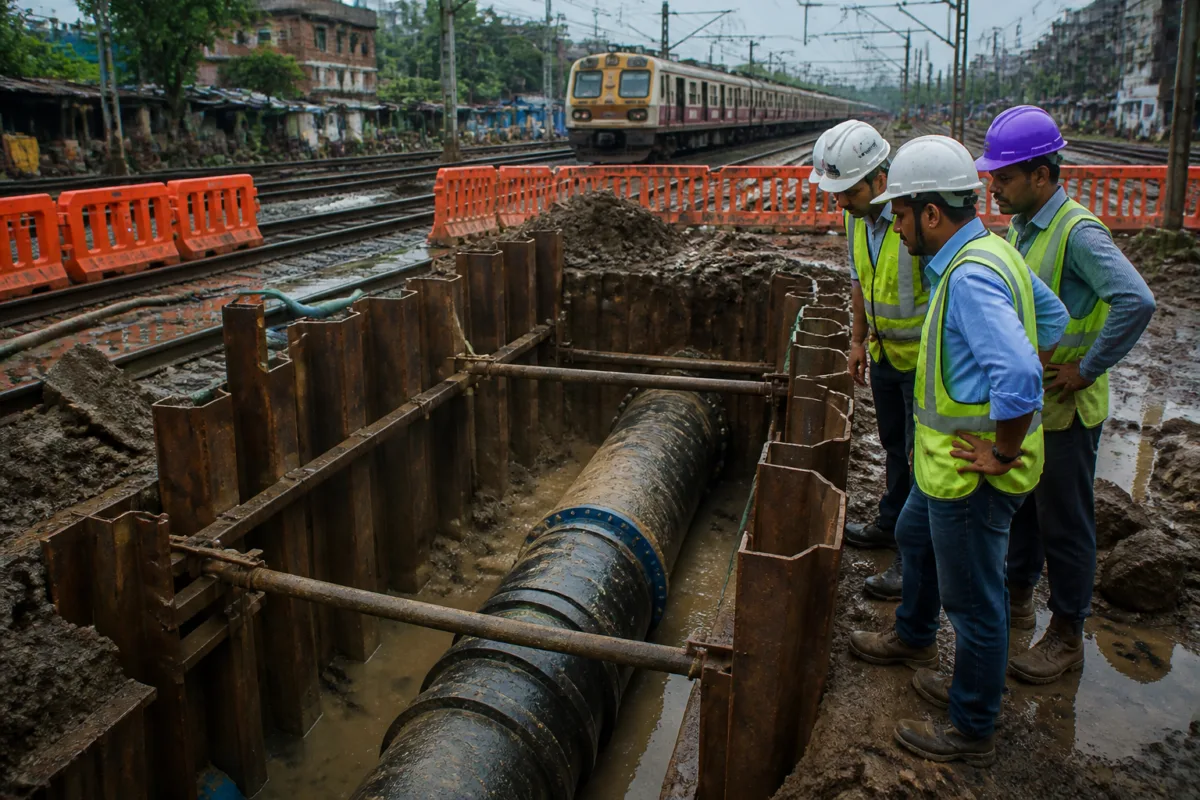
The Kolkata Municipal Corporation is weighing two engineering options to repair a damaged 1,800 mm Tala water pipeline located about seven metres below railway tracks, while avoiding disruption to passenger and goods train operations between Kolkata and Tala stations.
The pipeline was recently shut after a major leak caused waterlogging on railway tracks. KMC officials are now assessing whether engineers can use an existing pit to reach the damaged section or whether a new excavation closer to the leak will be required. Any excavation near the tracks will need the consent of Eastern Railway and safeguards against soil erosion and track movement.
The damaged steel pipeline is large enough for a person to enter, allowing engineers to identify the precise location and scale of the leak from inside the pipe. A leak at the same location in 2010 was repaired by engineers who entered through a pit some distance away and then moved inside the pipeline to reach the damaged section.
However, KMC officials said the earlier access pits may have been affected during construction of the new Tala Bridge between 2020 and 2022. This has left engineers considering whether to construct a fresh pit closer to the current leak site.
According to the officials, the leak is believed to be located between tracks used for daily passenger services and tracks used by trains travelling to Chitpore yard for maintenance, loading and unloading goods. The affected tracks are part of the Circular Railway network between Kolkata and Tala stations. Trains headed towards the Sealdah North section also use the route.
Circular Railway services were suspended for several days at the peak of the leak last week after the tracks became waterlogged. The prolonged presence of water raised concerns that the soil beneath the tracks could lose compactness, potentially allowing the soil to shift and causing subsidence. A KMC official said timely intervention had prevented such a situation from developing.
One option under consideration is to excavate a new pit from the ground to reach the leak directly. A KMC engineer said sheet piling could be used around the excavation. The technique involves driving long, interlocking structural sheets into the ground to create a continuous barrier that supports soil and limits the movement of water during excavation.
The proposed method would be particularly important because the excavation would be close to active railway infrastructure. KMC officials said adequate precautions would be required to ensure that the railway tracks remain firm and are not disturbed during the repair work.
No repair method has been finalised. KMC officials said all options remained under consideration and that the civic body would have to write to Eastern Railway to inform it about the proposed work and seek its consent. The railway authority’s views will be taken into account before the final repair approach is selected.
The 1,800 mm pipeline was built during the British era, according to KMC officials. Its location beneath railway infrastructure makes the repair a joint operational challenge for the civic and railway authorities, with the next formal step being KMC’s communication to Eastern Railway and the assessment of the available repair options.

