


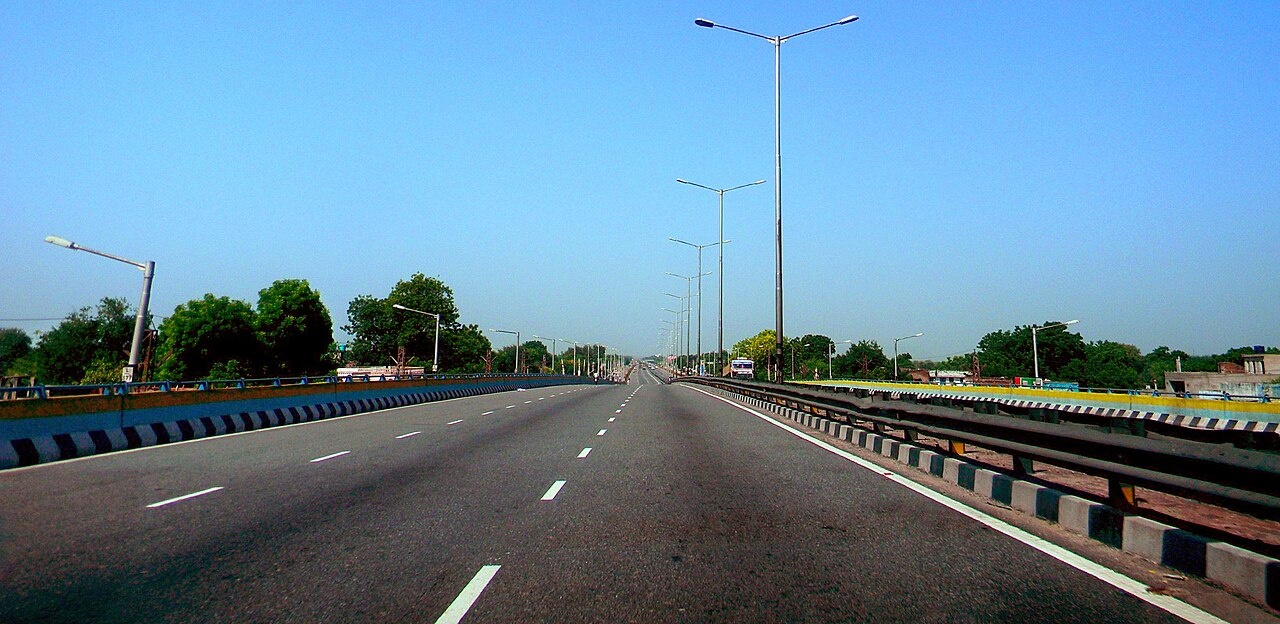
Transport operators in Surat staged a demonstration at a toll collection point along National Highway 48, raising concerns about toll charges imposed on vehicles that frequently travel short distances within the local region. The protest at the Mulad toll point has brought renewed attention to debates surrounding Surat local vehicle toll exemption and the balance between highway infrastructure funding and the economic realities of local mobility.
Travel operators involved in the protest argued that vehicles operating primarily within nearby areas are being required to pay the same toll fees as long-distance highway users. According to operators, this creates an additional operational cost for vehicles that use the highway corridor for routine local travel rather than intercity journeys. The demand for a Surat local vehicle toll exemption reflects a broader policy question affecting several expanding urban regions in India. As cities grow outward, national highways increasingly intersect with urban and suburban transport routes. In many cases, local commuters and small transport businesses rely on these highways for short daily trips, making toll policies a sensitive issue for local economies. Operators participating in the demonstration say the Mulad toll point serves traffic moving between Surat and surrounding localities. Vehicles involved in tourism services, passenger transport and small logistics operations reportedly cross the toll frequently during daily operations, leading to cumulative expenses that businesses say affect their financial viability. Urban transport analysts note that toll systems are typically designed to recover the cost of constructing and maintaining major highways. However, when highways pass through or near expanding cities, policymakers often face pressure to introduce concessions for local vehicles that depend on the corridor for everyday mobility. The Surat local vehicle toll exemption demand also reflects the importance of highway connectivity to the city’s economic activity. Surat is one of India’s largest textile and diamond processing centres, with extensive movement of workers, goods and services between the city and nearby towns. Efficient road connectivity is essential for maintaining the flow of economic activity across the region. Transport planners say resolving such disputes requires balancing infrastructure financing with the needs of local commuters and businesses. Some highway corridors in India have introduced discounted passes or special concessions for vehicles registered within nearby districts, allowing frequent local users to travel at reduced rates while maintaining toll revenue. The protest also underscores how expanding urban boundaries are reshaping the function of national highways. Corridors originally built for long-distance travel increasingly serve as urban mobility routes as cities grow along major transport networks.
Officials are expected to review the concerns raised by operators regarding the Surat local vehicle toll exemption request. Authorities may examine traffic data, vehicle usage patterns and economic impacts before considering potential policy adjustments. For rapidly growing cities like Surat, the debate highlights the need for transport planning that reflects changing mobility patterns. As highways become integral parts of urban transport systems, balancing infrastructure costs with equitable access for local users will remain an important challenge for policymakers.
ALSO READ – Surat Expired Vehicle Registrations Raise Road Safety Concerns
Surat NH48 Toll Policy Faces Opposition From Operators

