HomeCitiesSurat Bullet Train Push Signals Mobility Shift Surat Bullet Train Push Signals Mobility Shift
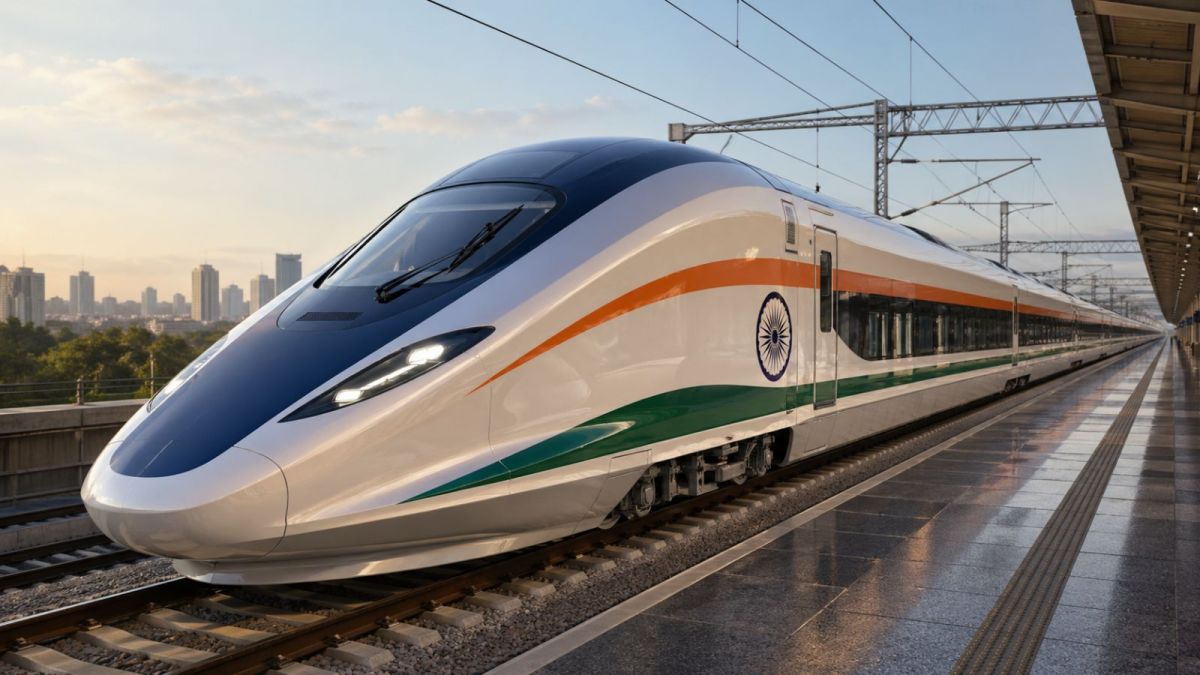
India’s push to develop a next-generation high-speed rail system, with a prototype expected to be built in Bengaluru by 2027, is likely to have significant implications for cities such as Surat, which sit along emerging high-speed transport corridors. As planning for faster intercity mobility gathers pace, Surat is increasingly positioned to benefit from improved connectivity, reshaping its economic and urban trajectory. The proposed train technology is aimed at enabling faster, energy-efficient travel between major urban centres.
While the manufacturing and development efforts are centred in Bengaluru, transport planners suggest that western India—particularly the Mumbai–Ahmedabad corridor passing near Surat—will be among the earliest beneficiaries of high-speed rail adoption. For Surat, a city driven by textiles, diamonds, and trade, enhanced connectivity could reduce travel time to key markets, strengthen supply chains, and attract new investments. The Surat bullet train impact is expected to extend beyond transport, influencing real estate demand, commercial development, and urban expansion along transit corridors. Urban experts note that high-speed rail infrastructure often acts as a catalyst for transit-oriented development. Areas around stations can evolve into mixed-use hubs, integrating housing, offices, and retail. However, without careful planning, such growth can also lead to land speculation, displacement, and uneven access to opportunities. The Surat bullet train impact also raises questions about infrastructure readiness. Increased passenger flow will require upgrades in local transport systems, including last-mile connectivity, public transit integration, and pedestrian-friendly access. Ensuring seamless movement within the city will be critical to fully realise the benefits of high-speed connectivity. From a sustainability perspective, high-speed rail presents an opportunity to shift travel patterns toward lower-emission modes. For a rapidly growing city like Surat, integrating such systems with green urban planning—such as compact development and efficient public transport—can help manage congestion and reduce environmental stress.
At the same time, experts caution that technological advancement alone is not enough. The success of high-speed rail will depend on affordability, accessibility, and equitable urban planning. If benefits are concentrated only among certain groups, the broader impact on city development may remain limited. As India advances its high-speed rail ambitions, Surat’s role within this network will be closely watched. The challenge will be to leverage improved connectivity not just for economic growth, but to build a more inclusive, resilient, and well-connected urban future.
Surat Bullet Train Push Signals Mobility Shift