


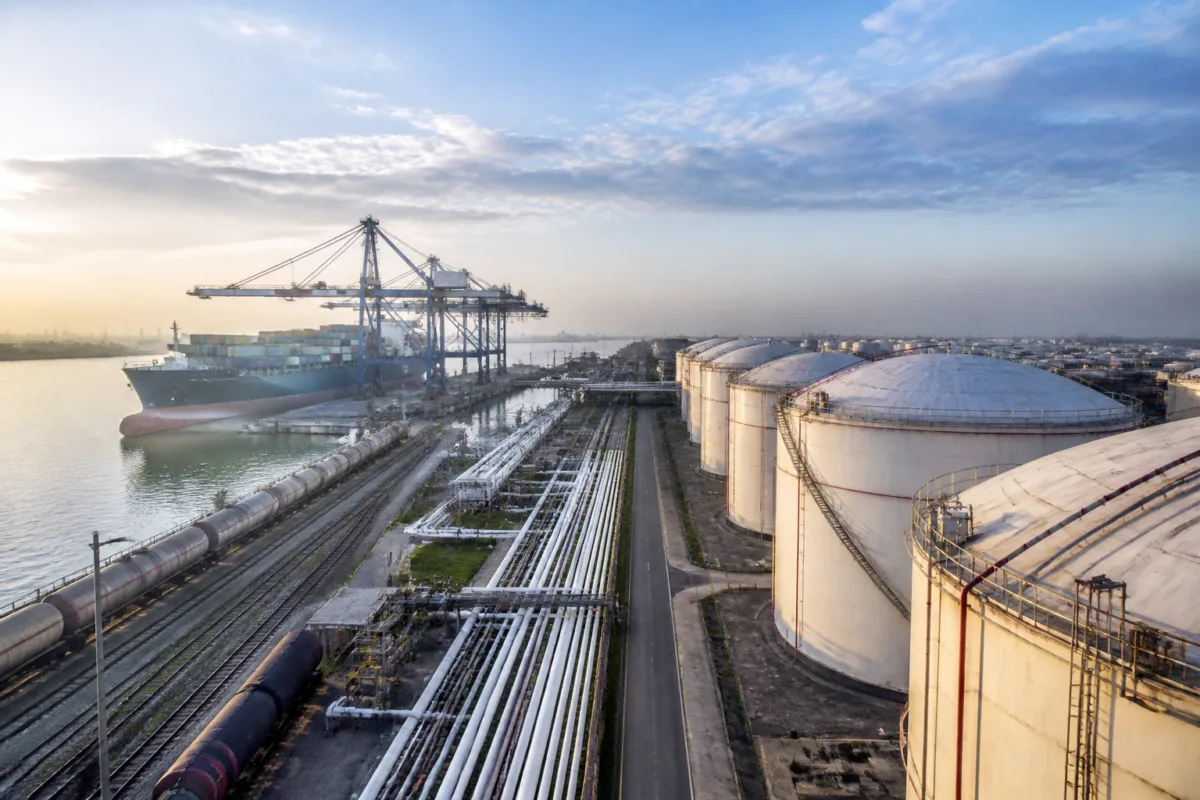
Adani Ports and Special Economic Zone’s acquisition of Evos BV is more than an overseas expansion by India’s largest port operator. It is a move to combine ports, liquid storage and energy-transition infrastructure across a wider network, while testing whether the operating model that has supported APSEZ’s domestic growth can be transferred to mature European markets.
APSEZ agreed to acquire a 100 per cent stake in the Netherlands-based Evos from Igneo Infrastructure Partners at an enterprise value of €2.56 billion. The transaction is expected to increase APSEZ’s global footprint from 20 to 28 ports and terminals across 10 countries and more than double its liquid-storage capacity. Evos is described in the supplied report as Europe’s second-largest independent liquid-storage operator, with a presence in key European energy hubs.
That combination changes the nature of APSEZ’s international platform. Ports are traditionally understood as gateways for cargo, but liquid-storage terminals add another layer of infrastructure: they connect maritime trade with energy supply chains, industrial users and the handling of higher-value products. In APSEZ’s case, the acquisition extends its exposure beyond conventional port operations into storage and sustainable fuels, giving the company a broader asset base through which to earn revenue.
The strategic appeal of the transaction rests partly on Evos’ operating profile. The business has an earnings before interest, tax, depreciation and amortisation margin of 56 per cent, compared with a 44.8 per cent international ports margin for APSEZ. Its Ebitda-to-cash-flow-from-operations conversion is 83 per cent. These figures explain why brokerages cited by Business Standard view Evos as a high-margin, cash-generative addition that could raise the quality of APSEZ’s international earnings contribution.
But the acquisition also shifts the company into a more demanding operating environment. APSEZ has demonstrated execution capabilities across domestic acquisitions, according to the report, but analysts have pointed out that replicating those improvements in mature and high-cost European markets remains untested. The challenge is therefore not simply to add terminals to a network. It is to integrate assets with different cost structures, operating conditions and market contexts without weakening the cash generation that makes the deal attractive.
The financing structure is central to that test. Evos has gross debt of €1.43 billion, net debt of €1.37 billion and leverage of six times. APSEZ plans to restructure the balance sheet through euro-denominated borrowings. The reported rationale is twofold: euro borrowing could reduce funding costs, with Evos’ cost cited at 4.5 per cent against 6.4-6.6 per cent for APSEZ, while also creating a natural currency hedge. Elara Securities identified financing costs, debt restructuring and sustained cash conversion as key factors in determining whether the acquisition ultimately produces net profit and earnings-per-share accretion.
This makes the deal an infrastructure-integration exercise as much as a purchase. The value will depend on how effectively APSEZ connects the new assets to its wider network, maintains Evos’ cash conversion and finds operating efficiencies or capacity additions. The report says analysts see opportunities to expand through higher-value products, operating efficiencies and future capacity additions, but it does not establish how quickly those benefits will materialise or what specific integration programme will deliver them.
The company’s domestic performance provides the immediate backdrop to the acquisition. APSEZ’s September-quarter operating profit grew 23 per cent year on year despite disruptions linked to the West Asia conflict. The report attributes that resilience to the company’s integrated network, which helped absorb disruption while capturing a share of higher-margin business. Management also raised its FY27 Ebitda guidance by ₹1,000 crore to ₹26,000-27,000 crore.
The domestic network remains an important part of the growth plan. Increased capital expenditure at Mundra, Dhamra, Hazira and Vizhinjam was identified by JM Financial Research as a positive. Analysts at the brokerage modestly increased their FY27 and FY28 Ebitda estimates, citing higher-than-expected profitability in the international business and at Mundra Port. This combination of domestic investment and international acquisition means APSEZ is pursuing growth on two fronts: increasing the scale of its Indian port network while adding specialised overseas infrastructure.
That structure also reveals the institutional importance of network integration. A port does not operate in isolation from the roads, rail connections, storage facilities and industrial supply chains around it. The supplied report does not provide a detailed breakdown of APSEZ’s inland connectivity or the public infrastructure supporting each terminal, so the wider logistics impact cannot be quantified here. It does, however, establish that the company’s integrated network was a factor in its ability to manage disruption and capture higher-margin business during the September quarter.
For Indian infrastructure companies, the transaction signals an effort to build platforms rather than isolated assets. APSEZ’s reported expansion from 20 to 28 ports and terminals across 10 countries gives it a wider geographic spread and a more diversified operating base. The addition of liquid storage introduces exposure to energy logistics and sustainable fuels, sectors that require specialised infrastructure and long-term operating capabilities. The deal therefore extends the company’s role from port management towards a more integrated logistics and energy-infrastructure platform.
The risks are visible in the same numbers that make the acquisition attractive. High margins and strong cash conversion improve the case for the transaction, but Evos’ leverage creates a financing obligation that must be managed alongside APSEZ’s own expansion programme. Lower euro borrowing costs could help, yet the benefit depends on the planned restructuring and on the acquired business continuing to generate cash at the levels cited in the report. The natural currency hedge may reduce one form of exposure, but it does not remove the operational challenge of managing a larger international portfolio.
Brokerage responses underline both the confidence and the unresolved questions. PL Capital analysts led by Tushar Chaudhari viewed the acquisition positively and assigned a ‘buy’ rating with a target price of ₹2,248. Elara Securities maintained its estimates while raising its target price to ₹2,432, describing the transaction as improving long-term visibility for a globally diversified, integrated ports and liquid-storage platform. JM Financial Research upgraded the stock to a ‘buy’ rating with a target price of ₹2,065 after the September-quarter performance and higher guidance.
Those ratings are market opinions rather than evidence that integration has already succeeded. The report said APSEZ shares reached an all-time high of ₹1,979 on November 11 and were trading at about ₹1,904, or roughly 22 times estimated FY28 earnings, after gaining 26.9 per cent over the previous year. These figures show that investors have already attached considerable value to the company’s growth narrative. They do not, by themselves, establish the future profitability of the Evos transaction.
The larger urban and infrastructure question is how ownership of interconnected port and storage assets changes the resilience of trade networks. APSEZ’s September-quarter performance suggests that an integrated network can help absorb disruption, while the Evos transaction adds geographic and operational diversification. At the same time, the acquisition demonstrates that resilience depends on balance-sheet capacity, cash conversion and the ability to operate across different markets, not only on the number of terminals controlled.
The evidence currently confirms a substantial expansion of APSEZ’s international footprint, a significant increase in liquid-storage capacity, strong recent operating performance and a higher FY27 Ebitda guidance range. It also identifies the unresolved issues: debt restructuring, financing costs, sustained cash conversion and the company’s ability to reproduce domestic execution gains in European markets. Those will determine whether the Evos acquisition becomes a durable infrastructure platform or remains primarily an expensive expansion of the company’s global footprint.

