


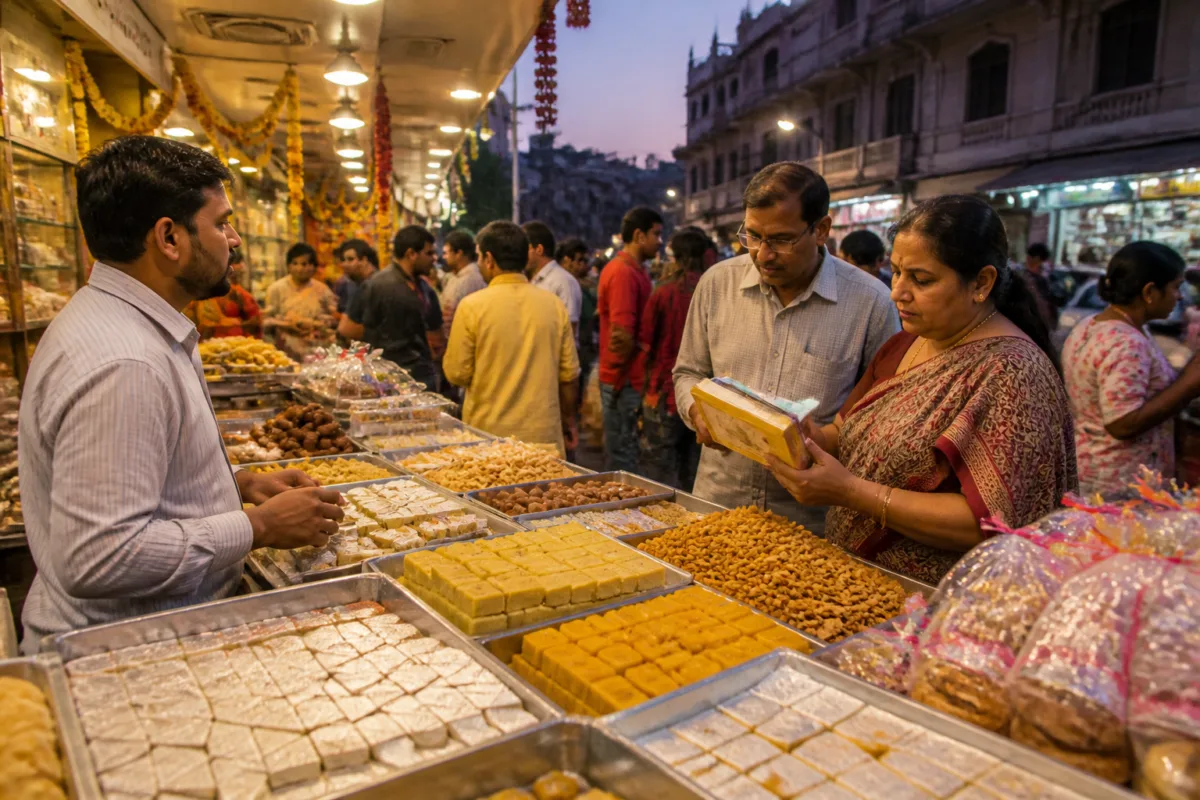
Ahmedabad’s Diwali sweets and gift hamper market is witnessing a reported 30% decline in sales this year as higher prices for raw materials, milk, ghee and packaging push traditional festive purchases beyond the budgets of many households.
According to local sweet and gift hamper traders cited by Gujarat Samachar, market demand ahead of Diwali is currently estimated at only 60% to 70% of last year’s level. The reported slowdown is particularly visible in premium sweets made from pure milk and mawa, as well as customised gift hampers.
Traders said higher input costs have raised the prices of sweets across categories. Premium mawa-based products are increasingly being purchased by higher-income customers, while middle-class and lower-income buyers are choosing items they consider more affordable, including kaju katri, namkeen, cashew-based snacks and mohanthal.
The shift reflects how inflation is changing the composition of festive consumption rather than eliminating it altogether. Families continue to buy sweets and snacks for household use and gifting, but are reportedly reducing quantities or selecting lower-priced products to remain within budget.
Gift hampers, which had gained popularity in recent years as an alternative to conventional sweet boxes, have also become more expensive. The report said hampers and customised gifting options that earlier ranged from ₹250 to ₹2,000 are now facing higher prices because of increased costs for their contents and packaging.
Gift hamper sellers said demand from ordinary and middle-income households has weakened sharply this year. The category is now being driven more by affluent families and corporate buyers, according to the traders quoted in the report.
Packaging has become an important part of the festive gifting market, but it is also adding to the final retail price. Rising costs of boxes, decorative materials and other packaging inputs have made attractive hampers less accessible to price-sensitive consumers.
The reported slowdown comes as Ahmedabad’s markets enter the final phase of Diwali shopping. For sweet shops and gifting businesses, the immediate challenge is to balance higher production and packaging expenses with customers’ reduced ability to spend. For households, the market is showing a clear preference for familiar products that offer more quantity or value at a lower price.
The traders’ estimates indicate that festive demand has not disappeared, but has moved away from premium and discretionary products. The extent of the reported decline will become clearer as retailers complete their Diwali sales and compare final turnover with last year’s performance.

