


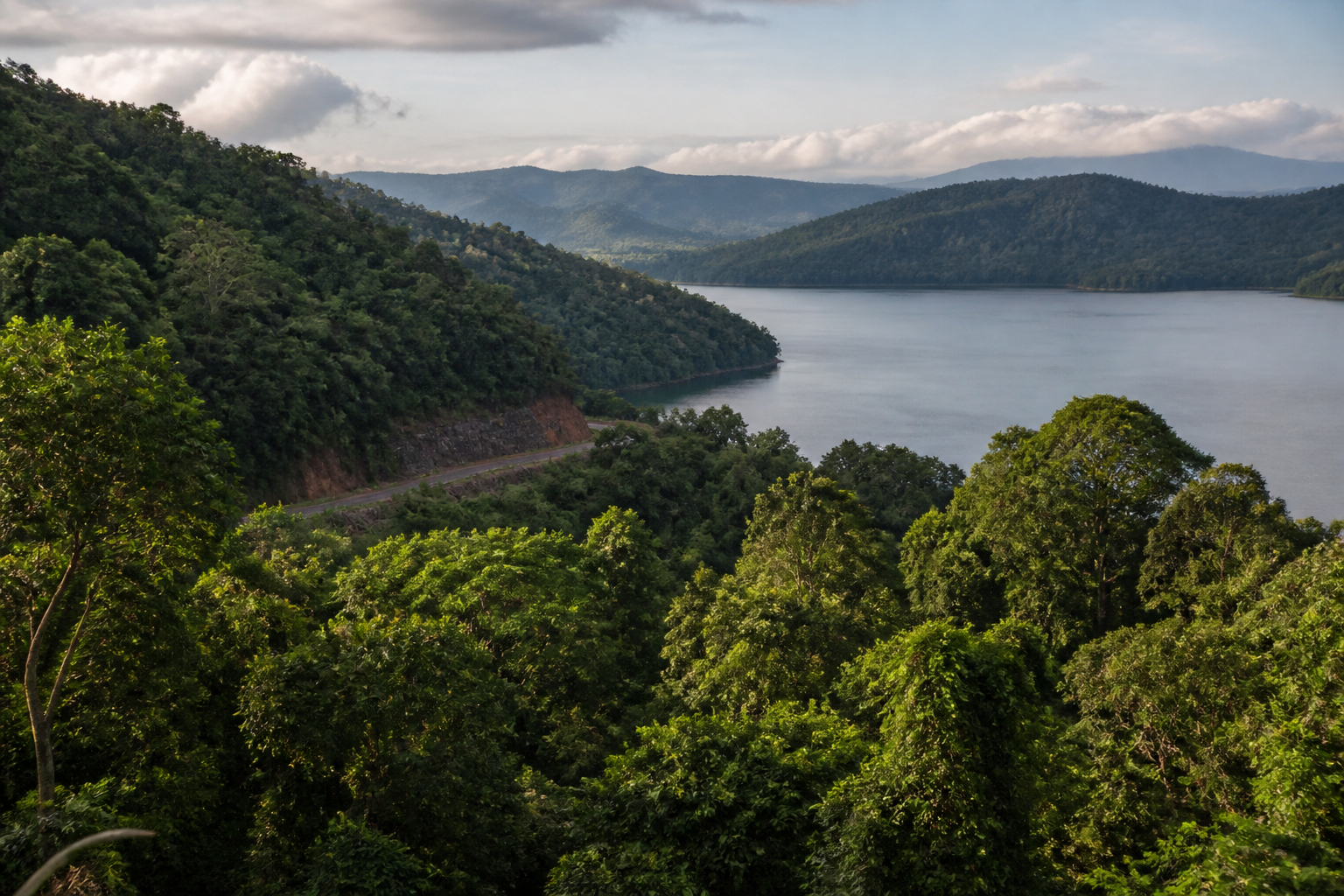
A forest department site-inspection report has placed the proposed Sharavathi pumped storage project at the centre of a difficult question for Karnataka’s infrastructure policy: how should the state expand electricity capacity in one of its most ecologically sensitive landscapes? The report does not reject the project outright. It warns of significant effects on forests, wildlife, the river catchment, reservoir, soil, moisture conditions and endangered-species habitat, while also saying approval could be considered subject to conditions.
The report was prepared after the deputy conservator of forests of the Shivamogga Wildlife Circle inspected the project site. According to the report cited by Prajavani, it was submitted to the ministry on August 28. The inspection followed a proposal from the chief engineer of Karnataka Power Corporation Limited seeking approval to use 30 acres of forest land in the Kargal area of the Shivamogga Wildlife Circle.
That sequence is important. The immediate question is not simply whether the project has received approval, but how the forest-clearance process will weigh its declared energy objective against the ecological risks recorded by the department’s own field assessment. The report’s conditional language leaves the project’s final status unresolved, while making the environmental scrutiny more consequential.
The proposed facility is intended to have a generation capacity of 2,000 megawatts. An earlier report by the National Institute of Advanced Studies in Bengaluru had said the project could be approved, subject to conditions. The subsequent forest department inspection introduced a more detailed account of the possible effects associated with construction and long-term project activity.
The concerns extend beyond the physical footprint of the land sought for diversion. The report warns that road widening and other development activity required for construction could fragment wildlife habitat. It also identifies the possibility of disruption to the movement of the lion-tailed macaque and other mammals. Construction traffic and the movement of workers and other people, it says, could cause continuing disturbance to animals and increase pollution.
This is a significant distinction in assessing infrastructure in a protected or ecologically valuable landscape. The impact is not limited to the area occupied by a project structure. Access roads, transport routes, work sites and associated development can alter how animals move through a forest. In the Sharavathi case, the forest department has specifically linked these activities to habitat fragmentation and changes in animal behaviour.
The report also identifies risks to the physical systems that support the landscape. It refers to possible increases in landslides and soil erosion in the Western Ghats, along with adverse effects from air pollution, noise pollution and soil degradation. It further names the river catchment, reservoir, soil and moisture conditions among the features that could be affected.
The construction timeline adds to the department’s concern. The report estimates that the work would take at least five years. A project with a long construction period can create a prolonged period of vehicle movement, excavation and human presence rather than a short, contained disturbance. In this case, the forest department says the extended work could change the character of the forest and harm local biodiversity.
The lion-tailed macaque provides the clearest measure of the habitat question. A survey conducted by the Karnataka Forest Department with various organisations in 2022-23 recorded 730 lion-tailed macaques in the Sharavathi Wildlife Sanctuary, according to the inspection report. The department has warned that disturbance to their habitat from the proposed project could lead to a decline in their numbers.
That figure does not, by itself, establish how many animals would be directly affected by the project or what portion of their habitat lies within the proposed area. The supplied report does not provide a project-specific population assessment, a map of the affected habitat, or quantified estimates of forest loss, emissions, traffic or erosion. Those gaps matter because a decision on forest diversion requires more than a general acknowledgement of risk. It requires clarity about the location, scale, duration and mitigation of each impact.
The project therefore sits within two overlapping administrative processes. Karnataka Power Corporation Limited has advanced the proposal for forest use, while the forest department has assessed the site and communicated the risks to the ministry. The department’s view, as reported, is neither an unconditional clearance nor an absolute prohibition. It is a warning that approval, if considered, must be tied to conditions.
The content of those conditions has not been specified in the supplied report. It is consequently not possible to say whether they would involve changes to the project design, limits on road construction, restrictions during wildlife movement periods, restoration obligations, monitoring requirements or other safeguards. The report also does not establish whether the ministry has accepted, modified or rejected the department’s assessment.
This uncertainty is central to the project’s next stage. The forest department’s field inspection has made ecological effects part of the formal decision record, but the final outcome will depend on subsequent consideration by the relevant authorities. Until that process is completed, the project’s 2,000 MW target remains a proposal rather than an operating capacity, and the requested use of 30 acres remains subject to approval.
The Sharavathi proposal illustrates why large energy projects in forested areas are evaluated through more than a capacity figure. The public case for the project is expressed through its intended electricity-generation capacity. The forest department’s report adds the costs and risks that are harder to capture in a single number: habitat fragmentation, disturbance, erosion, pollution, catchment effects and the vulnerability of a species whose population in the sanctuary was recorded at 730 in the cited survey.
The evidence currently confirms that the project has entered a serious environmental scrutiny phase. It does not confirm the scale of eventual damage, the effectiveness of possible safeguards or the final decision on forest use. Those questions will require the full inspection report, project maps, clearance conditions and subsequent decisions from the competent authorities. The next developments to monitor are the ministry’s response to the forest department’s assessment and the terms, if any, attached to further consideration of the proposal.
