


Six districts in Telangana and Andhra Pradesh have been identified among India’s 20 most exposed districts to potential Rabi production disruptions, according to an Ecowrap report cited by the Times of India. The findings place rainfall conditions, agricultural-credit exposure and irrigation resilience at the centre of the seasonal outlook for the two Telugu states.
Nalgonda and Nizamabad in Telangana, along with Bapatla, Guntur, West Godavari and Sri Potti Sriramulu Nellore in Andhra Pradesh, feature in the report’s Rabi Climate-Credit-Production Exposure Index. The index combines each district’s share of national Rabi production, deviation in Rabi rainfall and share of agricultural credit.
Both Telangana districts recorded a 100% negative deviation in Rabi rainfall, the report said. Together, they account for 0.67% of India’s Rabi production, with Nalgonda contributing 0.36% and Nizamabad 0.31%. Their respective shares of agricultural credit are 0.42% and 0.35%.
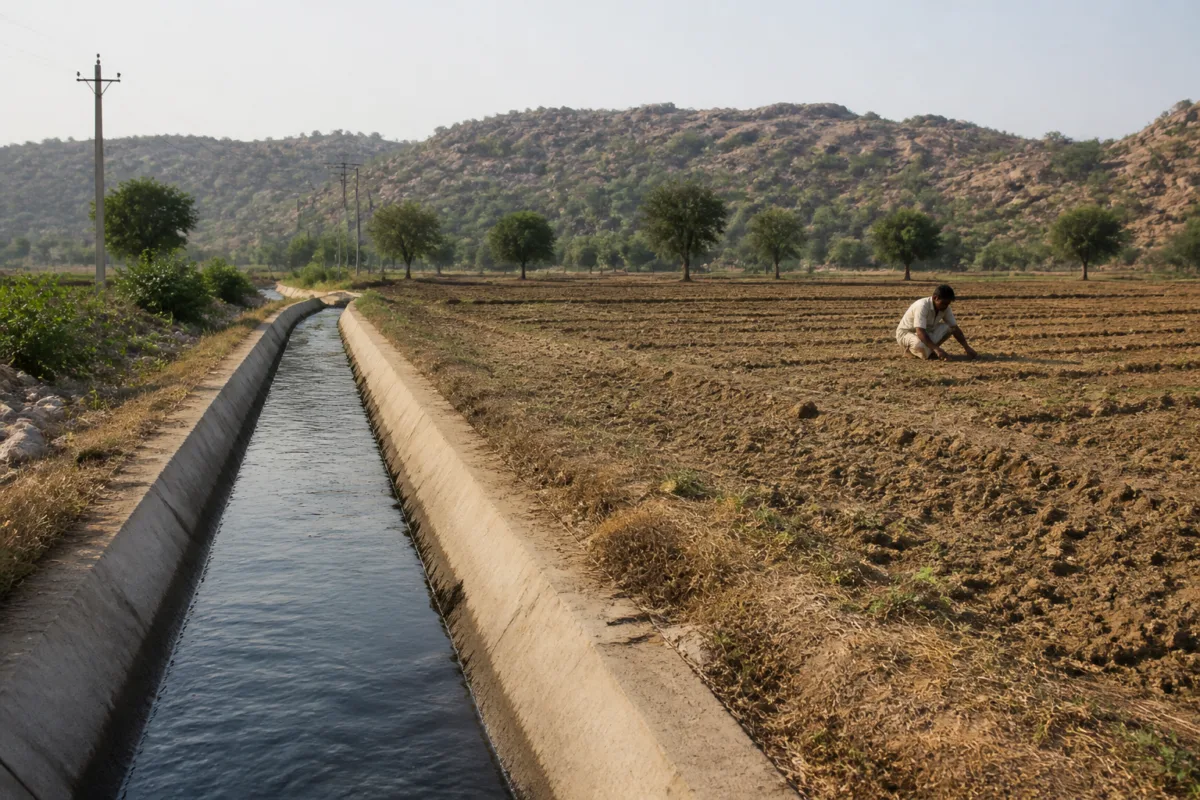
The report’s assessment comes as Rabi sowing in Telangana was progressing below the normal seasonal area in some districts. As of November 18, farmers across the state had sown 2.38 lakh acres against a normal seasonal area of 3.94 lakh acres, according to the report. In Nalgonda, sowing stood at 1,131 acres against a normal area of 5.49 lakh acres. Nizamabad recorded sowing across 40,824 acres against a normal seasonal area of 5.03 lakh acres.
The reported sowing figures indicate the immediate scale of the seasonal gap, but they do not by themselves establish the eventual crop loss. The Ecowrap estimates are model-based projections of potential disruption rather than measurements of actual losses.
Across India, the report estimates potential agricultural production losses of 3.86 crore tonnes across the Kharif and Rabi seasons. The Rabi component is estimated at 2.97 crore tonnes and the Kharif component at 0.89 crore tonnes. It places the gross value of agricultural production at risk at around ₹1 lakh crore.
The exposure is also linked to public investment requirements in Telangana. Chief minister A Revanth Reddy has sought ₹30,000 crore in special assistance from the Centre for drought-related measures and water-security works. The request includes ₹20,000 crore for drought mitigation in affected mandals and ₹10,000 crore for completing irrigation projects and undertaking groundwater recharge and conservation works.
These two figures should not be treated as equivalent. The ₹30,000-crore demand is Telangana’s request for financial assistance, while the approximately ₹1 lakh crore figure is a model-based estimate of potential agricultural production at risk across India. The state’s request therefore does not represent a quantified loss in the six identified districts.
The report nevertheless highlights how rainfall deviation can expose weaknesses in irrigation access, groundwater availability and seasonal farm financing. For Telangana, the immediate policy focus described in the report is on completing irrigation works, supporting drought-affected mandals and strengthening groundwater conservation. Whether those measures reduce Rabi production risks will depend on their implementation and on rainfall and sowing conditions during the season.

