


Disability rights groups in Karnataka have raised concerns over reduced allocations for welfare schemes, arguing that funding constraints could weaken support for education, employment and independent living for persons with disabilities (PwDs).
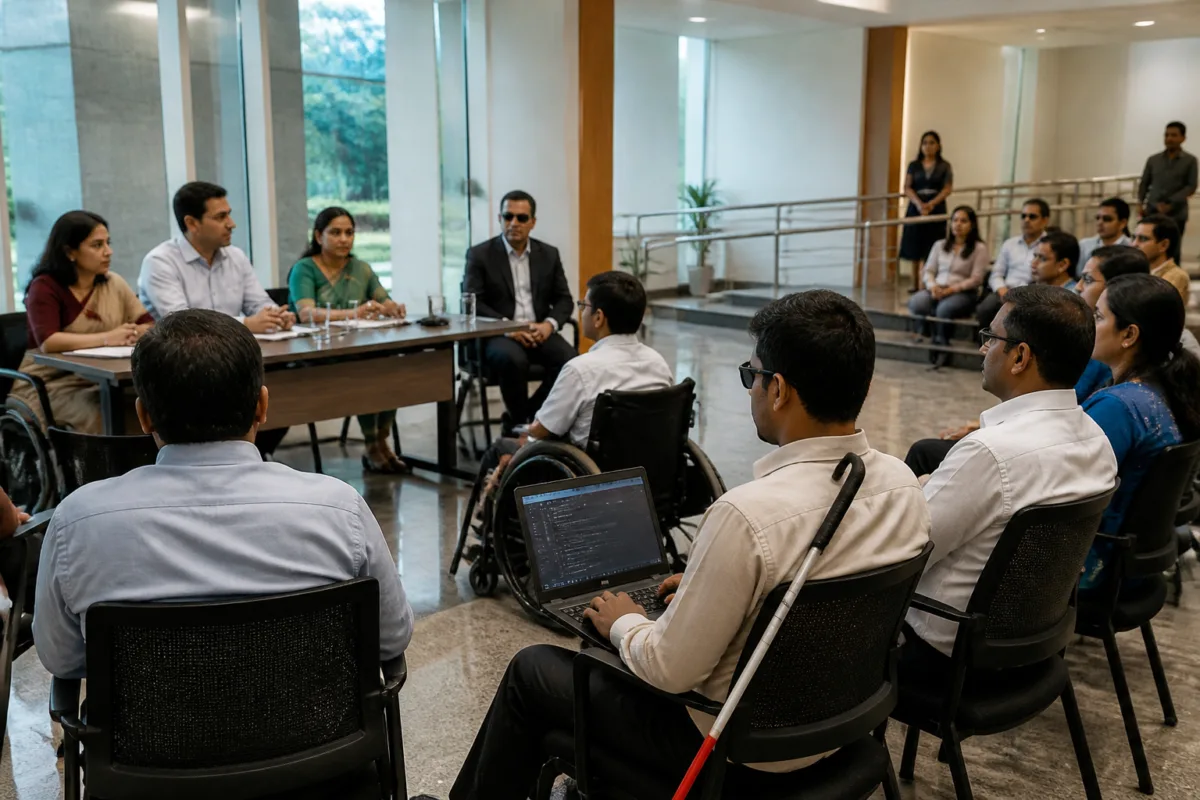
The concerns were voiced at a Bengaluru conference on implementation of the Rights of Persons with Disabilities (RPwD) Act. N Annavaram, an assistant professor at the University of Hyderabad who is visually impaired, said the allocation for a free laptop scheme had fallen from Rs 4 crore in 2014 to Rs 2 crore in 2026-27. He also said funding for hostels for working women with visual impairments had declined by nearly 66%.
The figures were presented by advocacy groups and were not accompanied in the report by detailed budget documents. Their central concern was that reductions in support schemes could undermine the practical accessibility of education, employment and public services, even where legal protections exist.
Annavaram called for progressive amendments to the RPwD Act, including higher reservations and mandatory accessibility. The Act provides for 4% reservation in government employment for persons with disabilities. He also alleged that positions identified for people who are totally blind were being given to candidates with low vision.
The debate places accessibility beyond the question of physical infrastructure alone. Assistive technology, hostel facilities and fair access to identified employment positions can determine whether public systems are usable and inclusive for people with different disabilities. For urban institutions, the issue connects welfare delivery with access to education, workplaces and civic participation.
Legislative Council chairman Saleem Ahmed said he would facilitate a discussion on measures to empower PwDs and address gaps in the implementation of government schemes during the upcoming legislature session in Belagavi.
Chief secretary Shalini Rajneesh, who inaugurated the conference, said the state government had presented its implementation of the Act to the United Nations Special Rapporteur on the Rights of Persons with Disabilities, who had praised Karnataka’s initiatives. She also stressed the importance of preventing disabilities through timely intervention.
Rajneesh said the cabinet had decided to purchase 5,000 laptops under the minorities department and that other groups would also follow. Her statement came in response to concerns raised by visually impaired students, who had sought voice-to-text equipment to reduce their dependence on scribes.
She said the government’s approach should focus on empowerment and facilitation rather than charity. That distinction is significant for implementation: support schemes must not only exist on paper but also enable people with disabilities to study, work and use public systems with greater independence.
The conference was held ahead of the RPwD Act completing a decade since Parliament passed it. Representatives of the National Federation of the Blind, Mitra Jyoti and the Karnataka Rajya Andha Noukarara Sangha also attended. The proposed legislative discussion and the state’s response to the funding concerns will determine whether the issues raised in Bengaluru lead to changes in allocations, accessibility requirements and scheme implementation.

