


India’s festive shopping season is becoming a test of how quickly the country’s retail geography is changing. E-commerce platforms are preparing for higher-value purchases, earlier demand and wider use of quick commerce, while consumers remain selective because of elevated prices. The result is not simply a contest between online marketplaces and rapid-delivery platforms. It is a reorganisation of how products are discovered, compared, ordered and delivered across metro and non-metro India.
The immediate expectation is for healthy growth in the value of festive purchases, but more measured growth in volumes. Shubham Nimkar, research analyst at Counterpoint Research, described the season as likely to be “healthy in value terms, but more measured in volume terms”, according to PTI. Consumers are still willing to spend, but higher prices are encouraging them to wait for discounts, compare options and prioritise purchases that appear necessary or aspirational within a fixed budget.
That distinction is important for understanding the next phase of India’s digital retail market. Growth is no longer being driven only by a larger number of transactions. It is also being shaped by the value of each order, the timing of demand, the channels through which consumers discover products and the logistics networks that can serve them.
## From groceries to occasion-based shopping
Quick commerce has traditionally been associated with groceries and other immediate household needs. Its festive expansion is now taking it into fashion, electronics, beauty and other categories where the delivery promise is being combined with seasonal merchandising. Devendra Meel, chief business officer at Zepto, said festive shopping was becoming more diverse, with brands introducing festive-specific stock-keeping units for different occasions and regions, including smaller festivals such as Ekadashi and Teej.
This expansion does not mean that quick commerce will replace traditional e-commerce. The two formats are increasingly being positioned around different shopping occasions. Quick commerce is suited to urgency, convenience and a narrower decision window. Traditional e-commerce remains stronger where shoppers need broader assortment, product discovery and time to compare prices.
Achint Setia, chief executive officer of Snapdeal, said quick commerce was “largely solving for immediacy in metro India”, while non-metro consumers were shopping with greater intent and comparing value. His description points to a divided but interconnected retail system: one part built around speed in large urban markets, and another shaped by price sensitivity and considered purchases beyond the biggest cities.
Consumers are also displaying a form of constrained aspiration. Setia said value-seeking remained the dominant behaviour among Snapdeal customers, but added that buyers were trading up within their budgets when prices remained sensible. In this pattern, “value” does not necessarily mean the cheapest product. It means a better-quality or more aspirational product that can still be justified within household spending limits.
The festive market is therefore being shaped by two simultaneous forces. Metro shoppers may be more receptive to premium products and immediate fulfilment, while non-metro consumers are expanding online demand through careful comparison and selective upgrades. Both groups are contributing to growth, but their expectations from digital retail are different.
## Non-metro India is moving from the margin to the centre
The strongest evidence of this shift comes from the contribution of smaller cities and towns. Setia said more than 80 per cent of Snapdeal’s sales came from non-metro regions. A Meesho spokesperson said 73 per cent of the platform’s Rakhi orders came from non-metro markets, while seller participation increased 72 per cent year on year.
The Infisum report cited in the source material found that 66 per cent of new direct-to-consumer orders now originate in Tier II and Tier III cities. These figures suggest that India’s online retail expansion is not simply a story of deeper penetration in the largest metropolitan markets. It is also a story of new demand, new sellers and new logistics requirements emerging across a wider urban network.
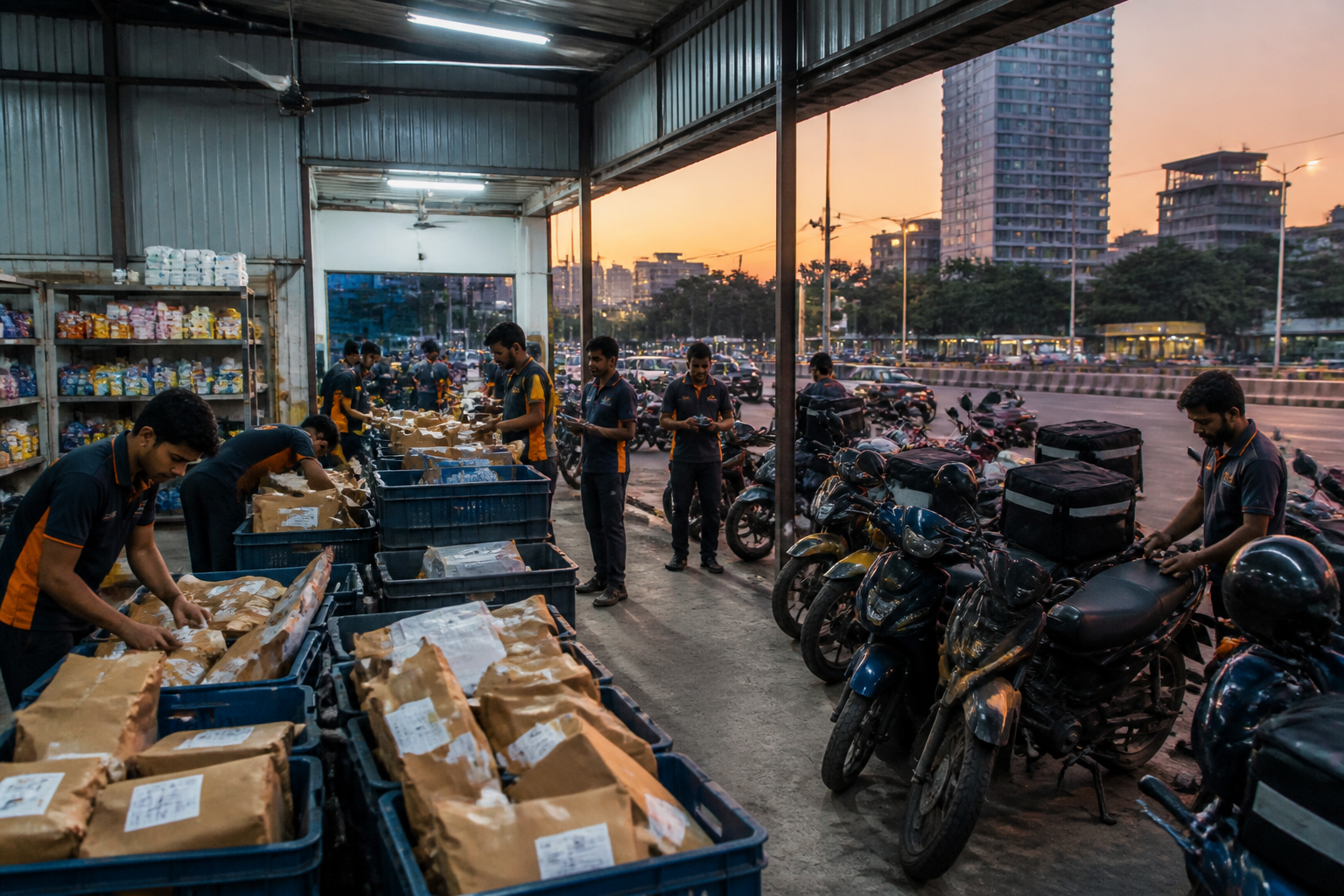
For cities outside the largest metros, the significance extends beyond consumer choice. E-commerce demand requires packaging, warehousing, sorting, transportation, last-mile delivery and digital seller services. As order volumes increase, these activities become part of the everyday economic infrastructure of smaller urban centres. The festive season concentrates that activity, but the underlying shift is broader and connected to the growth of digital commerce throughout the year.
At the same time, the available evidence shows that non-metro growth is not necessarily a straightforward move towards premium consumption. Setia’s description of “aspiration within a value frame” indicates that affordability remains central. Consumers may buy better products, but they continue to evaluate those purchases against price and perceived utility. This makes discounts, delivery reliability and product comparison important parts of the competitive landscape.
## The festive window is starting earlier
Another change concerns the timing of demand. Ragini Varma, chief business officer at retail technology company Fynd, said the festive demand window was moving earlier rather than becoming concentrated around Diwali. Fynd’s data showed that pre-Navratri direct-to-consumer order volumes were already 16 per cent higher year on year in August 2025.
The same source said direct-to-consumer gross merchandise value around Diwali grew 47 per cent year on year in 2025, compared with 34 per cent in 2024. For 2026, Fynd projected Diwali-period D2C GMV growth of 35-40 per cent. These figures indicate continued expansion, but they also suggest that the retail calendar is spreading across a longer period.
An earlier demand cycle changes how platforms and sellers prepare. Inventory must be positioned sooner, promotional activity begins earlier and logistics networks face a longer period of elevated demand. For consumers, early sales may create more opportunities to compare prices, but they may also encourage purchases to be brought forward by discounts and limited-time offers.
Nimkar cautioned that demand pulled forward by festive discounting could be followed by a softer December-January period. In smartphones and appliances, however, a later slowdown may also reflect normalisation after genuine replacement and upgrade purchases. The supplied evidence does not establish whether this pattern will affect all categories equally, but it shows why festive growth figures need to be read alongside the timing and purpose of purchases.
## AI is changing discovery, not just delivery
Artificial intelligence is becoming another layer in this retail transition. Setia said 76 per cent of Snapdeal’s orders were influenced by AI in some form, citing the platform’s “Snap & Shop” image-based search tool. The Meesho spokesperson said AI-led discovery systems were helping personalise recommendations and identify hyperlocal trends. Creator-led video content is also expected to play a larger role during the festive season.
The implication is that competition is moving beyond delivery speed. Platforms are also competing to decide what consumers see, how quickly they find it and how closely recommendations match local preferences. Image-based search, conversational commerce, virtual try-ons and voice-enabled shopping are described in the Infisum report as technologies that could improve retail productivity by 35-37 per cent by 2030.
The evidence also links AI to the geography of demand. If recommendation systems can identify hyperlocal trends, platforms may be able to tailor product discovery to specific cities, regions or festivals. That could support smaller sellers and localised inventory, although the source material does not establish how evenly such benefits will be distributed.
The Infisum report projects India’s e-commerce market will nearly triple from USD 125 billion in 2024 to USD 345 billion by 2030, at a compound annual growth rate of 18.4 per cent. By 2030, it expects e-commerce to account for 10-12 per cent of retail spending and serve 420-440 million online shoppers. These are projections rather than realised outcomes, but they indicate the scale of the market platforms are planning for.
## A retail expansion with an employment footprint
The festive season is also creating a significant temporary and permanent employment question. Amazon India said it had created more than 1.6 lakh seasonal work opportunities across its pan-India operations network, spanning more than 400 cities. The company said tens of thousands of these roles were within its Amazon Now quick-commerce network.
Meesho expects to enable more than 10 lakh indirect seasonal job opportunities, including about 6.5 lakh across its seller network and 3.75 lakh across its logistics ecosystem. Around 1.3 lakh sellers are expected to hire seasonal workers for packaging, manufacturing and warehousing. These figures describe opportunities linked to platforms and their wider networks, rather than a single standard employment category.
Zepto’s operating model presents a different approach. Chief operating officer Vikas Sharma said the company invests in a stable, permanent workforce instead of relying on temporary staffing during peak demand, with an emphasis on training and upskilling. The contrast highlights an unresolved feature of platform-led retail: the seasonal surge can create work quickly, but the quality, stability and duration of that work depend on the employment model used by each company.
India’s festive e-commerce story is therefore also an urban economy story. It connects household purchasing to warehouses, fulfilment centres, delivery networks, seller facilities and seasonal labour markets. Quick commerce may be most visible to consumers through a delivery application, but its expansion depends on physical systems distributed across cities.
The evidence confirms that India’s retail market is becoming more segmented by occasion, geography, price sensitivity and speed. Quick commerce is expanding beyond groceries, but traditional e-commerce retains an advantage in categories that require comparison and assortment. Non-metro cities are central to new demand, while AI is increasingly influencing discovery and personalisation. What remains uncertain is how much festive growth will represent sustained consumption rather than purchases brought forward by discounts, and how different employment models will shape the labour supporting this expansion. Those are the developments that will determine whether the current festive cycle marks a temporary sales peak or a deeper restructuring of India’s retail and urban logistics economy.
