


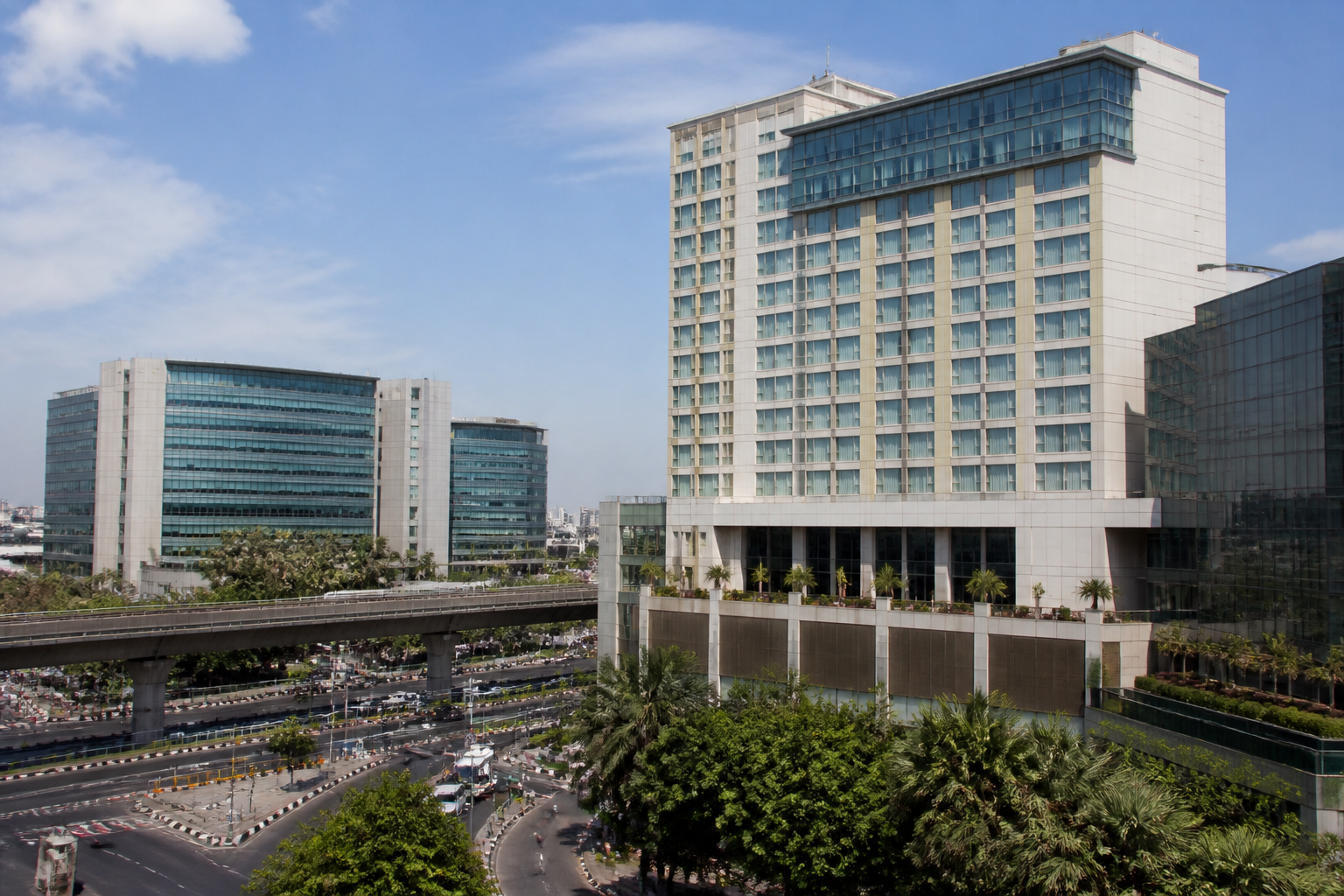
Chalet Hotels’ expansion to about 5,500 hotel keys by FY30 is not simply a plan to add rooms. It marks a change in how the company intends to participate in India’s urban real estate market: alongside hotels it owns and develops, it will increasingly use third-party operations, franchise arrangements and its own Athiva brand.
The company currently has approximately 3,389 operational keys and an announced pipeline of close to 2,300 keys, according to managing director and chief executive Shwetank Singh, taking the projected portfolio to around 5,500 keys. Singh described the shift as a move away from a “pure asset-ownership model” to one in which all three formats operate together.
That distinction matters because a hotel company’s growth is shaped not only by the number of rooms it builds, but also by how much capital it commits, how much operational control it retains and how it uses the land and commercial assets around its properties. Chalet’s stated strategy combines these choices rather than relying on one model across its portfolio.
The announced projects show the geographical spread of that strategy. A 380-room Taj hotel is planned at Delhi Airport, with approximately 70 rooms expected to open by the end of the current financial year. Ritz-Carlton Hyderabad, Hyatt Regency Airoli and a hotel in Udaipur are expected to come online in FY29. The recently announced Pune Yerawada project is targeted for FY31.
These projects are at different urban locations and operate within different development contexts. An airport hotel is tied to a major transport gateway and business-travel ecosystem. A project in Airoli is connected to a large metropolitan employment and commercial zone, while the Pune Yerawada project adds another city-based development to the pipeline. The supplied company commentary does not provide occupancy forecasts, project costs or expected revenue from each property, so the significance of the pipeline rests primarily on its scale, location and operating structure.
The Athiva brand is central to the company’s effort to expand without creating a broader collection of hotel brands. Launched by Chalet in 2025, Athiva initially had a pipeline of around 900 keys. The company now says approximately 380 keys have been added through recently announced projects in Pune and Hyderabad, taking the brand’s total pipeline to roughly 1,200-1,300 keys.
Singh said Chalet was not conceptualising another hotel brand and would remain focused on establishing Athiva. That approach gives the company one in-house brand through which it can develop and operate properties while continuing to work with established external brands such as Taj and Ritz-Carlton. The company’s portfolio will therefore combine brand ownership, franchise relationships and third-party management rather than treating them as mutually exclusive strategies.
In practical terms, the hybrid model allows Chalet to separate the ownership of a property from the operation and branding of that property. The company’s own statement identifies the Ritz-Carlton property as an example of a hotel operated by a third party and Taj properties as franchise arrangements. Athiva represents the company’s own brand platform. The report does not specify the contractual terms, fee structures or allocation of operating risk under these arrangements, but it makes clear that Chalet sees multiple formats as part of its long-term expansion plan.
The strategy also extends beyond hotel rooms. Chalet currently has approximately 2.4 million square feet of commercial space in operation and another 900,000 square feet under construction. The overall portfolio is expected to reach around 3.2-3.3 million square feet of commercial space. Singh said hospitality would remain the company’s mainstay despite this commercial real estate expansion.
This combination of hotels and commercial space gives the company a broader urban property footprint. Hotel projects often depend on their relationship with offices, airports, employment districts and other high-value city infrastructure. Commercial developments, meanwhile, can create a more diversified property portfolio. However, the supplied material does not establish how the commercial assets are integrated with individual hotel projects, nor does it provide details on tenants, locations, completion dates or revenue contributions.
The most important evidence in the announcement is therefore not a claim about a new hotel brand alone. It is the company’s description of a portfolio architecture in which hospitality remains the core business while commercial property provides an additional development platform. The projected increase from 2.4 million square feet of operational commercial space to roughly 3.2-3.3 million square feet would add about 800,000 to 900,000 square feet to the portfolio, based on the figures provided. The company separately describes 900,000 square feet as under construction, suggesting that the expansion is linked largely to projects already in execution, although the report does not provide a detailed project-by-project reconciliation.
The timing of the expansion is also significant for how the company is managing its development pipeline. The portfolio includes projects expected to open in the current financial year, projects scheduled for FY29 and a Pune project targeted for FY31. This spreads delivery across several years rather than concentrating the entire 2,300-key pipeline in one period. The company has not disclosed a separate target for additional projects beyond the announced pipeline.
Singh said Chalet was evaluating both greenfield and brownfield opportunities and had multiple conversations underway, but he also emphasised that the announced pipeline remained the company’s immediate focus. That distinction separates identified projects from possible future additions. It prevents the current 5,500-key target from being treated as an open-ended expansion promise: the number is based on the existing operational portfolio and announced pipeline, while any further growth remains under evaluation.
Funding is another part of the model. Singh said the company was well funded on its balance sheet and believed it could execute the announced expansion without substantially increasing debt. The statement indicates that Chalet expects to rely primarily on its existing financial position for the announced projects. It does not provide the balance-sheet figures, project-level capital expenditure, funding schedule or debt thresholds needed to independently assess that assertion.
That limitation is important when evaluating the hybrid strategy. Using franchise and third-party operating structures can alter the capital required for expansion, but the report does not state how much capital each model requires or how returns compare. Nor does it establish whether the company’s planned mix is driven mainly by balance-sheet discipline, brand strategy, project availability or operating considerations. Those questions remain open because the available material contains management’s description of the model, not a full financial analysis.
What the announcement does establish is a clear shift in the way Chalet presents its role in urban hospitality development. The company is no longer describing growth only through properties owned and operated within a traditional asset-heavy framework. It is combining owned or developed assets with external hotel brands, third-party operators and an in-house platform. That gives the portfolio greater structural variety, although the operational and financial consequences will become clearer only as the announced properties are completed and opened.
For cities, the immediate relevance lies in the locations and forms of development entering the pipeline. A Delhi Airport hotel, projects in Hyderabad, Airoli and Pune, and a Udaipur property will add hospitality capacity in distinct urban and regional settings. The commercial real estate expansion will add further built space. The supplied information does not quantify employment, traffic, water demand, energy use or local infrastructure requirements, so those impacts cannot yet be assessed from the announcement.
The evidence currently supports a narrower conclusion. Chalet Hotels is using a multi-format expansion strategy to grow from approximately 3,389 operational keys to about 5,500 keys, while developing a larger commercial real estate portfolio and keeping Athiva as its sole in-house hotel brand. The company says the announced pipeline can be executed without substantially increasing debt and that additional opportunities are being evaluated, but it has not set a separate target for those future projects.
The next milestones are the opening of approximately 70 rooms at the Delhi Airport Taj hotel by the end of the current financial year, the expected FY29 launches of Ritz-Carlton Hyderabad, Hyatt Regency Airoli and the Udaipur hotel, and the FY31 target for the Pune Yerawada project. Those delivery dates, along with the eventual performance of the Athiva pipeline and the company’s capital deployment, will determine whether the hybrid model becomes a durable template for Chalet’s urban real estate expansion.
