


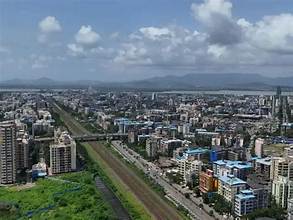
India’s next employment map may be shaped less by the dominance of Mumbai, Bengaluru and Delhi-NCR than by the ability of smaller cities to absorb corporate offices, skilled workers and the infrastructure that follows them. A report by NDTV Business identifies Pune, Jaipur, Ahmedabad, Indore, Coimbatore, Lucknow, Kochi, Chandigarh, Bhubaneswar, Surat, Nagpur and Patna as emerging employment markets, while describing a wider shift towards operating beyond the country’s largest metros.
The change is not a rejection of established corporate centres. It is better understood as a redistribution of growth. Companies are retaining their main operations in major metros while adding offices in other cities, a model described in the report as a “plus-one” strategy. This approach allows firms to expand their labour markets and operating footprint without moving their core headquarters.
That distinction matters for urban development. When employment expands in a city, the effect is rarely limited to office space. It can influence housing demand, transport patterns, commercial real estate, retail activity, flexible workspaces and the availability of local services. But the report also makes clear that the emergence of new hiring hubs is not automatic. Lower costs and available talent can attract companies, but sustained growth depends on whether cities can provide the infrastructure and business environment required for larger and more distributed operations.
The office market is already showing signs of wider demand. Office leasing across major cities rose 7 per cent year-on-year to 41.6 million square feet in the first half of 2026, according to the report. Vacancy declined to 13.2 per cent during the same period. Separately, Tier-2 cities accounted for 32 per cent of planned hiring nationally.
These figures do not establish that smaller cities are replacing metros. They indicate that demand for office space and corporate employment is becoming more geographically distributed. The central urban question is whether this distribution will create stronger regional economies or simply move selected back-office and support functions to lower-cost locations.
The answer will depend partly on the kind of work cities attract. Pune, for example, is presented as a mature employment centre rather than merely a lower-cost alternative to Mumbai. Office leasing in the city increased 56 per cent in the first half of 2026, with demand linked to banking, financial services and insurance, manufacturing and mobility. Its existing professional workforce and proximity to Mumbai give it advantages that newer destinations may take years to build.
Ahmedabad has a similar institutional advantage. The city already has business links with pharmaceuticals, chemicals, advanced materials and other industries. The report also identifies Ahmedabad as having the largest flexible-office footprint among Tier-2 cities. This combination of industrial depth and flexible commercial space could make it easier for companies to establish operations without building an entirely new local ecosystem.
The significance of these examples is that employment growth is more likely to endure when it is connected to an existing economic base. A city with manufacturers, service providers, educational institutions and a skilled workforce offers companies more than inexpensive office space. It provides a network through which businesses can recruit, procure services and expand.
Other cities on the list represent different stages of that process. Jaipur is described as an emerging destination for information technology and business-support operations, while Indore is benefiting from improving infrastructure and connectivity alongside a growing professional pool. Coimbatore’s industrial base could support manufacturing, technology and business services. Lucknow’s large population and expanding services economy could support technology, customer support and other corporate functions.
Kochi’s advantage lies in its existing technology and services ecosystem and its access to talent in Kerala. Bhubaneswar is described as combining lower operating costs with an expanding technology ecosystem. Chandigarh and its surrounding region could provide access to a large northern Indian talent pool, while Surat, Nagpur and Patna may see greater office demand as local economies expand and businesses formalise their operations.
The grouping of Surat, Nagpur and Patna also shows why the emerging-city story cannot be treated as a single national template. The drivers are not identical. In one city, manufacturing may be the anchor; in another, services, government-linked activity, technology or the formalisation of local businesses may be more important. The report identifies a common direction, but not a uniform development model.
That distinction is important for policymakers. If every city attempts to imitate Bengaluru by building generic office parks, the outcome may be an oversupply of commercial space without a matching employment ecosystem. The stronger opportunity lies in building on what each city already does well and connecting that base to new corporate functions.
The “plus-one” model also changes the relationship between companies and urban infrastructure. A firm opening a second location needs dependable connectivity, suitable workplaces and access to talent, but it may not initially require the scale of infrastructure associated with a major headquarters. Flexible workspaces can lower the entry barrier by allowing companies to test a market without committing to a large, long-term lease.
This can accelerate office expansion, but it also creates a question about the quality and permanence of jobs. A flexible workspace can support a genuine local office or function as a temporary satellite operation. The supplied report does not establish how many of the planned jobs in Tier-2 cities will be permanent, high-value or concentrated in particular sectors. That remains an important gap in assessing the long-term effect on urban economies.
For workers, the potential benefit is more direct. The report says professionals are increasingly willing to build careers closer to their hometowns rather than relocate to a major metro. If corporate employment expands locally, workers may gain access to formal jobs without bearing the housing and relocation costs associated with moving to Mumbai, Bengaluru, Delhi-NCR or Hyderabad.
However, the availability of local jobs does not by itself resolve the urban pressures associated with growth. More offices can generate demand for housing, transport and public services. Cities that currently appear affordable may face rising rents and longer commutes if employment grows faster than their residential and mobility systems. The report highlights infrastructure and connectivity as attractions, but it does not provide city-level measures of capacity, congestion or housing supply.
This is where the shift from metro concentration to distributed employment becomes a planning issue. In established metros, companies operate within large labour markets but face high real-estate and operating costs. In emerging cities, companies may find lower costs and less competition for talent, but the supporting urban systems may be less developed or less able to absorb rapid growth. The trade-off is therefore not simply expensive metros versus cheap smaller cities. It is between mature but costly ecosystems and less expensive ecosystems whose capacity is still being built.
The data cited by NDTV Business suggests that the transition is already visible in commercial demand. The 7 per cent rise in office leasing across major cities and the 13.2 per cent vacancy rate show a market in which space is being absorbed. The 32 per cent share of planned hiring attributed to Tier-2 cities points to a parallel movement in employment planning. Yet these are national indicators. They do not show whether growth is evenly distributed, whether particular cities are outperforming others or whether planned hiring will translate into completed offices and actual jobs.
That uncertainty makes implementation more important than the list of cities itself. Businesses will decide locations based on talent, operating costs, connectivity and the ability to scale. Governments and urban institutions will influence whether those advantages persist through infrastructure provision, land and commercial development, transport planning and the broader management of urban growth. The source report discusses the business case, but the administrative responsibilities behind that growth will sit with city and state institutions.
The emerging employment map also has implications for real estate. New offices can support demand for commercial buildings and flexible workspaces, while increased local employment can stimulate housing and service businesses. But commercial development that is not linked to transport and residential planning can produce isolated office clusters rather than integrated employment districts. The available evidence does not establish how the listed cities are planning for such integration, which is why office leasing figures alone cannot be treated as a complete measure of urban readiness.
The broader trend is clear: India’s corporate economy is beginning to look beyond a small group of established metros. The evidence in the report points to stronger office demand, lower vacancy, a significant share of planned hiring in Tier-2 cities and a corporate strategy based on adding locations rather than abandoning major hubs.
What remains uncertain is whether this will produce a durable redistribution of opportunity or mainly a cost-efficient extension of metro-based companies. The answer will depend on the depth of local economic ecosystems, the quality of jobs, the capacity of infrastructure and the ability of cities to accommodate new workers without losing their affordability. For Pune and Ahmedabad, the challenge may be managing expansion from an established base. For cities still building their corporate ecosystems, it will be proving that lower costs can be matched by reliable urban capacity.

