


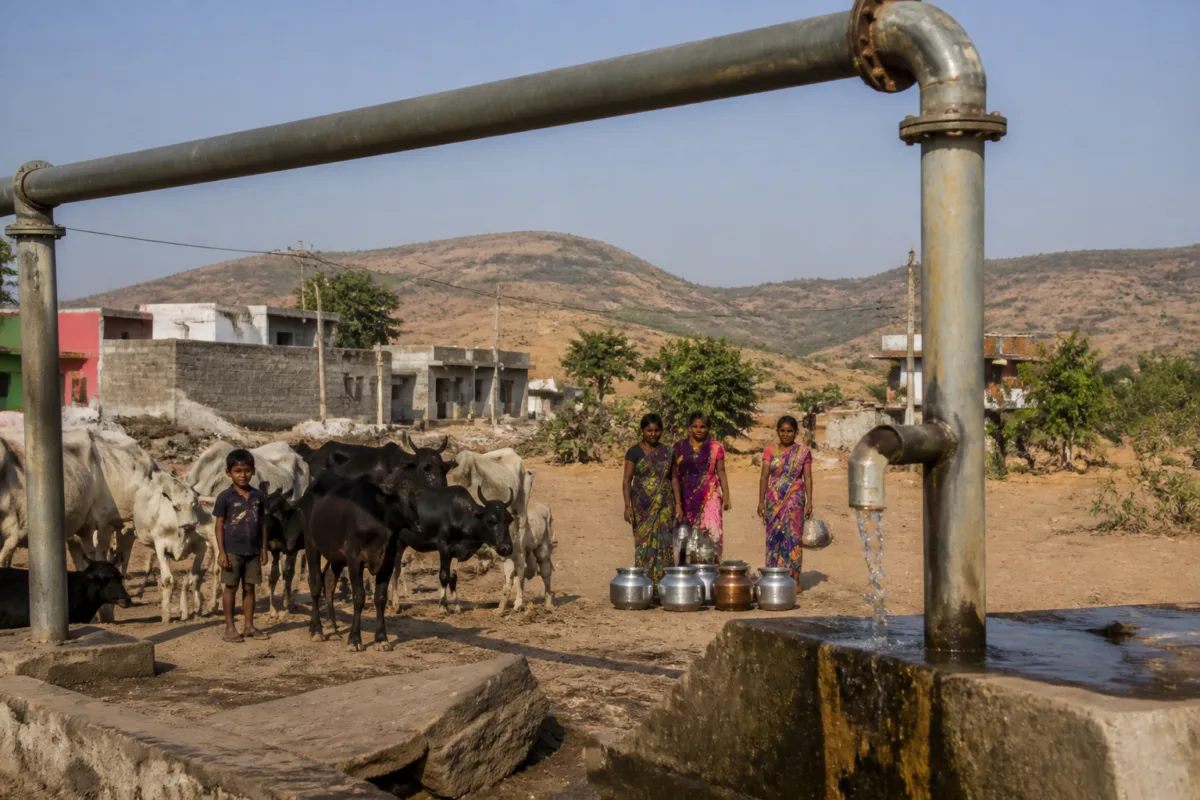
Pune district’s water shortage concerns have intensified as members of the Zilla Parishad questioned officials over incomplete regional water-supply schemes, irregular supply and inadequate maintenance capacity at a general body meeting on Friday. Zilla Parishad president Veerdhवल Jagdale directed the Maharashtra Jeevan Pradhikaran and the Zilla Parishad water-supply department to complete the required action within a week and submit a report.
The meeting, chaired by Jagdale, reviewed the district’s potential water scarcity and the proposed measures to address it. Chief Executive Officer Gajanan Patil, vice-president Vivek Valse-Patil, additional chief executive officer Chandrakant Waghmare and chairpersons of various subject committees attended the meeting. Officials said the water scarcity action plan would be finalised within two to three days and sent to the district collector.
Members raised concerns about the delayed Kadus, Mulshi and Belna regional water-supply schemes. Tanुजा Ghanwat said villages linked to the Kadus scheme were not receiving water because the project remained incomplete. In the Varude-Baburav area of Khed taluka, incomplete schemes being implemented by the Maharashtra Jeevan Pradhikaran have contributed to severe water scarcity, members said. Deepti Bhogade also raised the shortage of drinking water for livestock in the affected area.
The Mulshi regional water-supply scheme’s first and second phases were raised by group leader Shivaji Buchade, following which Jagdale said a separate meeting would be held on the issue. Smita Kanse said villages supplied through the Belna regional scheme in Junnar taluka were sometimes going without water for eight days. Members also highlighted shortages in Morachi Chincholi, Kanur Mesai, Satgaon plateau and the eastern parts of Ambegaon taluka.
The meeting also heard that the local system for repairing handpumps was understaffed and lacked adequate equipment. Karan Khalate raised the shortage of personnel and materials needed for repairs, while Rupali Konde pointed to inadequate water-supply infrastructure in the Shivganga valley. Vijay Singh Shinde sought the inclusion of water-scarce villages in Khed taluka in the district’s scarcity action plan.
The district’s water planning is also being affected by a reported 20% reduction in drinking-water supply from the Khadakwasla reservoir. Patil said water would be released for rabi crops after the kharif season, but no release was planned during summer. The change is expected to increase the importance of completing delayed schemes, repairing local infrastructure and prioritising drinking-water requirements during the coming months.
Jagdale directed the minor irrigation department to take action against gram sevaks in villages where bunds had not been constructed on time despite water being available in streams and drains. The meeting also decided to send a proposal to the Groundwater Surveys and Development Agency to increase the current 60-metre limit for drilling borewells under the groundwater law, citing drought conditions. Additional staff will be provided for borewell repairs, Jagdale said. The immediate administrative milestones are the finalisation of the scarcity plan within two to three days and submission of the delayed-scheme action report within a week.

