


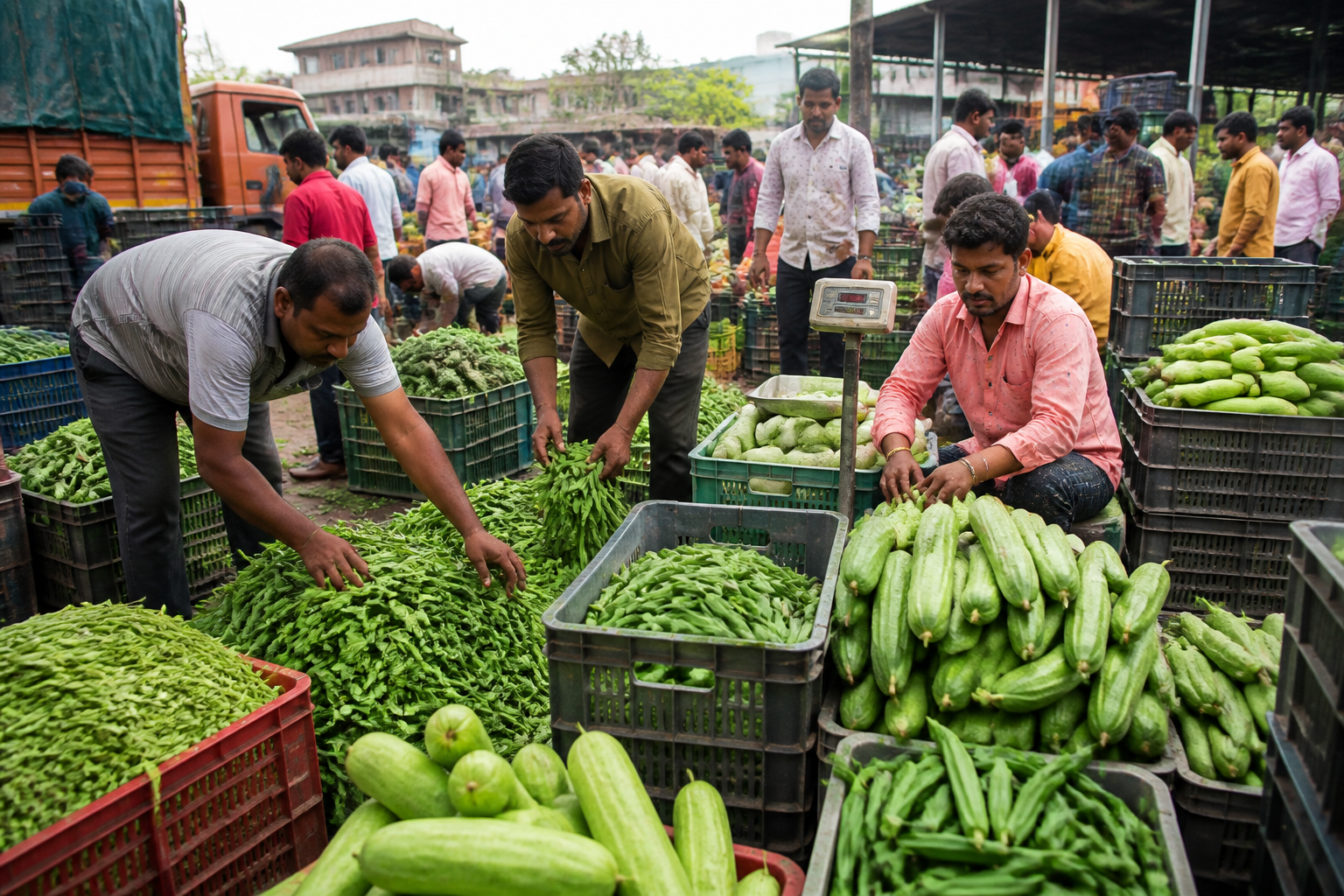
Pune vegetable prices have risen by 10% to 15% at the city’s Shri Chhatrapati Shivaji Market Yard as demand increases for offerings and meals prepared during Pitru Paksha, according to traders quoted by Loksatta.
The vegetables seeing higher demand include cluster beans, okra, cowpea pods, bitter gourd, cucumber and ridge gourd. Traders said the increase was recorded compared with the previous week, with the seasonal demand concentrated on vegetables commonly used for religious offerings and Shraddha meals.
Vilas Bhujbal, a senior commission agent at the Market Yard, and Amol Ghule-Patil, president of the Shri Sharda Gajanan Commission Agents’ Association, said demand for these vegetables had increased during Pitru Paksha. Their comments indicate that the latest movement is linked to a temporary demand spike rather than a change announced by the market administration.
Retail prices are now higher than wholesale rates across the listed vegetables. Cluster beans are being sold at Rs 100-120 per kg in the retail market, compared with Rs 40-60 per kg in the wholesale market. Okra is priced at Rs 100-120 per kg at retail, against Rs 25-40 per kg wholesale.
Cowpea pods are available at Rs 80-100 per kg in retail markets, while wholesale prices are between Rs 20 and Rs 25 per kg. Bitter gourd is selling for Rs 80-100 per kg at retail, compared with Rs 25-30 per kg wholesale. Cucumber prices range from Rs 60-80 per kg in the retail market and Rs 15-20 per kg in wholesale trade. Ridge gourd is priced at Rs 80-100 per kg at retail, against Rs 25-30 per kg wholesale.
Retail vegetable trader Prakash Dhamdhere said one kilogram of vegetables was being sold for Rs 80-100 in retail markets during Pitru Paksha, with stronger demand contributing to the higher prices. He also said prices this year were comparatively lower than last year, even though vegetables typically become costlier during the period.
The price movement also reflects how religious and ceremonial demand can quickly affect the city’s food distribution network. Produce arriving at the Market Yard is sold through wholesale channels before reaching neighbourhood retailers, where the final price includes the retail trade margin and other market-linked costs. The figures reported by traders show a significant difference between wholesale and retail rates for several vegetables.
Dhamdhere said many residents balancing employment and business commitments have limited time to prepare meals for ceremonies. Some therefore register with catering businesses that prepare the food on their behalf, adding another layer of organised demand around the festival period.
According to Bhujbal and Ghule-Patil, demand is expected to continue until October 10. Navratri will begin on October 11, and traders expect vegetable demand to decline during the festival because many people observe fasts and reduce their consumption of regular vegetables. The next shift in demand will therefore depend on the transition from Pitru Paksha to Navratri purchasing patterns.
