


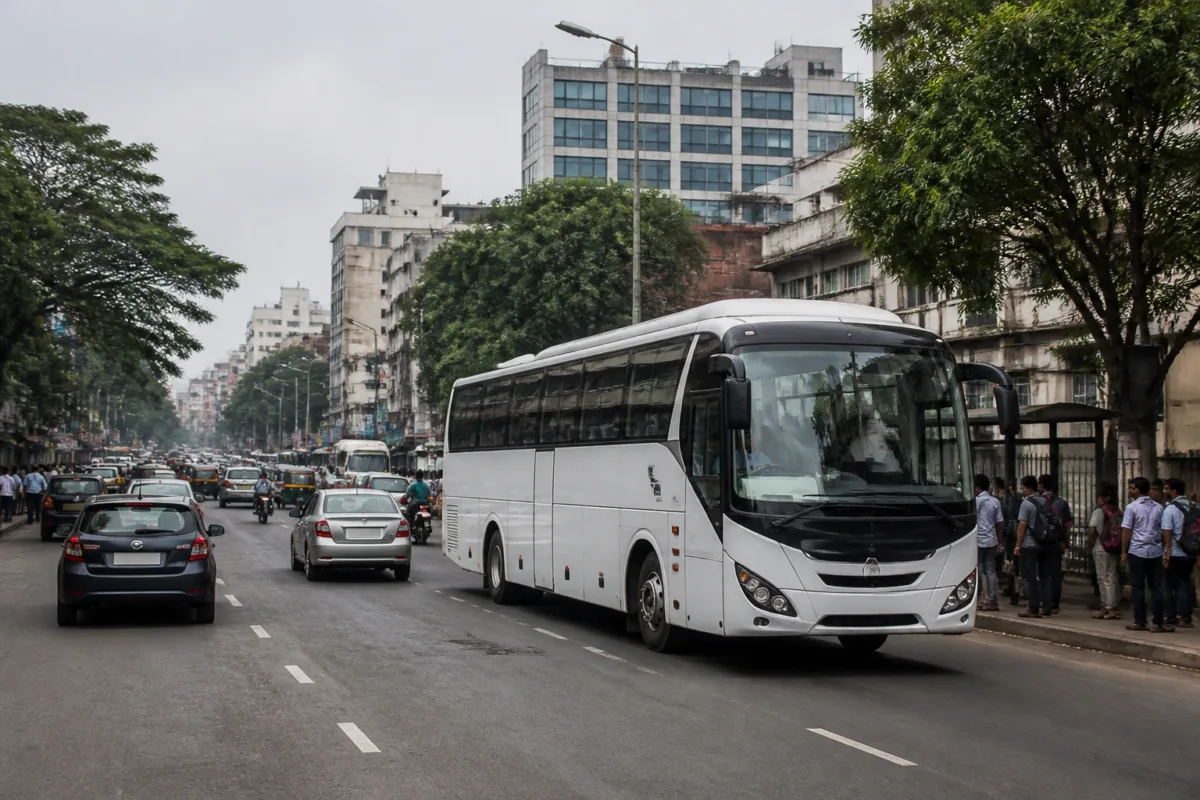
Pune private bus fares could rise by 20-25% after the Pune Bus and Car Owners Association announced a proposed revision citing higher vehicle prices, diesel costs, maintenance expenses and regulatory charges. The increase would affect private buses, tourist vehicles and staff transport, while school bus fares are proposed to rise from the next academic year.
The revised fares will be implemented only after the necessary process, according to the association. A proposal for the school bus fare increase has already been submitted to the transport department, the association said.
Association president Rajan Junawane said fares had not been revised for five years, even as the cost of operating private transport services had increased. The association provides vehicles for weddings, religious tours, excursions, corporate employees and schoolchildren across Pune.
Tushar Jagtap, the association’s secretary, said the price of mini buses and tempo travellers had nearly doubled. He also said tyre prices had risen by around 50% and oil prices by 70-80%, making the proposed increase necessary to keep the businesses operating.
The association cited several other cost pressures, including drivers’ salaries, vehicle maintenance, Regional Transport Office fitness charges and e-challan penalties. It also referred to stricter safety requirements and higher taxation as factors affecting the viability of private operators.
The proposed revision could increase transport costs for schools, companies and families that rely on contracted vehicles. School bus operators would pass any approved increase on to parents from the next academic year, while corporate staff transport and hired vehicles could become more expensive once revised rates are implemented.
The operators have also alleged that private transport providers do not receive facilities or relief extended to state-run transport services. Kiran Desai, a member of the association, said operators were facing financial pressure because of rising costs and inadequate government support.
The association has asked the government to introduce an official fare chart for private vehicles, similar to the system used for autorickshaws. At present, the proposed increase remains an association-level demand and is subject to the required administrative process.
The request places the transport department at the centre of a wider fare-setting issue. Private buses and contracted vehicles support several urban functions, including school mobility, employee transport and group travel, but the source report does not specify whether the government has accepted the proposed rates or when a decision will be taken. The next formal step is the transport department’s consideration of the submitted proposal, including the request concerning school bus fares.

