


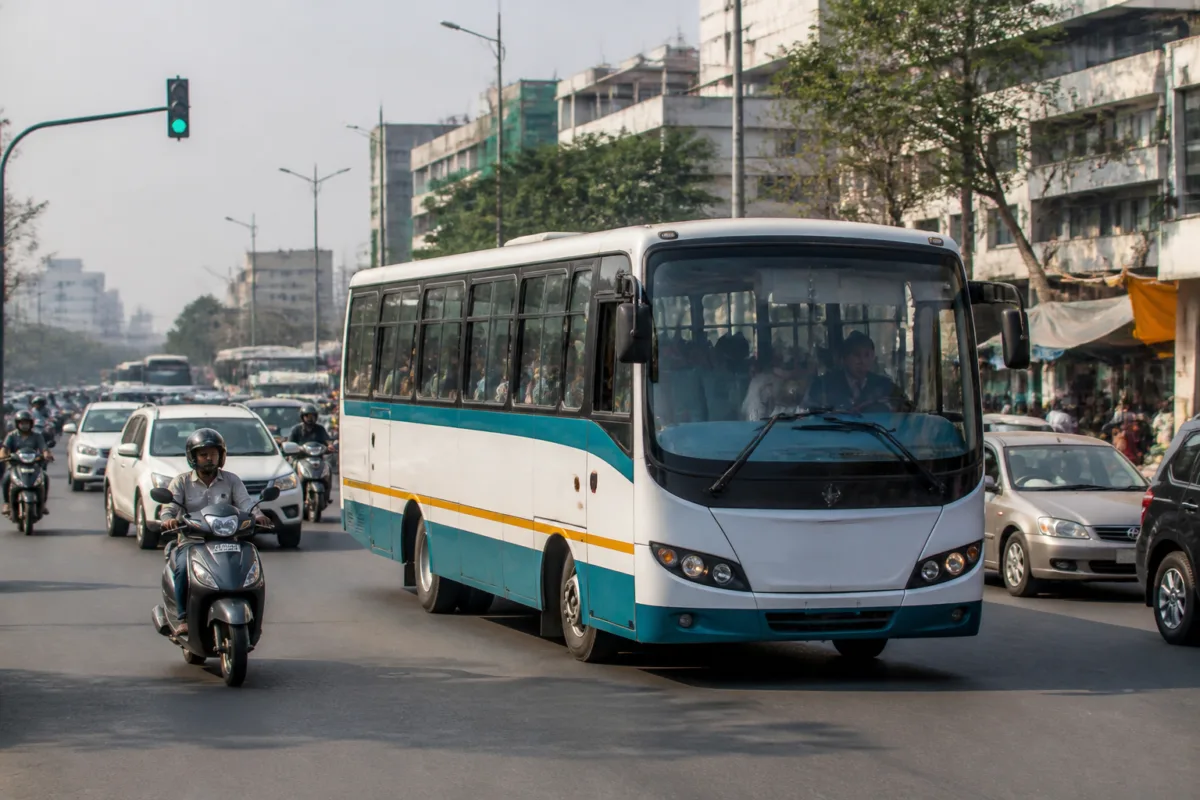
Private bus fares in Pune will rise by up to 25% after the Pune Bus and Car Owners Association announced an immediate revision, citing higher vehicle, fuel, insurance, maintenance and staffing costs. The association said the increase follows a five-year period without a fare revision.
The decision covers mini-buses, tempo travellers, 13- to 49-seat buses, tourist buses, employee transport vehicles and other private passenger transport services. The association announced the move at a press conference at Patrakar Bhavan, where its president Rajan Junawane said operating private passenger vehicles at the old rates had become difficult.
The association has also sent a proposal to the transport department seeking a revision in school bus fares. Those revised rates are planned to take effect from the next academic year, subject to the department’s consideration. Unlike the private passenger bus increase, the school bus proposal has not yet been described as an approved fare change.
The association attributed the increase to higher prices for vehicles, tyres, batteries, spare parts and engine oil, along with increases in driver salaries, insurance, road taxes, tolls, vehicle fitness and registration-related charges. Secretary Tushar Jagtap said vehicle prices had nearly doubled, tyre prices had risen by about 50% and engine oil costs had increased by 70% to 80%.
The proposed per-kilometre rates vary by vehicle capacity. For a 17-seat bus, the rate will rise from Rs 23 to Rs 27. For a 20-seat bus, it will increase from Rs 25 to Rs 30. The proposed rate for a 32-seat bus is Rs 38, compared with the existing Rs 33, while the 35-seat rate will rise from Rs 36 to Rs 42.
For larger vehicles, the proposed rate for a 40-seat bus is Rs 45, up from Rs 41. The rate for both 45-seat and 49-seat buses will increase from Rs 45 to Rs 55 per kilometre. The increases therefore vary across categories, with the association describing the overall revision as ranging from 20% to 25%.
The association said the revision was intended to compensate for increased operating costs rather than raise profits. Its office-bearers also sought a government-appointed committee and an official fare chart for private passenger vehicles, similar to the framework used for autorickshaws.
The immediate fare change places private bus users among the urban transport segments facing higher travel costs, while the separate school bus proposal will now depend on the transport department’s decision. The association’s next stated step is to pursue the proposed school transport rates for implementation from the coming academic year.

