


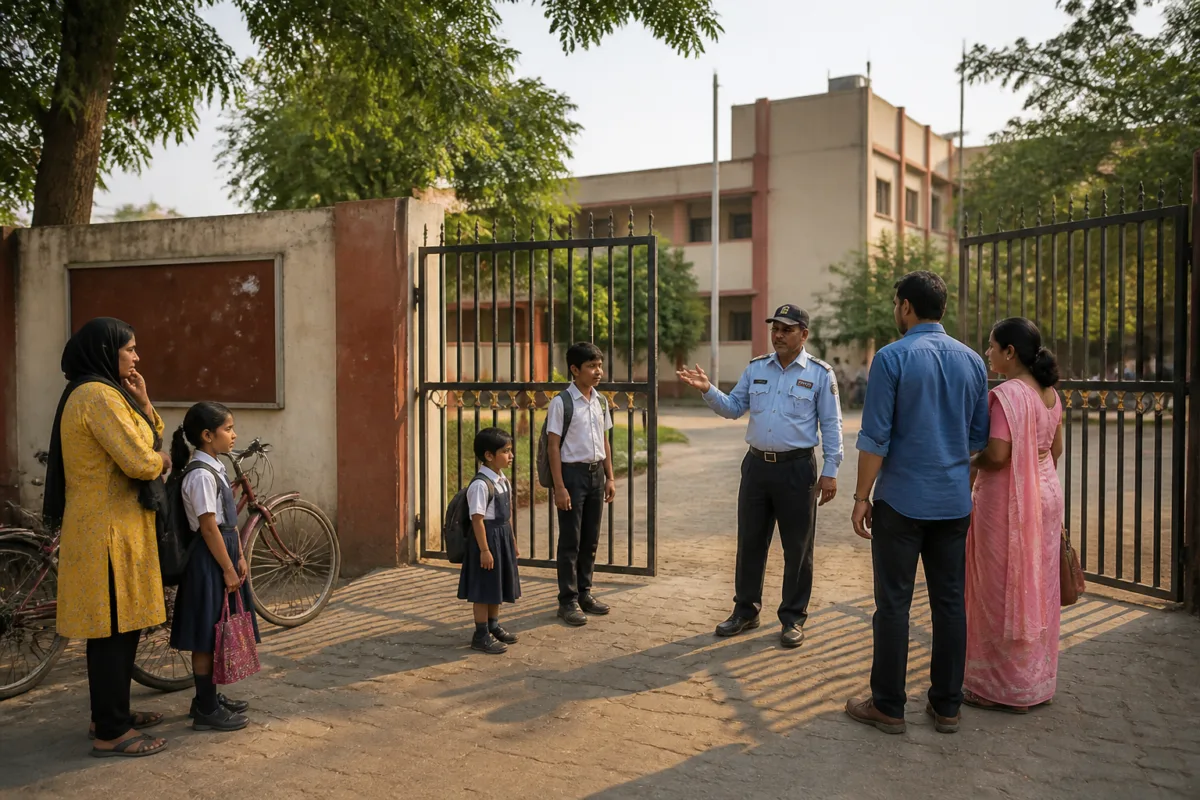
A Gujarat education department circular restricting the entry of unauthorised persons into schools and requiring permission for photography and videography has triggered protests from the National Students’ Union of India (NSUI), Congress and the Aam Aadmi Party, with opposition groups questioning whether the move will improve child safety or reduce public scrutiny of government schools.
The circular, according to a report by Nav Gujarat Samay, requires visitors to obtain permission from the school principal before entering government schools. The report also said that violations could attract legal action, including provisions related to child protection laws where applicable. The education department’s stated purpose, as described in the report, is to protect children and regulate access to school premises.
NSUI Gujarat submitted a written representation to the education minister, describing the circular as incomplete. The student organisation said that controlled entry was not enough to address concerns affecting students and parents, including alleged arbitrary fee increases in private schools, non-compliance with Fee Regulatory Committee rules, discrimination against students admitted under the Right to Education framework and the operation of schools without necessary government approvals.
NSUI demanded statewide investigations into schools allegedly charging fees in violation of regulations and legal action against managements that breach Fee Regulatory Committee rules. It also called for the publication of a list of schools operating without required approvals, their closure where violations are established, and action against institutions accused of discriminating against RTE students.
The political opposition has focused primarily on the implications for transparency in government schools. Gujarat Pradesh Congress Committee media convenor and spokesperson Manish Doshi said child safety was essential but argued that the government could not use child protection as a way to conceal administrative failures. He described government schools as public institutions funded through taxpayers’ money rather than assets belonging to any political party.
The Aam Aadmi Party also opposed the decision. AAP state president Isudan Gadhvi alleged that permission requirements were intended to prevent outsiders from documenting problems in government schools. He referred to claims about deteriorating buildings, schools operating with a single teacher and inadequate facilities, but the report did not provide independent verification of those allegations or a response from the education department.
AAP leader Manoj Sorathiya said that filing cases against people visiting schools would be inappropriate if the objective was to improve education. The party said authorities should address alleged deficiencies in school infrastructure and administration rather than restrict visits.
The dispute places two public responsibilities in direct tension: safeguarding children within school premises and maintaining accountability in publicly funded institutions. The circular’s implementation, the precise permissions required for different categories of visitors and the education department’s response to the opposition’s allegations remain central to the next stage of the controversy.

