Pune Noise Pollution Data Raises Enforcement Questions
Pune is heading into another Ganesh festival season with a familiar civic problem: how to enforce noise limits without turning a major public celebration into a policing contest. The issue has gained a new dimension after National Crime Records Bureau data for 2024 showed no offences recorded by Maharashtra under specified environmental laws, despite repeated noise violations reported during festival activity.
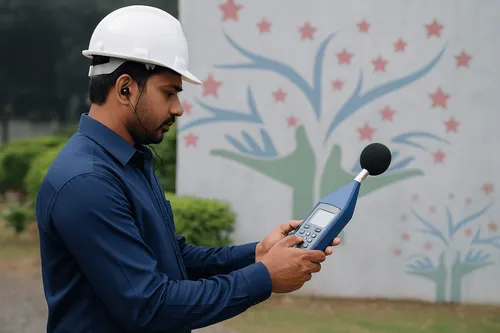
The Pune noise pollution debate is therefore no longer only about loudspeakers and processions. It also exposes a less visible question: whether environmental violations are being consistently recorded, classified and carried through the criminal justice system. The NCRB’s crime statistics are organised according to defined offence categories. A zero entry under the relevant environmental heads does not necessarily mean that police received no complaints or took no enforcement action. Local cases may be registered under other legal provisions or handled through notices, preventive measures and administrative action. Maharashtra’s own pollution-control framework separately tracks festival noise monitoring, underscoring the difference between environmental measurements and NCRB crime classifications. That distinction matters in Pune, where enforcement records and measured sound levels have repeatedly pointed to a persistent problem. During the 2025 immersion procession, COEP Technological University’s monitoring recorded an average 92.6 decibels on Laxmi Road, substantially above the 55-decibel daytime standard applicable to residential areas. Peaks reached 111.8 decibels at one monitored location.
The longer trend is also difficult to ignore. COEP’s monitoring recorded an average of 105.2 decibels in 2023 and 94.8 decibels in 2024 before the 2025 decline. The improvement is meaningful, but the absolute levels remain far above ambient standards, suggesting that incremental reductions should not be mistaken for compliance. Enforcement has also extended beyond Pune city. In Pimpri-Chinchwad, police registered cases against festival organisers in 2025 for noise-related violations during immersion processions. Separately, authorities have faced legal scrutiny over implementation of noise regulations, with the National Green Tribunal directing the police and Maharashtra Pollution Control Board to strengthen enforcement and report compliance.
For residents, the practical concern is less about which statistical category records a violation and more about whether excessive sound is prevented in the first place. Maharashtra Police itself identifies sleep disturbance, hearing damage, communication problems and physiological effects among the consequences of excessive urban noise. The immediate priority, therefore, is a transparent enforcement chain: measured noise levels, recorded violations, legal sections used, action taken and case outcomes should be capable of being reconciled across agencies. Without that linkage, Pune noise pollution data will continue to describe different versions of the same urban problem.