


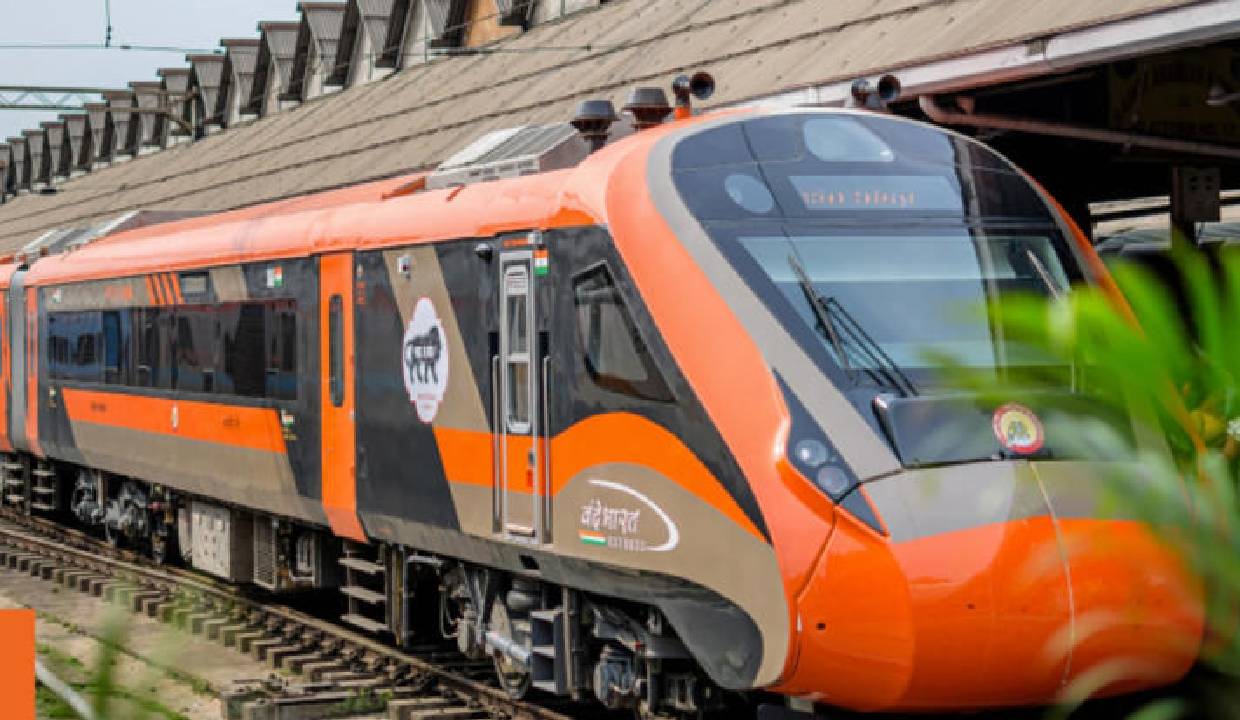
Two new long-distance rail links now place Pune and Mumbai directly on Indian Railways’ expanding Amrit Bharat network, shifting a part of Maharashtra’s interstate passenger movement into a cheaper non-AC corridor built for migrant workers, pilgrims and budget travellers. Prime Minister Narendra Modi on Tuesday flagged off the Banaras–Hadapsar Amrit Bharat Express and the Ayodhya–Lokmanya Tilak Terminus Amrit Bharat Express, adding direct Uttar Pradesh–Maharashtra connections under the Railways’ low-cost mass mobility programme.
For Maharashtra passengers, the significance is less ceremonial than operational. Pune now gets a direct Banaras connection through Hadapsar, while Mumbai’s Lokmanya Tilak Terminus receives a new weekly Ayodhya service without passengers having to depend on fragmented transfers across already crowded northbound routes. Indian Railways says both trains are designed as fully non-AC General and Sleeper services with push-pull locomotion, CCTV surveillance, improved charging facilities and upgraded coach safety systems aimed at lower- and middle-income travellers.
This matters because the Railways is now making a visible capacity choice. Over the past two years, premium semi-high-speed services such as Vande Bharat have dominated railway expansion headlines. The Amrit Bharat rollout moves in the opposite passenger direction: slower than premium trainsets, but built to absorb the volume that actually moves between industrial metros and high-outmigration northern states.
The trade-off is deliberate — Indian Railways is adding aspirational premium corridors at the top, but it is now also strengthening the budget spine underneath, where the highest passenger pressure still exists.
That pressure is visible every festival season and labour migration cycle on trains running between Maharashtra, Uttar Pradesh and Madhya Pradesh, where waitlists routinely stretch and unreserved coaches remain overloaded. The new Banaras–Pune and Ayodhya–Mumbai services directly target those population flows while also adding a pilgrimage link between Maharashtra and two of north India’s largest religious centres.
Public discussion around Amrit Bharat services has also reflected this demand: railway users have consistently treated the trains less as premium launches and more as long-awaited modern replacements for overcrowded mail and express stock on high-volume routes.
For Pune’s Hadapsar terminal and Mumbai’s Lokmanya Tilak Terminus, the practical outcome is straightforward. Both stations now receive another layer of northbound passenger throughput — not in executive class, but in the category Indian Railways still moves the most people in.
The saffron coaches may be new.
The waiting passengers on these routes are not.
