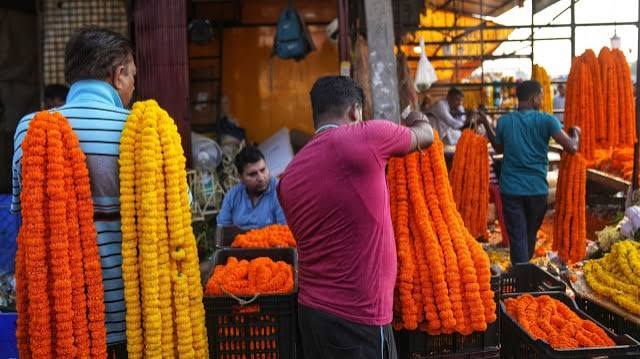
Pune Flower Prices Slide as Festival Supply Surges
Pune: An unusual glut of loose flowers has pushed wholesale prices sharply lower in Pune just days before the Ganapati season, creating a mixed picture for the city’s flower economy. Marigold and chrysanthemum are trading at roughly ₹10–20 a kg in the wholesale market, according to market participants, while growers face the risk that a traditionally strong festival market may not absorb the current surplus.
The immediate imbalance is between farm output and demand. Traders at the Agriculture Produce Market Committee (APMC) market said favourable sunshine and comparatively limited rainfall during August helped flowers remain in the fields rather than being lost to weather-related spoilage. Much of the loose-flower supply reaching Pune’s wholesale market comes from farms within the district. The Pune flower market is particularly sensitive to short changes in weather because flowers have a limited shelf life. Unlike grain or other storable agricultural commodities, unsold flowers cannot easily be held back until prices improve. That leaves farmers and traders exposed when arrivals rise faster than daily demand. Market estimates suggest the festival may provide some relief, but not necessarily enough to restore last year’s rates. Chrysanthemum had reportedly reached about ₹120–140 a kg during the previous Ganapati season. Traders now expect it could remain below ₹70–80 a kg this year, while marigold may stay below ₹50 a kg if the present supply conditions persist. These are market expectations, not guaranteed future prices.
For households, housing societies and community festival organisers, the surplus could reduce the cost of traditional floral decoration and religious use. Yet the benefit to consumers comes alongside a more difficult question for growers: when prices collapse at the wholesale level, lower retail prices do not automatically translate into healthier farm incomes. The Pune flower market also illustrates a broader weakness in highly perishable urban food and horticultural supply chains. Better information on arrivals, demand and prices can help growers decide when and where to sell, while stronger links between farmers, local institutions and bulk buyers could reduce avoidable wastage. Government agricultural platforms already provide mandi price information, including through Agmarknet, which has been expanded to provide real-time market data. PPress Information Bureau
Weather remains the biggest variable. A spell of heavy rain could reduce supply and quickly reverse the present price trend, while continued favourable growing conditions could prolong the surplus. For Pune, the immediate issue is therefore not simply cheaper flowers during Ganapati, but whether the city’s seasonal demand can be connected more efficiently with local growers before perishable produce becomes waste.