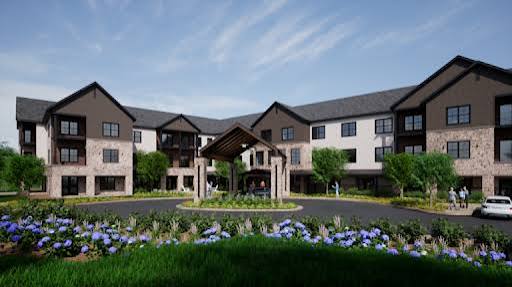
Pune: Pune’s elder-care infrastructure is expanding with the opening of a new 49-bed assisted-living centre in Kalyani Nagar, as changing family structures and longer lifespans increase demand for specialised support. The seven-storey facility, inaugurated on August 30, combines dementia care, rehabilitation, high-dependency support and assisted living, signalling a shift towards more specialised residential healthcare within the city’s urban fabric.
The centre is the second facility of its kind operated by the organisation in Pune and its sixth across Mumbai, Pune and Goa. Its model separates care according to residents’ changing physical, cognitive and medical requirements rather than treating senior housing as a single category. Four floors are allocated to people living with Alzheimer’s disease and other forms of dementia, while dedicated space is provided for high-dependency, rehabilitation and assisted living requirements. That distinction is increasingly relevant to Pune’s built environment. Conventional housing is often designed around independent adults and families, with limited consideration for mobility restrictions, cognitive impairment or the need for on-site medical support. Urban planners and elder-care specialists have increasingly highlighted the importance of environments that allow older residents to retain autonomy while receiving appropriate assistance. The facility has been planned around an ageing-in-place approach, with inputs from medical, psychological and rehabilitation professionals. Physiotherapy and activity areas are incorporated alongside residential and care spaces, allowing mobility, cognitive stimulation and social interaction to form part of daily routines. A multidisciplinary team is expected to provide nursing, medical, psychological and rehabilitation support.
The development also reflects a wider social change. Families are becoming more geographically dispersed, while professional commitments can make continuous home-based care difficult. For older residents, the issue is not simply access to medical treatment. Safe mobility, companionship, privacy and the ability to make everyday choices can determine whether a care setting remains supportive or becomes overly institutional. This creates a new planning question for Pune: how can senior living become part of ordinary neighbourhood infrastructure rather than functioning as an isolated healthcare destination? Proximity to hospitals, public transport, accessible streets, parks and essential services can be as important as the internal design of a care facility.
The economic implications are also broader than bed capacity. As demand for specialised ageing services grows, cities will require more trained caregivers, nurses, therapists and geriatric specialists. This could create new employment opportunities while strengthening a segment of urban healthcare infrastructure that has historically received less attention than acute-care facilities. The new centre is scheduled to begin admissions from September 10. For Pune, the development offers a useful test of how the city accommodates an ageing population: not merely by adding residential capacity, but by creating accessible, dignified and connected environments where older citizens can continue to participate in urban life.