Pune Chakan Infrastructure Faces Wider Mobility Test
Pune’s Chakan-Talegaon industrial belt is set for a broader infrastructure overhaul as the Maharashtra government steps up road repairs and traffic planning after mounting concerns over congestion and deteriorating connectivity. The immediate focus is on monsoon-damaged roads, but proposed public transport links, pedestrian infrastructure and utility planning point to a larger question: whether the region can match its rapid industrial growth with safer and more resilient urban infrastructure.
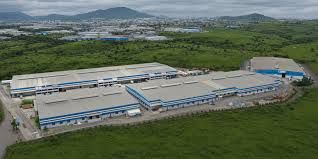
Maharashtra Deputy Chief Minister and Urban Development Minister Eknath Shinde inspected road works in Chakan on August 23 and reviewed measures with officials and industry representatives. Authorities are testing faster repair methods, including geo-polymer patches, hardened concrete mixes and pre-cast panels, particularly on stretches carrying heavy commercial traffic. The approach is intended to reduce the time roads remain under repair and limit disruption to freight movement. The pressure on the Chakan roads is not simply a pothole problem. The industrial corridor has expanded around large manufacturing and logistics activity, bringing sustained movement of trucks, buses, two-wheelers and workers. Heavy traffic combined with monsoon exposure can accelerate pavement failure, while inadequate drainage can make repeated repairs short-lived. For commuters, this translates into longer journeys and greater exposure to road-safety risks.
The government has therefore outlined measures beyond emergency patching. A 54-km Talegaon-Shikrapur route, the Nashik Phata-Rajgurunagar corridor and internal industrial roads are among the stretches identified for faster intervention. Officials have also been directed to incorporate footpaths, utility corridors and cycle tracks into new road planning. Such provisions are significant in an employment-heavy zone where daily mobility is not limited to private vehicles and freight. Public transport is also being considered as part of the long-term response. MahaMetro has been asked to examine the feasibility of extending a proposed Chakan connection towards Rajgurunagar and to study a Talegaon-Shikrapur corridor. Better mass transit could reduce dependence on cars and motorcycles while giving industrial workers a more predictable alternative to congested roads. The wider challenge is coordination. Roads, drainage, lighting, waste management, water supply and electricity cannot be planned independently in a rapidly urbanising industrial belt. Urban planners argue that Chakan roads need asset-level maintenance and drainage planning rather than repeated seasonal repairs.
The immediate repairs may provide relief, but their success will ultimately depend on whether the region moves towards integrated mobility, stronger stormwater management and safer streets. For Chakan, infrastructure quality is increasingly becoming a measure not only of industrial competitiveness, but of everyday urban liveability.