


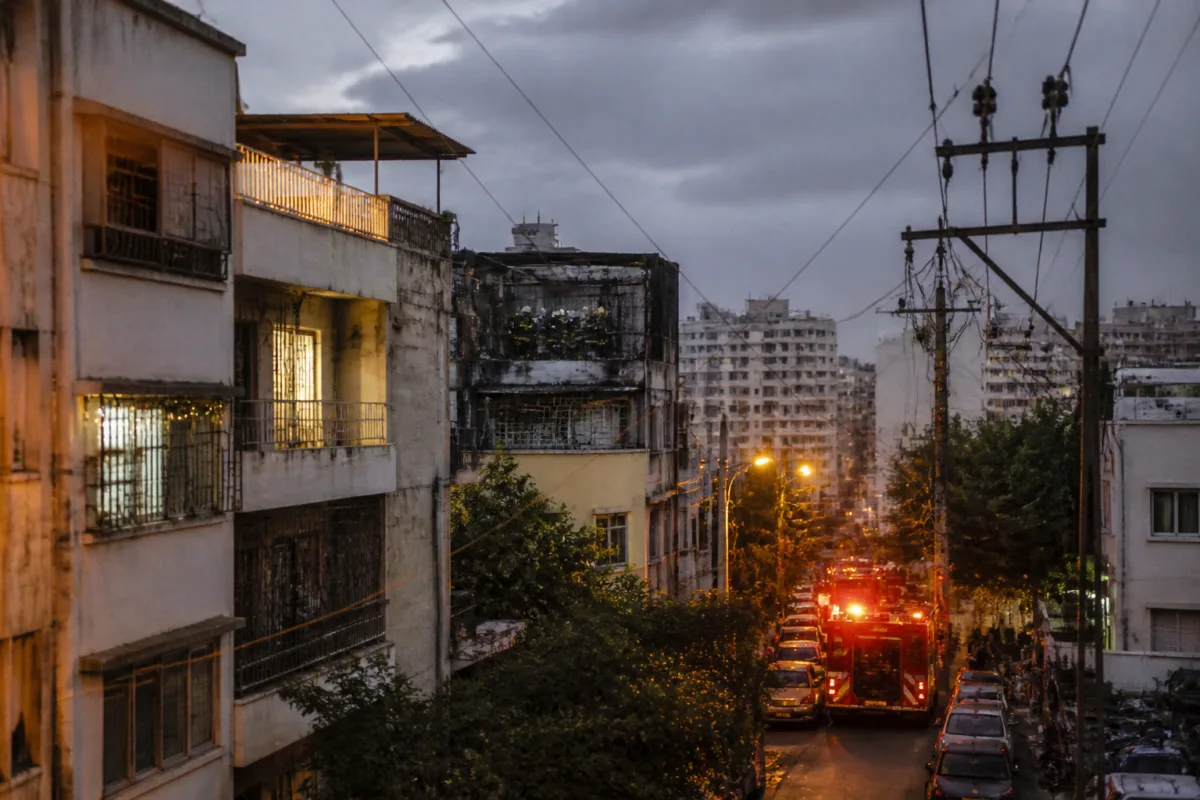
Pune’s proposed ban on aerial firecrackers is not simply a festive-season restriction. It is a response to a recurring urban safety problem in which rockets and other airborne fireworks can move beyond the control of the people lighting them, reaching balconies, terraces, open plots and electrical infrastructure in densely built neighbourhoods.
The Pune Municipal Corporation is considering restrictions after its fire brigade received 94 calls linked to firecracker-related incidents between 3pm on Laxmi Pujan day and 7am the following morning. PMC officials have also cited a spike in the city’s air quality index during the festive period. The proposal follows a request from T C Benjamin, a former additional chief secretary in the urban development department and former PMC civic chief, for Mumbai-like restrictions on aerial fireworks.
Pavneet Kaur, additional commissioner of PMC, said the civic body was “seriously looking into problems caused by aerial firecrackers in the city” and was planning to impose a ban. She said a decision was expected after discussions with the municipal commissioner. Prajit Nair, another additional municipal commissioner, said Thane Municipal Corporation had done a good job by banning aerial firecrackers this Diwali and indicated that Pune was considering a similar approach for the following year because the festive season had already ended.
The proposed action has emerged from incidents that exposed the distance between a private celebration and the public systems that absorb its consequences. Benjamin told The Times of India that an aerial rocket landed near electrical transformer infrastructure at Marigold Phase II Society in Kalyaninagar and triggered a blaze. The fire severely damaged power cables, resulting in a power outage that lasted nearly seven hours.
The incident was contained with the help of security personnel, but Benjamin said the cables had burnt before the fire brigade arrived. His account placed electrical infrastructure at the centre of the safety concern. In high-rise and high-density residential areas, the risk is not limited to the location where a firecracker is discharged. A rocket can travel across building setbacks, terraces and balconies before landing near combustible material or a power installation.
Residents in other parts of Pune reported similar incidents involving balconies, terraces and open plots. A resident of Panchavati in Pashan told the newspaper that a rocket exploded inside a balcony while the family was sleeping. A parasol caught fire, while clothes were drying nearby. The resident said the blaze did not spread, but questioned what might have happened if the clothes had caught fire.
The same resident also described a separate fire in dry leaves on an open plot beside the building. The fire brigade had to be called to extinguish it. These incidents show why the civic proposal is moving towards aerial fireworks rather than a general restriction on all festive activity. The concern identified by PMC officials and residents is the unpredictable flight path of rockets and similar fireworks in built-up areas.
The number of calls recorded by the fire brigade gives the proposal a measurable operational basis. Ganesh Sonune, chief fire officer of the PMC fire brigade, said the department received 94 firecracker-related fire calls during the stated period. The figure does not establish how many separate structures or electrical installations were damaged, but it indicates the volume of emergency responses concentrated around a short festive window.
For the fire brigade, such incidents create a demand-management problem. Calls can arise simultaneously from balconies, terraces, open plots and other locations spread across the city. Each response requires vehicles and personnel to travel through roads that may already be crowded during festival hours. The report does not provide response-time data or a breakdown of the incidents, so the available evidence cannot establish whether the brigade was overwhelmed. It does show that firecracker-related incidents formed a substantial emergency workload during the period covered.
The Kalyaninagar outage also demonstrates how a relatively local fire can become a neighbourhood-level infrastructure disruption. Damage to power cables can affect residents who were not involved in the fireworks and can interrupt electricity supply for several hours. The incident therefore shifts the policy question from individual behaviour alone to the protection of shared urban systems, including electrical installations and residential buildings.
Benjamin’s request to PMC included a survey of vulnerable high-rise and residential pockets, area-specific restrictions or an outright ban near electrical installations and residential terraces, and the deployment of local ward officers to enforce safety protocols. These suggestions point to three possible layers of municipal action: identifying risk locations, restricting the activity in those locations and assigning responsibility for enforcement on the ground.
The distinction between a citywide ban and area-specific restrictions is significant. A citywide prohibition would establish a single rule across Pune, while area-specific controls would require the civic administration to identify vulnerable pockets and communicate different restrictions in different places. The report does not state which model PMC will adopt. Kaur’s comments indicate that a decision was still under consideration and subject to discussions with the municipal commissioner.
The proposed policy also reflects the limits of responding only after a fire occurs. Emergency services can extinguish a blaze, but they cannot reverse damage to power cables, protect residents from smoke or restore electricity immediately. Benjamin’s account of the Kalyaninagar outage was presented as a warning about disaster preparedness, while PMC officials linked their consideration of a ban to both fire safety and air pollution.
Air quality adds a second urban systems concern. Nair said Pune’s AQI spiked during the year’s festive period, although the report does not provide the actual AQI readings, the duration of the spike or the precise contribution of aerial fireworks. That limitation matters. The available information supports the civic body’s concern about deteriorating air quality, but it does not allow the scale of the contribution from aerial firecrackers to be independently assessed from the report alone.
The institutional responsibility is shared within PMC. The municipal commissioner would be involved in the final decision, additional commissioners are examining the proposed restrictions, and the fire brigade would be a key operational agency for prevention and emergency response. Ward-level officers, proposed by Benjamin, would provide the local enforcement layer. The report does not identify the police or any other agency’s role, nor does it specify penalties, inspection arrangements or the legal instrument that would be used.
That missing implementation detail will determine whether a ban remains an announcement or becomes a workable safety measure. A restriction would need to be communicated to residents, applied in areas where rockets are commonly used and supported by a clear enforcement mechanism. The source report establishes that these operational questions remain unresolved because PMC had not yet announced its final decision.
The comparison with Mumbai and Thane is being used as a policy reference rather than as evidence that Pune has already adopted the same rules. Benjamin sought Mumbai-like restrictions, while Nair cited Thane’s ban as an example. Pune’s eventual approach may therefore be shaped by how the civic administration interprets the experience of neighbouring urban bodies, but the report does not provide details of either city’s enforcement outcomes.
What the Pune episode confirms is that festive firework use intersects with several everyday urban vulnerabilities at once: high-rise housing, exposed balconies, dry vegetation, electrical infrastructure, emergency response capacity and air quality. The risks are distributed across private societies and public systems, which is why individual caution alone may not address the full problem.
The evidence currently supports a clear case for preventive consideration, but not yet a conclusion about the effectiveness of a future ban. PMC still has to announce whether it will prohibit aerial fireworks, restrict them in selected areas or adopt another measure. The next important developments are the municipal commissioner’s decision, any formal order, the identification of vulnerable locations and the enforcement arrangements that accompany it.

