


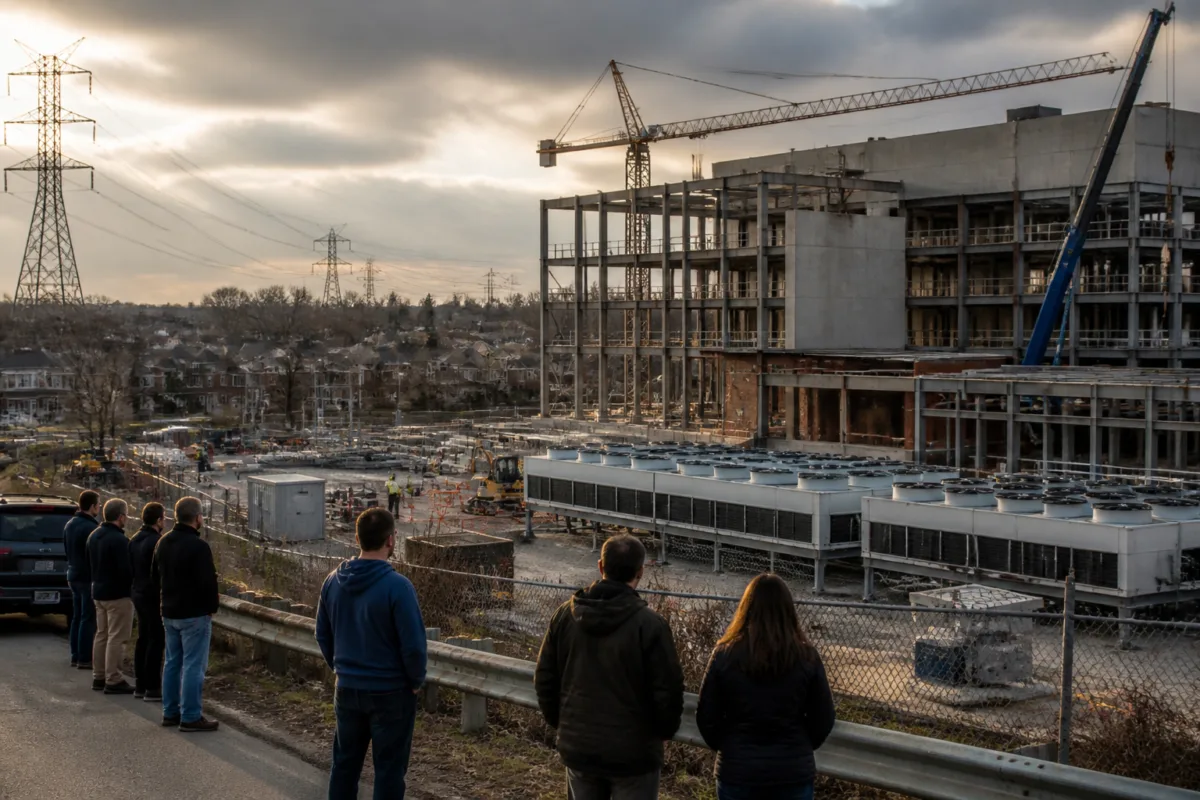
OpenAI’s decision to press ahead with US data-centre expansion, even as opposition to the facilities gains political force, exposes a central tension in the artificial-intelligence boom: the companies building the technology need enormous physical infrastructure, while the communities hosting it are demanding greater scrutiny over its local effects. The company’s response, according to a Reuters report carried by Deccan Chronicle, is to combine continued construction with a more open approach to future site discussions.
OpenAI Chief Financial Officer Sarah Friar told CNBC in an interview on Friday that the company would continue investing to meet customer demand despite a Democratic sweep in the US midterm elections. “When I think about the midterms, I need to keep thinking about how do we keep investing to meet customer demand,” Friar said. She added that OpenAI would continue building relationships with communities “so we can get the compute we need”.
The significance of the statement is not limited to OpenAI’s corporate plans. Data centres are increasingly becoming a local urban-governance issue. Their development requires land, power, water and network infrastructure, while construction can alter traffic patterns, local employment conditions and the physical character of communities. The supplied report does not provide project-level details on the location, size, energy demand or construction schedule of OpenAI’s planned facilities. It does, however, show that the company’s expansion is now being discussed alongside public concerns and election campaigns rather than only as an internal technology investment.
OpenAI launched what the report describes as a charm offensive with communities after opposition to data centres became a rallying point for wider anxieties about artificial intelligence. As part of that effort, the company said it would no longer use non-disclosure agreements with public officials when negotiating or discussing future sites. It also said residents would receive access to construction plans and information on their potential effects.
That change places transparency at the centre of the data-centre question. Agreements between technology companies and public authorities can influence how residents understand a proposed facility, what information is available before construction begins and how local governments explain decisions to their communities. The report does not establish how OpenAI’s new approach will be implemented, which officials or agencies will receive the information, or whether the company has adopted a common disclosure standard across all proposed sites. Those details remain important because a commitment to share plans is different from a formal public-review process.
The political pressure is particularly visible in Texas, identified in the report as one of the fastest-growing data-centre regions in the world. Democratic candidates, including Texas Governor-elect Gina Hinojosa, made tighter scrutiny of the facilities a central campaign pledge. The report does not specify the proposed regulatory measures or explain whether they would affect planning permissions, environmental review, utility connections, taxation or operating conditions. It does establish that data-centre development has moved into electoral debate, giving local and state authorities a larger role in determining how quickly new capacity can be built.
The conflict is sharpened by the speed of demand reported by OpenAI. Friar said the company was raising fresh capital after its business grew 70 per cent quarter over quarter in the third quarter, while enterprise demand doubled over the same period. She presented the growth as evidence that customers were using artificial intelligence and receiving value from it. For infrastructure planners, the figures point to the business pressure behind the company’s expansion plans, although the report does not translate that demand into a specific requirement for buildings, electricity capacity or computing hardware.
The broader market reaction shows how closely the physical expansion of data centres is tied to the financial expectations surrounding artificial intelligence. Concerns that a Democratic sweep could slow construction of facilities considered critical to the AI boom contributed to a reported loss of about $2.5 trillion from the US stock market on Thursday. The report links the concerns to chip, cloud and networking companies that have benefited from the spending cycle. This market response does not demonstrate that construction has slowed, but it shows that regulatory scrutiny is being treated by investors as a potential constraint on the wider technology supply chain.
Other companies’ announced or reported plans reinforce the continued expansionary direction. Alphabet-owned Google said it would invest $17 billion to build its first data centre in Wyoming. Bloomberg News also reported that ByteDance was considering expanding a data-centre project in northeastern Brazil. These developments are not evidence of identical project models or regulatory conditions, but they indicate that the demand for computing facilities is not confined to a single company or one US state.
The institutional question is therefore larger than whether OpenAI proceeds with its own sites. Data-centre growth requires coordination between technology companies, local governments, public officials, utility providers and residents. The report identifies community negotiations and access to construction plans as immediate areas of change, but it does not provide information on the public agencies responsible for approving sites, the infrastructure costs borne by municipalities or the mechanism for assessing potential effects. Without those details, the material supplied cannot establish whether greater disclosure will resolve the underlying dispute or simply improve communication around projects that remain contested.
The financial backdrop adds another layer of uncertainty. Friar said OpenAI was raising fresh capital and rejected suggestions that the company had scaled back its fundraising ambitions after the sharp sell-off in AI stocks. The report says OpenAI’s fundraising follows the company’s reported growth in the third quarter. It also notes questions around rival Anthropic’s proposed listing, with prospective investors reportedly seeking a more attractive valuation and questioning whether the company could begin its roadshow and remain on track for a November listing. The reference to Anthropic matters because it places OpenAI’s infrastructure spending within a wider debate about how durable the AI investment cycle will be.
That debate has direct implications for the built environment. Data centres are capital-intensive facilities whose development depends on long-term expectations about computing demand. Yet the supplied report does not state how much OpenAI plans to spend on individual facilities, how many sites are under discussion, what construction timelines apply or how much power and water they would require. It would therefore be premature to infer the scale of their local urban impact from the company’s fundraising or reported business growth alone.
What the evidence does confirm is a shift in the politics of digital infrastructure. OpenAI is continuing to pursue expansion while acknowledging that communities and elected representatives want more oversight. The company’s decision to end non-disclosure agreements with public officials for future site discussions and to provide residents with construction information represents a response to that pressure, but the report does not establish whether it amounts to a binding policy or how it will be monitored.
The next stage will depend on how these commitments interact with local approvals and public scrutiny. The key developments to watch are the disclosure of site-specific construction plans, the regulatory measures proposed by authorities in data-centre regions, the response of communities and the effect of capital-market conditions on expansion schedules. For now, the evidence points to a sector still committed to building, but increasingly unable to treat the physical consequences of that build-out as a matter only for corporate decision-makers.

