


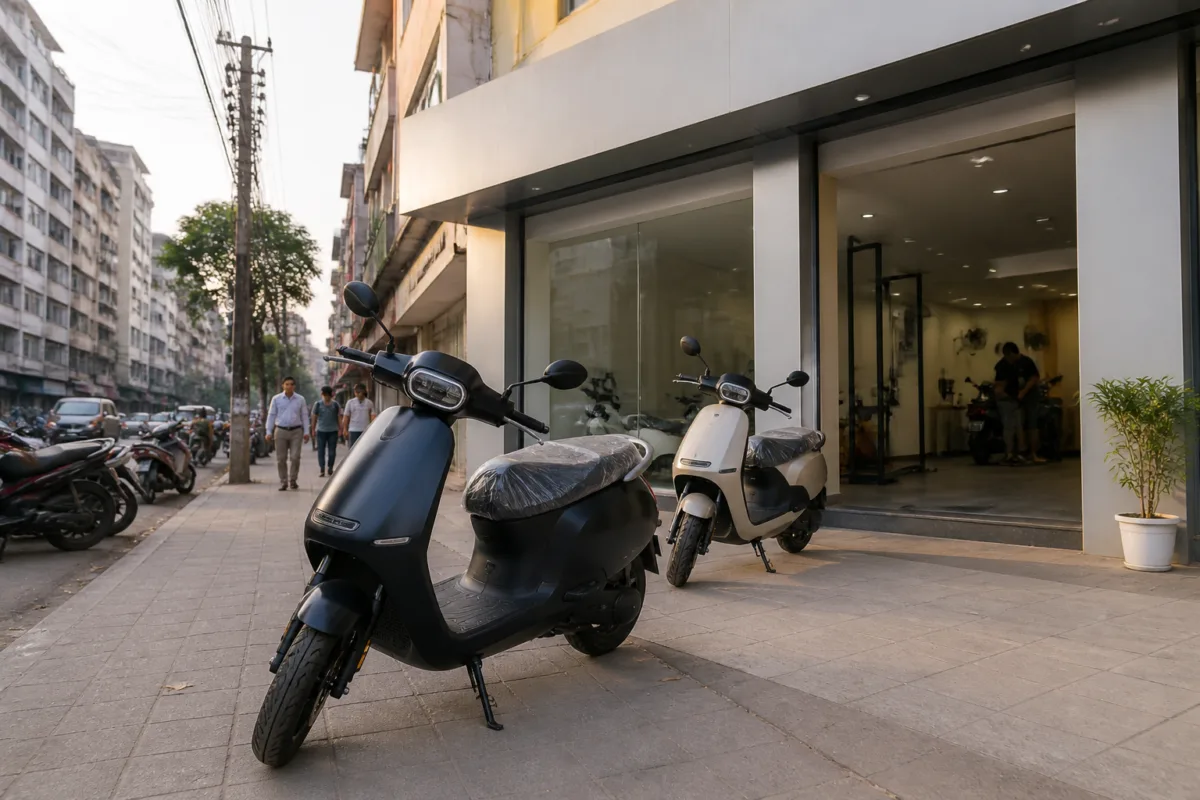
Ola Electric is offering dealers a 6 percent standard margin and an additional three percentage points during the initial phase of operations as it shifts from direct-to-consumer sales to a franchise-led retail model, according to reports cited by Moneycontrol.
The electric two-wheeler maker is moving away from its company-operated retail structure as its market share declines. According to Federation of Automobile Dealers Associations data cited in the report, Ola Electric’s share fell to roughly 7 percent from 17 percent a year earlier, while sales declined nearly 36 percent year-on-year to 118,830 units between January and October 2026.
Dealers familiar with the terms said the additional incentive is being issued through credit notes rather than upfront payments. The incentive could continue for up to six months, compared with typical margins of around 3 to 5 percent at conventional two-wheeler manufacturers, according to the report.
During Ola Electric’s second-quarter FY27 earnings call, founder, chairman and managing director Bhavish Aggarwal said the introductory commission structure would reduce as dealers stabilised over the next two to three quarters. He also said the company planned to reach 450 stores by December and more than 700 by March 2027.
Aggarwal said Ola Electric had stopped taking orders from its direct-to-consumer stores from November 1 and that most of those outlets would close by December, with a few continuing to operate. The company had 319 dealer-operated stores across 255 partners as of November 8, according to the report.
Ola Electric expects the closure of company-owned outlets to reduce operating expenses by about Rs 50 crore. The shift is intended to expand physical retail and service access through franchise partners as competition in the electric two-wheeler market intensifies.
FADA’s October 2026 retail figures cited in the report placed TVS Motor first in the electric two-wheeler segment with 60,490 units and a 27 percent share. Bajaj Auto followed with 49,126 Chetak scooters. Ather Energy and Hero MotoCorp’s Vida were also identified as growing competitors.
Some dealers raised concerns about territory protections under the new arrangement. One dealer said the agreement did not guarantee a minimum coverage area and could allow Ola Electric to approve multiple dealerships within the same region.
The company’s financial performance has also come under pressure. Ola Electric reported a consolidated net loss of Rs 362 crore in the September quarter, compared with Rs 418 crore a year earlier. Revenue fell 39 percent to Rs 421 crore, while the adjusted operating EBITDA loss stood at Rs 246 crore.
Ola Electric has separately reported improvements in service operations. In its FY26 shareholder communication, the company said average service turnaround time improved from about nine days in October 2025 to roughly one day in March 2026. It also said the service backlog fell from 14 days to six days, while warranty costs for third-generation scooters were 70 percent lower than for second-generation models.
The retail transition will determine how quickly Ola Electric can expand city-level sales and service coverage while maintaining consistent dealer standards and customer support across its growing franchise network.

