


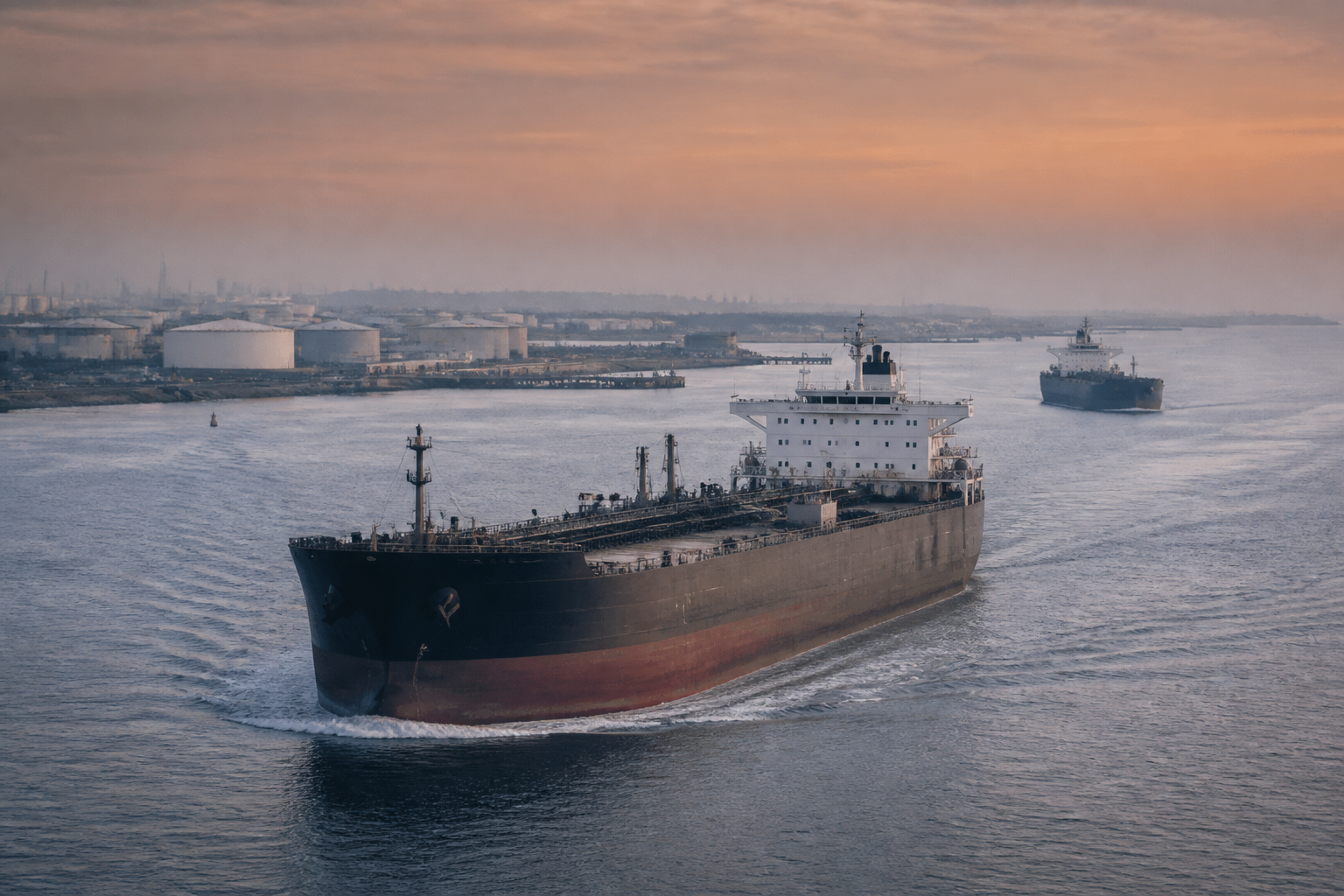
The latest rise in oil prices has pushed Brent crude above $100 a barrel again, but the larger concern for cities is not the market threshold itself. It is the way a disruption in a distant maritime corridor can move through transport networks, fuel markets and the cost of everyday goods. With Iran reporting attacks on ships near the Strait of Hormuz and the United States saying it had sunk five Iranian oil tankers, the latest market response shows how exposed urban economies remain to risks beyond their administrative boundaries.
Brent crude futures rose 0.1% to $101.34 a barrel by 0107 GMT on Thursday, while US West Texas Intermediate crude gained 0.5% to $96.55, according to the report. Brent had settled 3.4% higher on Wednesday at $101.21 after touching $101.58. WTI rose 3.25% to $96.05. Both benchmarks closed at their highest levels since May 22.
The immediate trigger was the escalation in attacks involving shipping near the Strait of Hormuz. Iran said it had attacked 10 ships, while the United States said it had sunk five Iranian oil tankers. Iran’s Revolutionary Guard Corps also warned that it would intensify its response to further attacks. The report does not establish the full operational effect of these incidents, but the price movement indicates that traders are treating the possibility of deeper supply disruption as a material risk.
For cities, the Strait of Hormuz matters because energy supply is embedded in nearly every urban system. Before the war, nearly one-fifth of the world’s oil supply passed through the waterway, according to the supplied report. Oil and gas flows have since remained well below pre-war levels. Even when physical shortages do not immediately appear at fuel stations, the prospect of constrained supply can raise prices across the chain that moves people, food, construction materials and manufactured goods.
That transmission begins with transport. Higher crude prices can raise the cost of gasoline, diesel and jet fuel. Road-based logistics are particularly exposed because the movement of goods between ports, warehouses, wholesale markets and neighbourhood retailers depends on fuel-intensive vehicles. Public transport systems can also face pressure where buses rely on diesel or where operating contracts are sensitive to fuel-price changes. The supplied material does not identify specific fare revisions or fuel-price changes in Indian cities, but it establishes the mechanism through which crude prices can increase transport costs.
The same pressure extends to air and sea freight. The report notes that higher crude prices can increase the cost of jet fuel and transport by sea, adding to the price of goods that depend on road, air or maritime movement. Urban consumers therefore encounter the effects indirectly: through delivery charges, food distribution, retail prices and the cost of services that depend on commercial vehicles. The impact is not limited to motorists or fuel purchasers.
The physical crude market is already showing signs of sustained tightness. Dated Brent, a benchmark used to price around two-thirds of global oil supplies, has remained above $100 a barrel since September 3, according to LSEG data cited in the report. That distinction matters. A short-lived futures-market spike may affect expectations, while a prolonged increase in physical crude prices can be passed more consistently into refined fuels and operating costs.
Refined fuel prices cited in the report remain elevated in the United States, with gasoline averaging about $4.22 a gallon and diesel approaching $6 a gallon. These figures are not measures of urban fuel prices everywhere, nor do they establish the effect on Indian households. They do, however, illustrate how crude-market stress can coexist with high prices for the fuels used by freight, public agencies, construction firms and service providers.
The current episode also follows a pattern of sharp movement rather than a single uninterrupted rise. Oil prices had mostly stayed below $100 a barrel since late May as traders expected the conflict to remain contained. They eased after the United States and Iran reached a temporary agreement to halt attacks in June, although no permanent peace deal followed. Brent later reached as high as $126.41 a barrel after the war began on February 28, hitting that peak on April 30. It briefly crossed $100 again in late July before falling below the level.
This history shows why urban planners and administrators face difficulty when energy risks are volatile. Municipal budgets, transit operators and contractors typically plan around expected operating costs, while a geopolitical shock can alter fuel prices faster than annual budgets or procurement arrangements can adjust. The supplied evidence does not show how individual city agencies are responding, but it does point to a wider governance problem: urban systems may depend on global commodity conditions over which local institutions have little control.
The supply outlook adds another layer of pressure. The International Energy Agency has forecast global oil supply to fall by 4.3 million barrels per day this year, or about 4%, according to the report. That forecast is presented alongside the shipping disruption and helps explain why markets are sensitive to further interruptions. If flows through a major maritime route remain below earlier levels while total supply also declines, the margin available to absorb another shock becomes narrower.
The urban consequences are not evenly distributed. Households that rely on private vehicles feel changes at the pump directly, while lower-income households may experience them through bus services, delivery costs and food prices. Businesses with thin margins can face higher logistics expenses before they can adjust prices. Construction activity may also be exposed through the cost of transporting materials and operating equipment, although the supplied material does not provide project-level data or quantify that effect.
The financial response is also part of the urban story. Asian stocks fell on Thursday as oil prices stayed above $100, with investors awaiting United States inflation data that could influence Federal Reserve policy. That reaction links energy markets to borrowing conditions and economic confidence. The supplied report does not quantify any effect on municipal finance, housing or construction lending, but prolonged energy inflation can become relevant to those sectors through wider financial conditions.
What the evidence confirms is a chain of exposure: conflict threatens shipping; shipping risk raises concerns about crude supply; crude prices affect refined fuels; and fuel costs influence the movement of people and goods through cities. What it does not establish is the eventual duration of the disruption, the precise impact on Indian fuel prices or whether urban transport operators will change fares or services.
The next developments to monitor are therefore concrete rather than speculative: whether attacks near the Strait of Hormuz continue, whether oil and gas flows recover, whether Brent remains above $100, and whether elevated crude prices feed into gasoline, diesel and jet-fuel markets. For cities, the significance of the current episode will depend less on one day’s benchmark price than on whether a temporary geopolitical shock becomes a sustained operating cost across the urban economy.

