


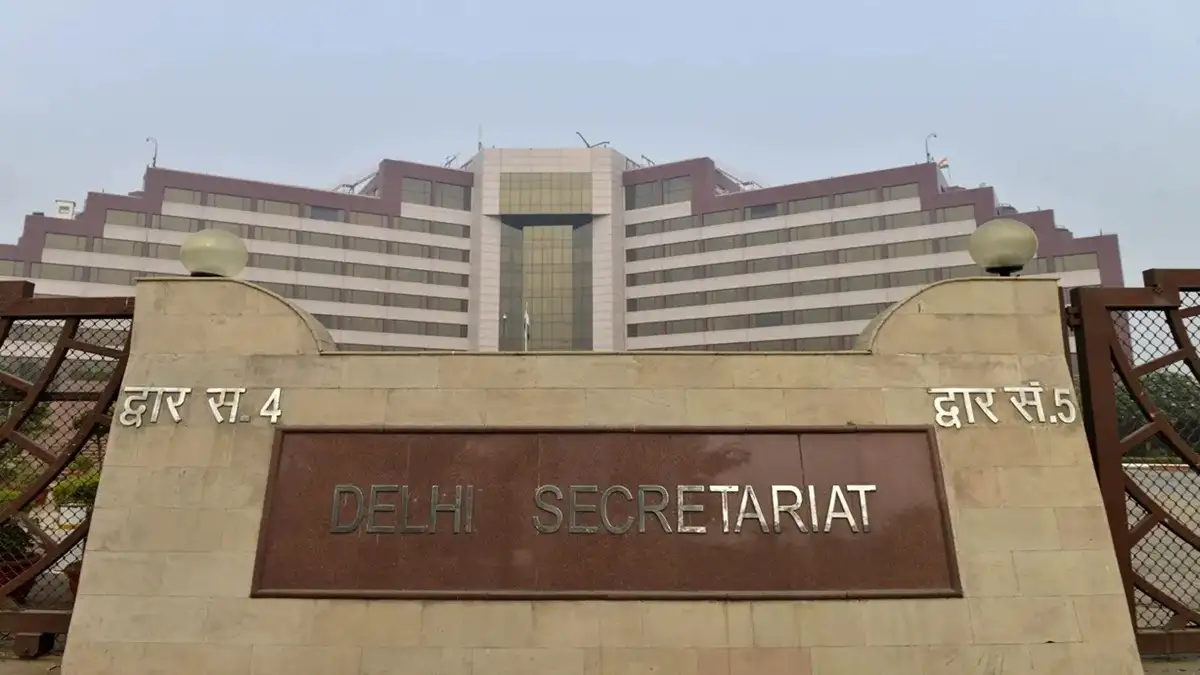
New Delhi’s urban future appears poised for a significant shift, following a high-level strategic meeting between the Union Minister for Housing and Urban Affairs and the Delhi Chief Minister at the city’s administrative core—the Delhi Secretariat.
The meeting, which included senior ministry officials and the full cabinet of the state government, marked a crucial convergence of central and local leadership focused on reviving Delhi’s urban infrastructure, resolving inter-departmental deadlocks, and setting a sustainable course for the National Capital. For the first time in recent administrative memory, a Union minister from the housing and urban affairs portfolio conducted such a comprehensive policy engagement within the Secretariat premises. This physical setting, symbolic of a collaborative intent, served as the backdrop for deliberations on some of Delhi’s most persistent civic challenges—ranging from inadequate water supply and traffic congestion to complex land acquisition and stalled urban planning initiatives under the Delhi Development Authority (DDA).
Sources close to the meeting confirmed that several long-pending bottlenecks affecting key infrastructure projects were discussed in detail. The Union Minister reportedly underscored the need for a synchronised approach to overcome bureaucratic hurdles that have hampered Delhi’s evolution into a globally benchmarked capital city. “A positive and coordinated approach was agreed upon to resolve pending issues from the previous government,” the Minister later stated via social media, hinting at a shift from reactive to proactive governance. The discussions come as the BJP-led city administration crosses the 100-day mark since assuming power in Delhi, with the ruling dispensation eager to translate electoral promises into measurable outcomes. Taking full control of the Municipal Corporation of Delhi earlier this year had given the government critical administrative bandwidth. However, transforming that leverage into real-world change has demanded clear lines of communication between municipal, state, and central agencies—a challenge that Friday’s meeting appeared intent on resolving.
Chief Minister who chaired the dialogue from the state’s end, described the session as “historic” and “constructive.” She indicated that all major stakeholders, including the DDA and senior MoHUA bureaucrats, aligned on a blueprint that will now fast-track crucial initiatives. “All the long-pending issues concerning Delhi were thoroughly addressed today,” she said. “We worked together with senior officials to create a framework aimed at resolving these longstanding problems. This marks the beginning of a new phase of development for Delhi.” At the core of the discussion was a relook at the functioning of the DDA, which continues to be a pivotal but often contentious player in Delhi’s urban landscape. Officials have long criticised the lack of coordination between the DDA and elected city bodies, which has led to critical delays in implementing housing, mobility, and public amenities projects. The need to digitise and decentralise the DDA’s workflow—particularly in land use conversion, property registration, and green zoning—was raised as a top priority, according to insiders present during the deliberation.
Closely tied to land reform is the city’s mounting traffic crisis. Delhi, despite having a growing metro rail footprint, still grapples with vehicle congestion and pollution—issues that both the central and state leadership now agree must be tackled through integrated transport planning. The proposed resolution involves building greater synergy between Delhi’s metro expansions, last-mile connectivity, and pedestrian-friendly urban design. New corridors of green mobility—such as electric bus fleets and dedicated cycling lanes—are likely to be considered in upcoming policy announcements. Another area receiving immediate attention is the capital’s fragile water infrastructure. As climate volatility grows, Delhi’s dependence on neighbouring states for raw water remains a point of vulnerability. The meeting explored new options, including decentralised rainwater harvesting, water recycling technologies, and long-term investment in piped water distribution across underserved colonies.
In line with the broader national goal of creating carbon-neutral cities, environmental sustainability was reportedly a key pillar in the framework discussed. Participants reaffirmed commitments to greening public spaces, retrofitting older buildings with energy-efficient solutions, and prioritising zero-emission construction methods for new housing and public infrastructure. For the Delhi government, which has promised a ‘world-class’ living environment for its residents, aligning growth with ecological responsibility now appears not just aspirational but essential. Urban policy observers believe that the real test will lie in execution. While the meeting signals intent, Delhi’s institutional complexity—with overlapping jurisdictions and frequent turf disputes—remains a hurdle. Previous reform initiatives have often been stymied by legal ambiguities and misaligned governance. However, the combined presence of the Union Minister, senior secretaries, and state cabinet members at a single planning table may mark a new chapter in cooperative federalism at the city scale.
In the months ahead, stakeholders and citizens alike will watch closely for visible signs of improvement. The city’s landscape—marked by pockets of unchecked construction, snarled roads, and inequitable housing—requires more than just visionary talk. Implementation must reflect the urgency of Delhi’s realities: a city that bears the weight of being India’s political, cultural, and administrative heart, while also struggling under the pressures of rapid urbanisation. As the meeting concluded, there was cautious optimism among observers. While the leadership refrained from making sweeping policy declarations, the decision to meet on neutral ground and engage directly on complex matters signalled a renewed political will. For Delhi, a city too often caught in bureaucratic impasses, that alone may be the most important development of all.
Also Read : South Delhi Braces for Flood Risk as Drains Lag
