


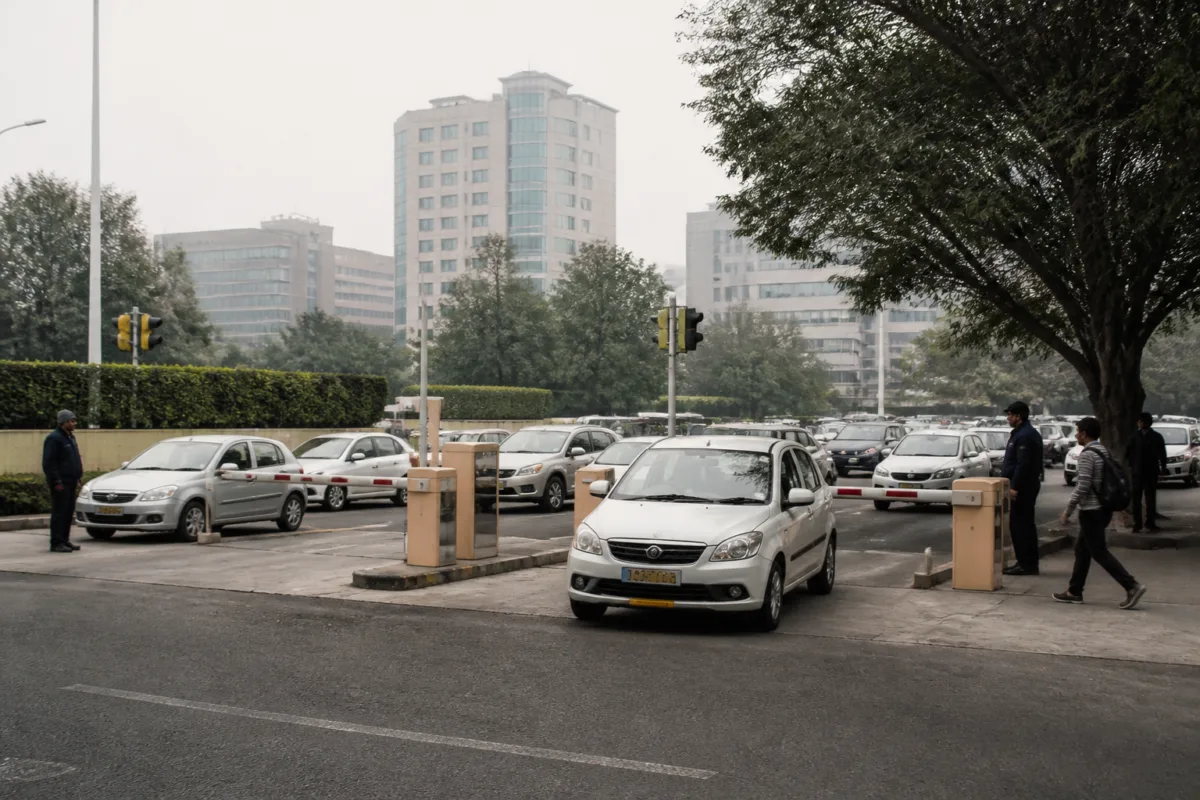
The New Delhi Municipal Council (NDMC) has doubled parking charges at its parking lots from November 1 to February 28, 2027, in a move intended to discourage private vehicle use and support efforts to tackle air pollution in the national capital.
The revised rates will apply during the four-month period or until Stage II of the Graded Response Action Plan (GRAP) is implemented, whichever is earlier, according to a public notice issued by the NDMC’s Parking Management System Department.
The decision places parking policy alongside other emergency measures used during Delhi’s pollution season. By increasing the cost of parking, the civic body is seeking to influence how residents travel to and move within areas under its administration. The notice, as reported by Millennium Post, does not provide details of the earlier rates or specify the revised charge for each parking facility.
The measure covers NDMC parking lots and is effective from November 1. It is scheduled to remain in place until February 28, 2027, unless Stage II of GRAP is implemented earlier. The public notice therefore links the duration of the parking surcharge to both a fixed seasonal window and the escalation of the city’s pollution-control response.
GRAP is the framework through which authorities introduce progressively stricter measures when air quality deteriorates. In this case, the NDMC has tied the continuation of the revised parking rates to the implementation of Stage II, making the parking decision conditional on the timing of that wider response mechanism.
The announcement also highlights the role of municipal parking systems in Delhi’s pollution-control strategy. Parking charges are normally used to manage demand for limited public space and recover the cost of operating parking facilities. Under the NDMC notice, the same system is being used as a short-term transport intervention during the pollution period.
For motorists using NDMC parking lots, the immediate effect is a higher cost of leaving private vehicles in those facilities. The supplied notice does not state whether the NDMC has announced corresponding changes to public transport services, parking availability, enforcement arrangements or exemptions. It also does not specify whether the revised rates apply uniformly across all parking lots or vary by facility.
The period covered by the order includes the months in which Delhi’s air pollution typically receives heightened administrative attention. However, the public notice, as described in the report, does not quantify the expected reduction in private vehicle use or identify a specific air-quality target associated with the charge increase.
The NDMC’s Parking Management System Department is the issuing authority for the notice. The next operational milestone is the continuation of the revised rates through the notified period, subject to the earlier implementation of Stage II of GRAP.

