


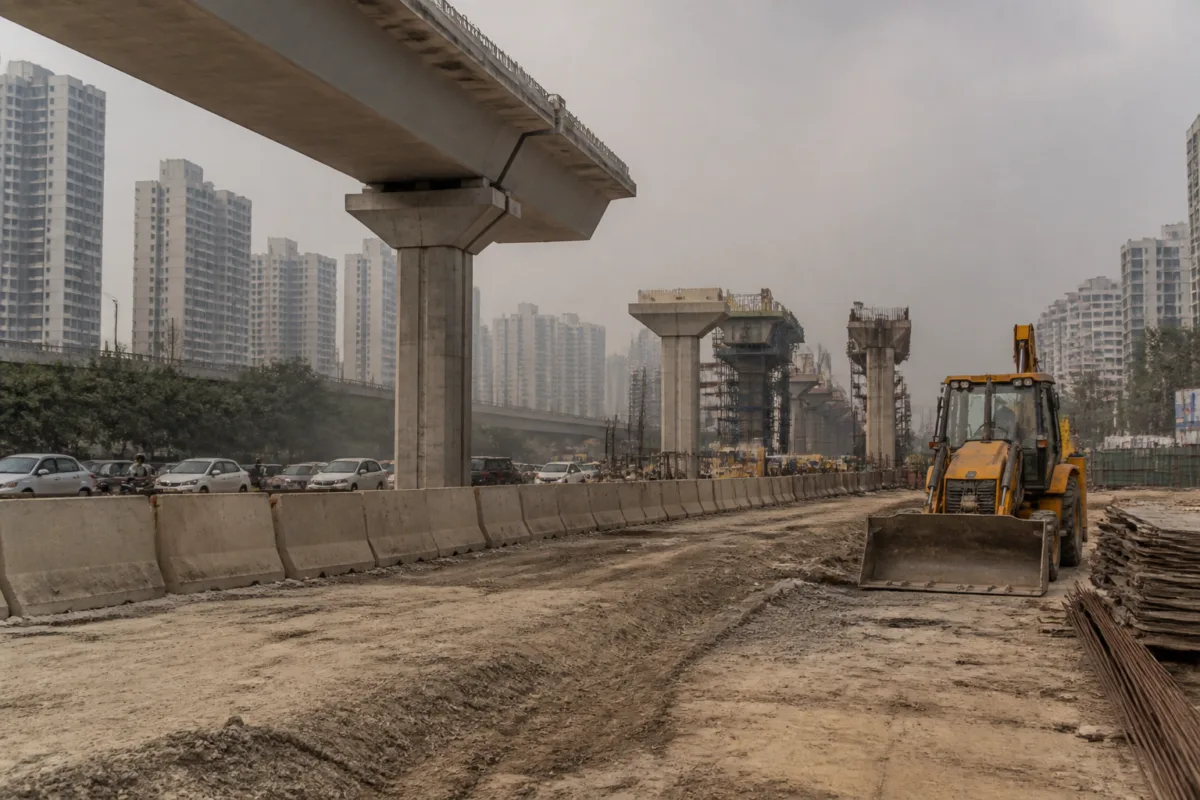
Noida has halted construction activity from 5 to 20 November as part of pollution-control measures, putting work on the Chilla Elevated Road, a Sector 62 skywalk, Yamuna embankment repairs and at least four other public projects at risk of further delays.
The restriction covers construction activities across the city, particularly work that generates dust and smoke. The affected projects include the Chilla Elevated Road, Yamuna embankment repair, the skywalk under construction at the Sector 62 roundabout, and two bridges being built over a drain in Salarpur.
Work on the Japanese Park in Sector 94, beautification of D-Park in Sector 62 and repairs to damaged roads across Noida will also be temporarily affected, according to the report. Several of these projects are already behind their scheduled timelines, raising the possibility that the pollution-control pause will extend the wait for residents to receive the intended transport, drainage and public-space benefits.
Noida Authority General Manager S.P. Singh said many development works were under way in the city and that excavation was taking place at most of the sites. He said stricter action would be taken against activities producing dust and smoke, with compliance at construction sites to be enforced to prevent operations that could worsen pollution.
The Chilla Elevated Road is being built to ease congestion on the Film City route. The Sector 62 skywalk is intended to improve pedestrian movement at one of the city’s busy junctions. In Salarpur, two bridges are being constructed over a drain, while the Yamuna embankment repair is intended to address work along the river edge. The other projects cover landscaping, public-space improvements and road maintenance.
The 15-day restriction comes as Noida manages the conflict between pollution-control requirements and the delivery of infrastructure that is itself intended to address persistent urban problems. A construction pause can limit dust and emissions from excavation and related activity, but it also interrupts project schedules, particularly where work is already behind plan.
The ban is scheduled to end on 20 November. However, the report said a return to normal construction activity cannot be assumed if air quality deteriorates again. It also cited the possibility that similar restrictions could continue until January, which would push the completion timelines of the affected projects further back. The continuation of restrictions will depend on pollution levels and subsequent directions from the authorities.

