


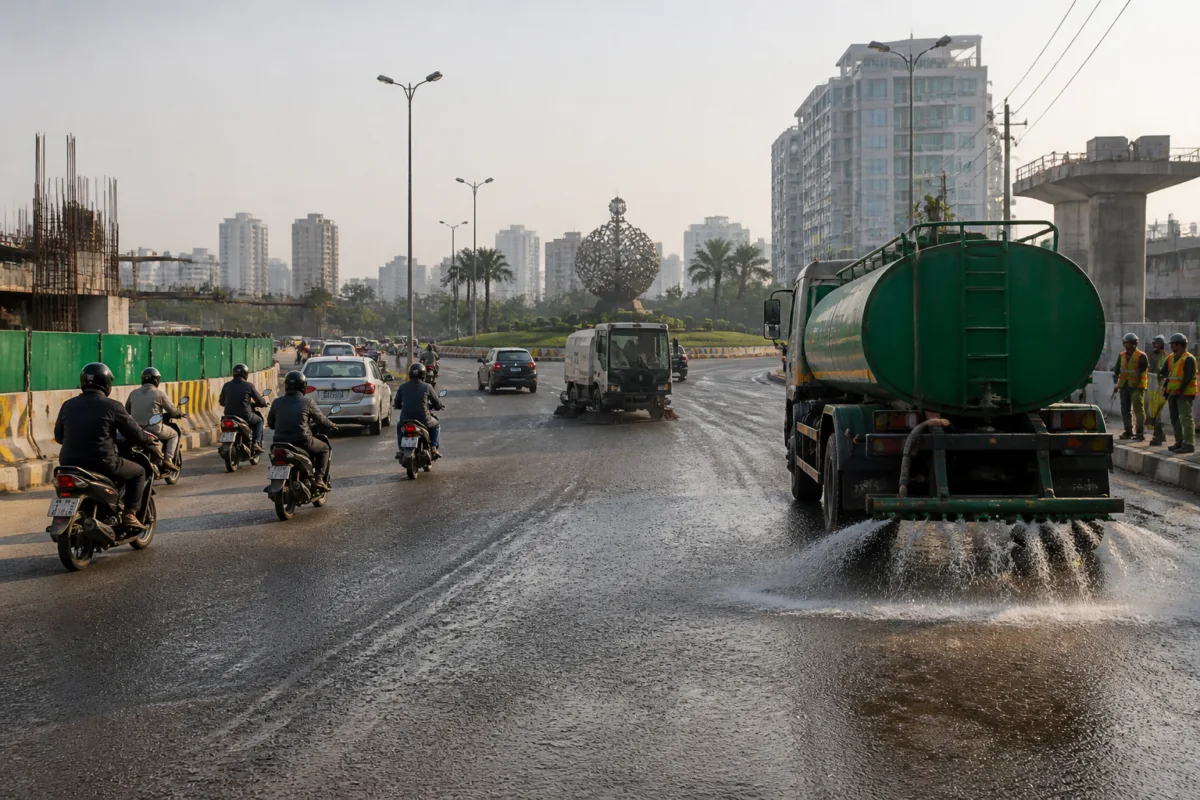
The Greater Noida Industrial Development Authority (GNIDA) is preparing a two-month campaign to control air pollution at 11 identified hotspots, with road cleaning, water sprinkling and dust-control measures under regular monitoring, according to Navbharat Times.
The decision was taken at a review meeting on 27 November chaired by GNIDA chief executive officer Dr Balkar Singh. The authority has appointed nodal officers for each hotspot and directed officials to conduct inspections and submit action reports.
The locations identified by the Uttar Pradesh Pollution Control Board include the Gaur Chowk underpass, Makoda roundabout, Tilpata roundabout and the stretch from ACE roundabout to the 130 Metre Road. The CRPF Camp–Phase Two Noida Road is also among the listed locations. Road dust, damaged roads and construction activity were cited as major pollution sources.
GNIDA said 21 teams had been formed for pollution-control work. It is using 107 water tankers and 32 trucks and anti-smog guns to spray water on dust-affected roads and locations. Fourteen mechanical sweeping machines have also been deployed. Officials have been asked to maintain before-and-after photographic records to track the work.
The authority said fines totalling ₹5.28 crore had been imposed on 100 people for pollution and violations of Graded Response Action Plan rules in 2026. This included ₹48.10 lakh in 36 construction-related cases and ₹4.65 crore in 48 cases involving ready-mix concrete plants. Three cases of waste burning accounted for ₹2.25 lakh, while 13 other cases accounted for ₹12.70 lakh. GNIDA directed officials to recover the penalties and issue recovery certificates against defaulters.
The authority also reported that 247 anti-smog guns had been installed at construction sites. Inspections, proper barricading and wheel-washing facilities were ordered. GNIDA has additionally identified 56 garbage-vulnerable points for cleaning and beautification, while directing markets and public places to improve waste disposal and promote composting of horticultural waste.

