


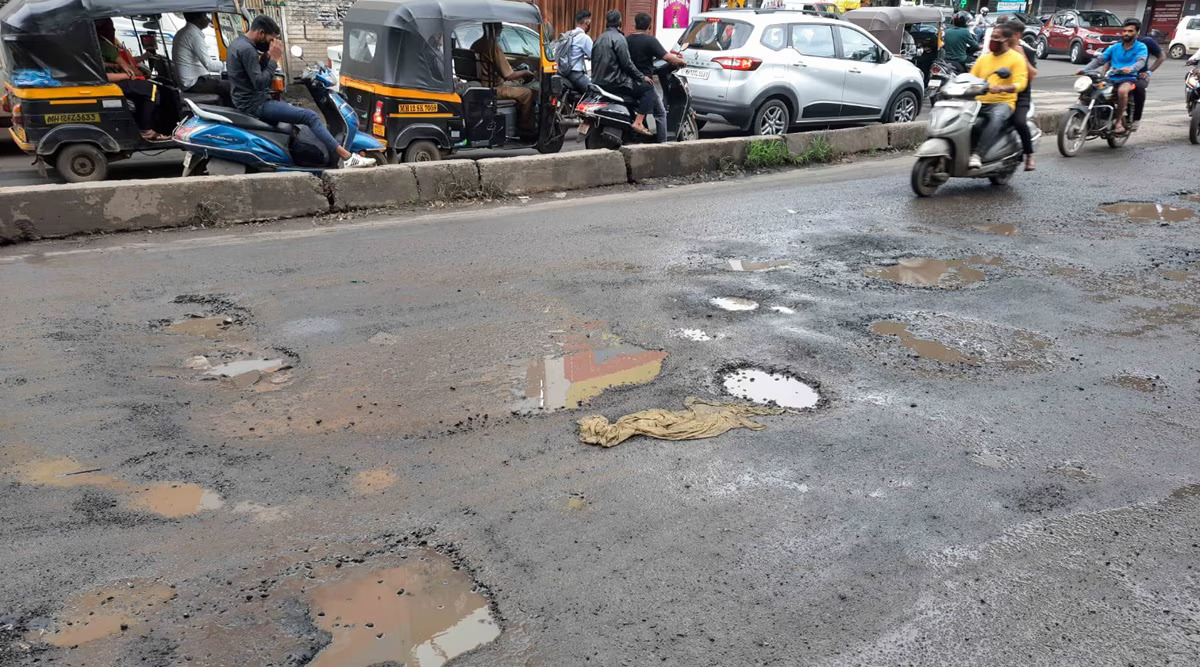
Navi Mumbai residents in Kharghar staged a protest on Tuesday, halting ongoing road resurfacing along the Utsav Chowk–Tata Hospital stretch, citing repeated pothole formation despite recent repairs. The residents, represented by a local citizen forum, criticised the Panvel City Municipal Corporation (PCMC) for relying on temporary patchwork rather than delivering durable road solutions.
According to civic observers, the stretch in question has developed recurring potholes in the same locations annually for nearly eight years. Citizens allege that these recurring damages are symptomatic of poor-quality resurfacing and lack of coordination in municipal project planning. Repeated expenditure on short-term fixes has triggered public frustration over ineffective infrastructure investment. The protest followed complaints regarding roadwork executed after state Assembly elections, worth an estimated Rs 200–300 crore. Residents highlighted that even well-constructed roads originally developed under CIDCO supervision have deteriorated due to substandard resurfacing conducted by multiple contractors. Civic experts note that such repeated interventions not only compromise road longevity but also raise concerns about public fund management and potential conflicts of interest.
In response to the demonstration, municipal officials engaged with residents at the site, assuring that further work would prioritise comprehensive resurfacing instead of piecemeal patching. Citizens, however, demanded independent expert audits of all Kharghar roads, legal accountability for contractors and officials responsible for repeated damages, and full transparency in future tendering processes. Urban planning experts stress that recurring potholes undermine mobility, increase vehicle maintenance costs, and compromise road safety. They argue that durable road solutions, including proper sub-surface construction, quality materials, and modern repair technologies, are essential to prevent repeated municipal expenditure. Implementing sustainable road infrastructure aligns with broader goals of zero net carbon and equitable urban development, ensuring long-term benefits for commuters and residents.
Residents also underscored the need for transparency in civic project execution, emphasising that public involvement and scrutiny can enhance accountability and reduce waste. They warned that protests and civic mobilisation would continue until effective, permanent road repair measures are instituted. The Kharghar case highlights a broader challenge faced by rapidly urbanising cities: balancing rapid infrastructure development with quality and sustainability. With recurring potholes affecting daily commutes and safety, municipal authorities are now under pressure to adopt long-term, sustainable solutions to safeguard public investments and maintain citizen trust.
Also Read : Navi Mumbai NGO Urges NMMC To Install Common Utility Ducts Roads
