


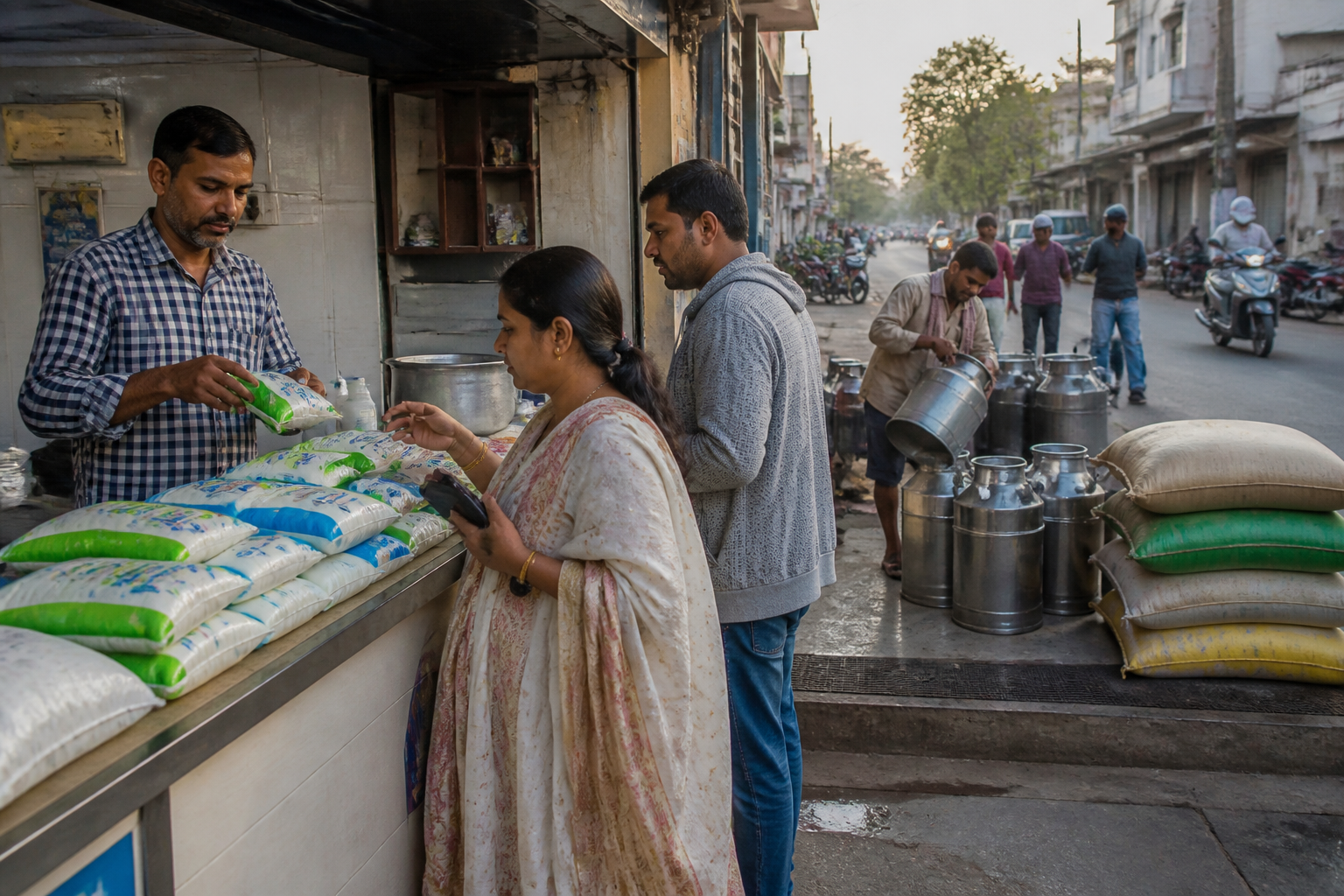
Karnataka’s cooperative milk producers’ federations have sought an ₹8–₹10 per litre increase in Nandini milk procurement and retail prices, citing rising cattle-feed, fodder, veterinary and maintenance costs. A delegation met Chief Minister D.K. Shivakumar at Vidhana Soudha on Tuesday and submitted the request.
The delegation asked the state to raise both the price paid to producers and the maximum retail price of Nandini milk. Bengaluru Milk Union Limited (BAMUL) president D.K. Suresh said dairy farmers were facing higher operating costs while reduced crop yields and fodder availability during the current drought had weakened farm incomes.
Suresh said the cost of cattle feed, fodder, medicines and other inputs had increased continuously, raising the expense of producing milk. He also said farmers were under pressure because agricultural income had declined and fodder had become less available.
According to the report, Karnataka’s cooperative unions have not increased milk prices for around one and a half years, even as cooperative institutions and private dairies in several states have raised prices for milk and milk products. The delegation said private companies were attempting to procure more milk, increasing competition for the cooperative unions.
The delegation said Karnataka currently pays producers ₹35 per litre for toned milk. It compared this with procurement prices cited for Andhra Pradesh, Kerala, Maharashtra and Tamil Nadu. The report stated that the figures were ₹41.5 in Andhra Pradesh, ₹41.8 in Kerala, ₹4 in Maharashtra and ₹42.24 in Tamil Nadu. The Maharashtra figure was reported as ₹4 and was not separately clarified in the supplied report.
The delegation also said Karnataka’s maximum retail price for milk was at least ₹12 per litre lower than prices in neighbouring states. It argued that the proposed revision was necessary to retain milk producers and protect the cooperative procurement network while addressing higher production costs.
Shivakumar directed officials to submit comprehensive information before any decision is taken. The requested assessment is to cover the increase in cattle-feed prices over the past 10 years, the cost of producing one litre of milk, the quantity of milk sold outside the cooperative system in each district, the volume procured by the unions, and comparative procurement and retail prices in neighbouring states.
