


Nagpur’s slum works programme is facing a funding and allocation problem after municipal records showed that 162 projects worth Rs 12.71 crore received administrative approval across 26 wards between April 1 and October 1, while proposals recommended under the programme were valued at nearly Rs 55 crore against a budgetary provision of about Rs 35 crore.
The ward represented by Laxmi Hattithele, chairperson of the Nagpur Municipal Corporation’s (NMC) Durbal Ghatak, or Weaker Sections, Committee, received the highest number of approved works during the period. Ward 5 received administrative approval for 18 works worth Rs 1.40 crore, according to records accessed by the Times of India.
Ward 1 followed with 16 works valued at Rs 1.29 crore. Ward 13 received 12 works worth Rs 1.16 crore, while Ward 11 received 11 works valued at Rs 84.45 lakh. Ward 4 received eight works worth Rs 79.49 lakh. Ward 16, represented by standing committee chairperson Shivani Dani Wakhare, received 11 works worth Rs 74.90 lakh, valued at Rs 74.90 lakh.
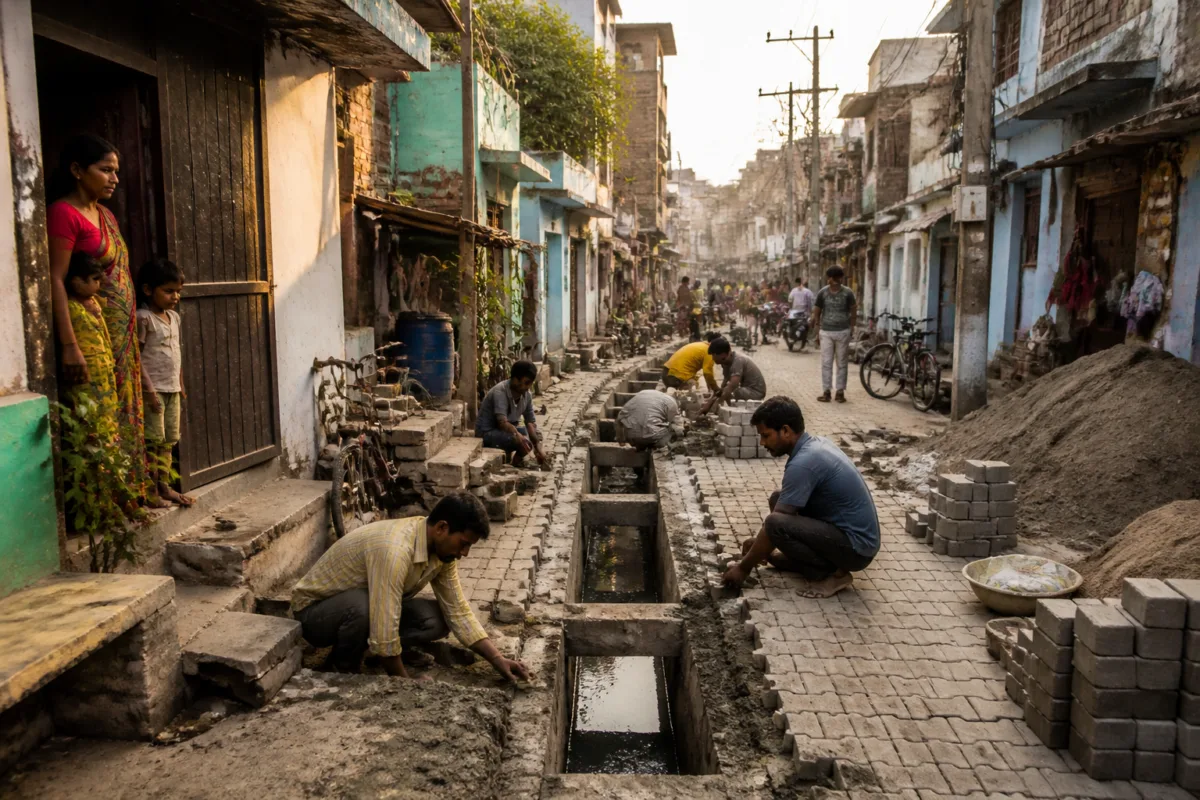
The approved works primarily involve local infrastructure in slum settlements, including cement-concrete flooring, sewer lines, stormwater drains, paving blocks, road repairs and chamber maintenance. These projects are typically small-scale interventions, but their distribution determines which neighbourhoods receive improvements to access, drainage and sanitation infrastructure.
Ward 15 had the lowest allocation in the administrative approval list, with one work valued at Rs 4.94 lakh. Twelve wards did not appear in the list of approved works for the period.
The distribution has come under scrutiny as the committee’s recommendations were substantially higher than the available provision. Hattithele issued recommendation letters for 521 works worth Rs 39.31 crore between April and October, according to official records cited in the report. Of these, 401 works worth Rs 30.97 crore were uploaded to the NMC’s work module and converted into proposals. Another 120 works worth Rs 8.34 crore had not been uploaded.
The gap between recommendations, proposals, approvals and executed works is significant. Only nine works, valued at Rs 60 lakh, had received work orders at the time of the report. Administrative approval does not by itself establish that a project has been awarded or completed, making the work-order figure a more limited indicator of implementation.
Civic officials estimated that about Rs 7 crore would be required for cement, drain and paving-block works. With Rs 25 crore available under the committee’s allocation, officials said an additional Rs 15 crore from other budget heads could be needed to accommodate the proposed works and regularise the allocation process.
On November 17, Hattithele wrote to municipal commissioner Vipin Itankar seeking cancellation of all allocation letters and fresh scrutiny of the proposals. She told reporters that the administration had not yet responded and that she would convene a committee meeting to decide the next course of action.
The immediate civic issue is therefore not only the total amount available, but also how projects move through the municipal approval chain. The records cited in the report show a wide difference between recommendations and work orders, as well as uneven representation of wards in the administrative approval list. Any fresh scrutiny will need to establish which proposals meet the programme’s criteria, whether the works are technically and financially viable, and how projects should be prioritised within the available budget.
Until that process is completed, residents in wards without approvals may face uncertainty over basic works such as drainage, sewer connections, road repairs and surface improvements, while projects already approved remain subject to funding and execution decisions.

