


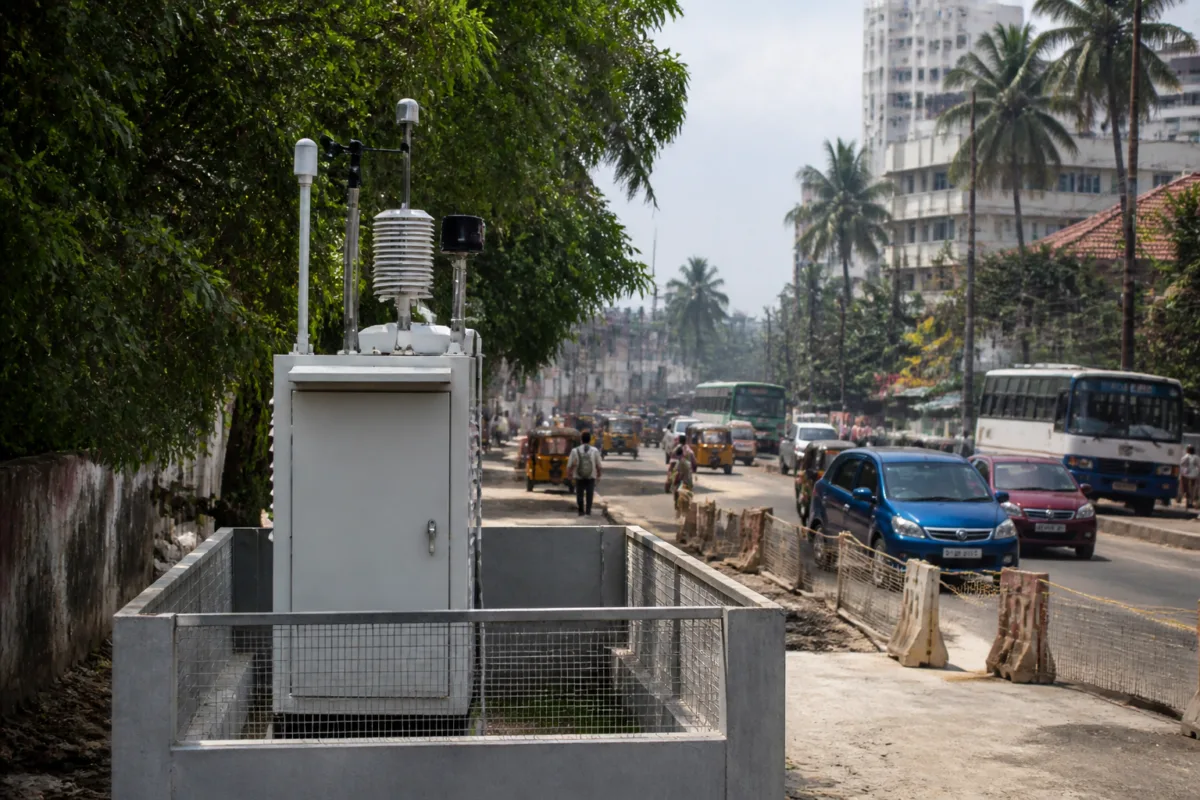
Kerala has constituted a three-member expert committee to examine why air-quality index (AQI) figures reported for Kochi and Thiruvananthapuram differ across monitoring systems, with the panel directed to submit its report within two weeks.
The Environment Department issued the order on November 18, citing growing concern over deteriorating air quality across the country and the risks facing rapidly urbanising Kerala. It said recent data from different sources for the two cities had shown discrepancies, raising public concern.
The chairperson of the Kerala State Pollution Control Board (KSPCB) will convene the committee. Its other members are Suresh Ramasubramanya Iyer, senior fellow and area convener at the Centre for Air Quality Research at The Energy and Resources Institute in New Delhi, and George K Varghese, a professor in the civil engineering department of the National Institute of Technology-Calicut.
The panel will study air-quality trends in Kochi and Thiruvananthapuram over the past few years. Its review will cover AQI and key pollutants, including PM2.5, PM10, nitrogen dioxide, sulphur dioxide and ozone, along with seasonal and location-based variations.
It will also examine why figures reported by the Central Pollution Control Board, KSPCB, other official monitoring stations, satellite-based systems and private or low-cost sensors do not match. The committee has been asked to recommend a single authoritative reference for the KSPCB.
The review will assess the existing monitoring network, including the siting and coverage of stations, calibration, maintenance and data validation. These factors determine how accurately monitoring systems represent pollution levels in different parts of a city and how reliably residents can interpret public AQI information.
The committee will identify major pollution sources in the two cities, including vehicle emissions, construction and road dust, waste burning, industrial activity and port or airport operations. It will recommend short- and long-term measures for state agencies.
The panel will also suggest a protocol for transparent public communication, including real-time AQI displays and advisories. KSPCB will provide secretarial assistance and has been asked to submit a proposal covering the committee’s sitting fees and other expenses.
The committee’s report is expected to address both the technical causes of the conflicting readings and the institutional process for publishing air-quality information. Until a common reference and communication protocol are established, differing AQI figures can make it difficult for residents and public agencies to interpret pollution conditions consistently.

