


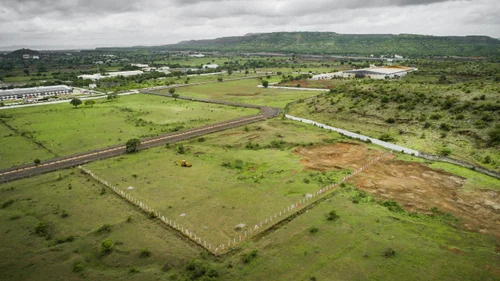
Nagpur’s municipal administration has identified 410 land parcels across the city for the development of new public marketplaces, a move aimed at strengthening neighbourhood commerce and improving organised retail infrastructure within rapidly growing urban zones. The initiative forms part of a broader Nagpur market infrastructure plan designed to accommodate expanding populations, support small traders and reduce congestion in existing informal market clusters. Urban authorities began mapping potential sites after policy discussions highlighted the need for more organised commercial spaces across the city. Officials involved in the exercise say the Nagpur market infrastructure plan focuses on underutilised municipal land that can be repurposed for structured retail markets while ensuring accessibility for residents in different neighbourhoods.
The proposal comes at a time when Nagpur is experiencing sustained urban growth driven by logistics expansion, real estate development and improved regional connectivity. As residential areas spread outward, the demand for accessible local marketplaces has increased. Urban planners note that the absence of planned retail spaces often leads to unregulated roadside markets that strain traffic corridors and civic infrastructure. Under the emerging Nagpur market infrastructure plan, civic authorities aim to distribute market spaces across multiple zones of the city to ensure that essential goods and everyday services are available within walking distance for residents. Such neighbourhood markets can reduce travel distances for daily purchases and support more sustainable urban mobility patterns. Municipal officials say the next stage involves evaluating each identified plot for feasibility, including land ownership verification, infrastructure requirements and integration with local transport networks. Some sites may require redesigning surrounding road infrastructure, pedestrian access or utility connections before development can begin. Urban development experts emphasise that organised markets play a critical role in inclusive city economies. Street vendors, small retailers and local producers often depend on such spaces to operate legally and safely. Well-designed markets can provide structured stalls, sanitation facilities and waste management systems while protecting the livelihoods of informal sector workers. The Nagpur market infrastructure plan also reflects a growing recognition among city planners that retail infrastructure is a key component of liveable urban neighbourhoods. When markets are distributed strategically, they help reduce overcrowding in central commercial districts and enable more balanced economic activity across the city. Environmental planners also highlight the potential sustainability benefits of neighbourhood markets. By locating everyday retail close to residential communities, cities can reduce dependence on long-distance travel for daily goods. This can lower traffic congestion and associated emissions while improving pedestrian accessibility.
While the identification of land parcels represents an early step, officials say further consultations will determine how the sites are developed. Some locations may be converted into traditional vegetable and produce markets, while others could support mixed-use retail hubs serving growing residential areas. If implemented effectively, the Nagpur market infrastructure plan could reshape how neighbourhood commerce functions across the city. The initiative signals a shift toward integrating economic activity more deliberately into urban planning, ensuring that future growth supports both local livelihoods and sustainable city development.
ALSO READ – Indore SEZ Export Growth Signals Industrial Momentum
Nagpur Market Development Plan Targets 410 Urban Plots
