


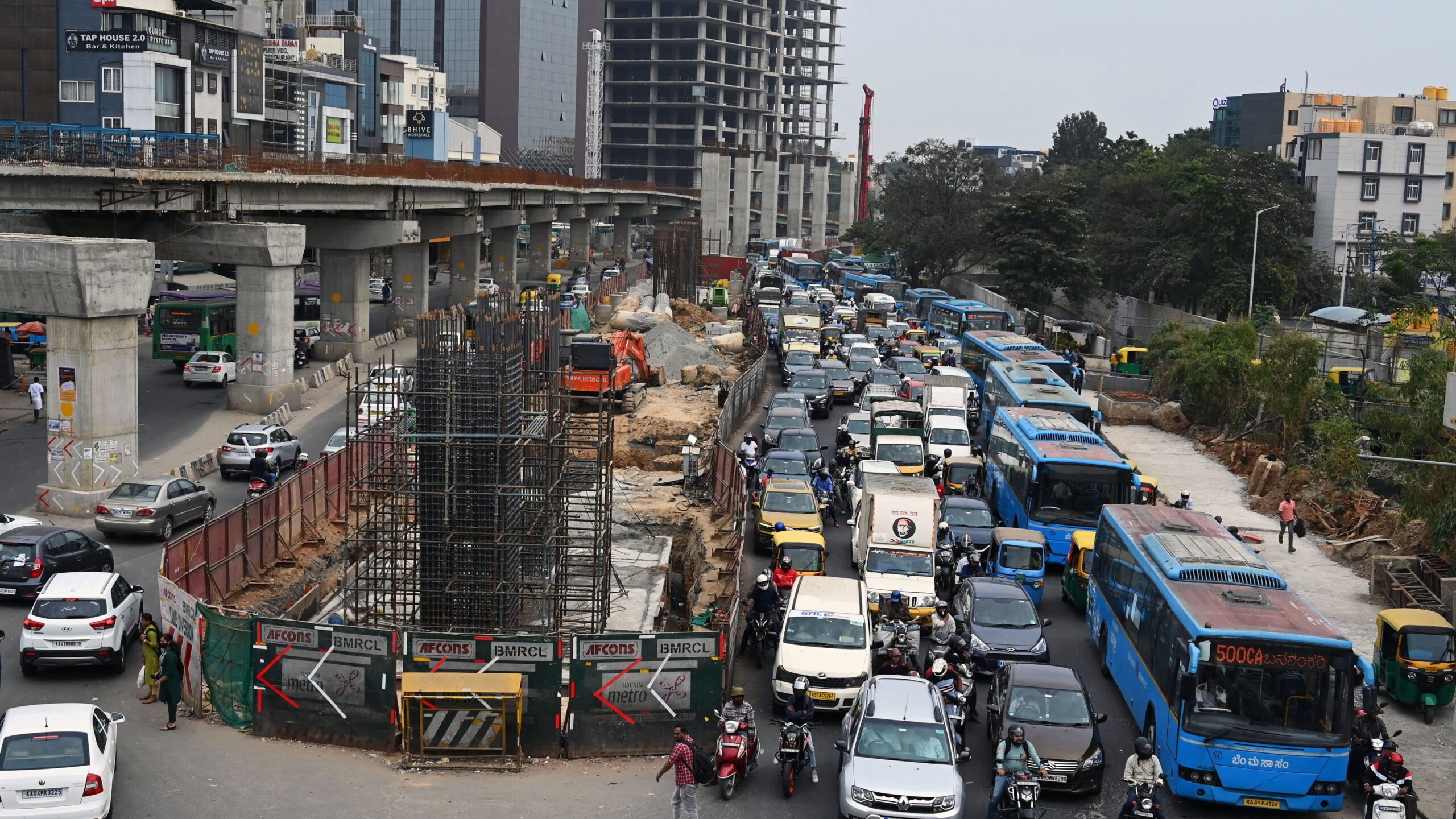
A major road infrastructure upgrade at one of Bengaluru’s busiest traffic intersections is expected to trigger months of congestion and commuter disruption as underpass construction begins in a critical mobility corridor already struggling with heavy vehicle movement.Civic authorities have initiated work on the junction improvement project as part of broader efforts to ease long-term traffic bottlenecks in the rapidly expanding metropolitan region.
However, transport planners warn that the construction phase could significantly affect daily travel patterns, with diversions and lane restrictions likely to intensify congestion for commuters, freight operators, and public transport users over the coming months.The Bengaluru underpass project reflects the growing infrastructure pressures confronting India’s technology capital, where rapid urbanisation and rising vehicle ownership continue to outpace transport capacity.Several major junctions across the city now operate under chronic peak-hour stress, particularly in corridors connecting residential suburbs with commercial and technology districts.Urban mobility experts say Bengaluru’s recurring congestion crisis cannot be addressed solely through grade separators and flyovers. While underpasses may improve vehicle flow at specific choke points, researchers caution that isolated road expansion projects often provide temporary relief unless integrated with broader public transport and land-use reforms.The affected junction has long been identified as a critical pressure point within Bengaluru’s traffic network, with commuters routinely facing delays stretching across multiple kilometres during peak hours. The latest construction activity is expected to worsen travel conditions in the short term, particularly during monsoon periods when waterlogging and road narrowing further reduce traffic efficiency.
Transport analysts argue that Bengaluru’s infrastructure model remains heavily road-centric despite growing evidence that sustainable urban mobility requires stronger investment in mass transit, pedestrian systems, and multimodal connectivity. The city’s expanding metro network has improved mobility in several corridors, yet dependence on private vehicles remains high due to fragmented last-mile access and uneven public transport coverage.The Bengaluru underpass project also highlights the economic cost of prolonged infrastructure execution. Businesses operating along major transport corridors often experience reduced accessibility, logistical delays, and productivity losses during extended construction periods.Environmental planners further note that continuous road expansion without ecological safeguards can intensify heat retention, stormwater runoff, and emissions in dense urban areas. Sustainable infrastructure specialists increasingly advocate for climate-responsive transport planning that combines mobility upgrades with green buffers, improved drainage systems, and walkable public spaces.For residents and daily commuters, the coming months are likely to test the resilience of Bengaluru’s already strained transport ecosystem.
While authorities present the project as a long-term congestion mitigation measure, many urban observers believe the city’s mobility future will depend less on isolated road engineering and more on whether Bengaluru can transition toward integrated, public transport-led urban planning.As construction progresses, the challenge for policymakers will be balancing immediate commuter disruption with the broader need for sustainable and efficient mobility infrastructure in one of India’s fastest-growing urban economies.
Also Read:Bengaluru Mysuru Bullet Rail Plan Gains Attention
