


A social media post highlighting a dusty and unfinished pedestrian route near some of Bengaluru’s largest technology campuses has renewed scrutiny over the widening infrastructure divide within India’s leading digital economy hub.The images, which circulated widely online this week, showed commuters navigating an unpaved stretch close to major office clusters in the city’s eastern technology corridor.
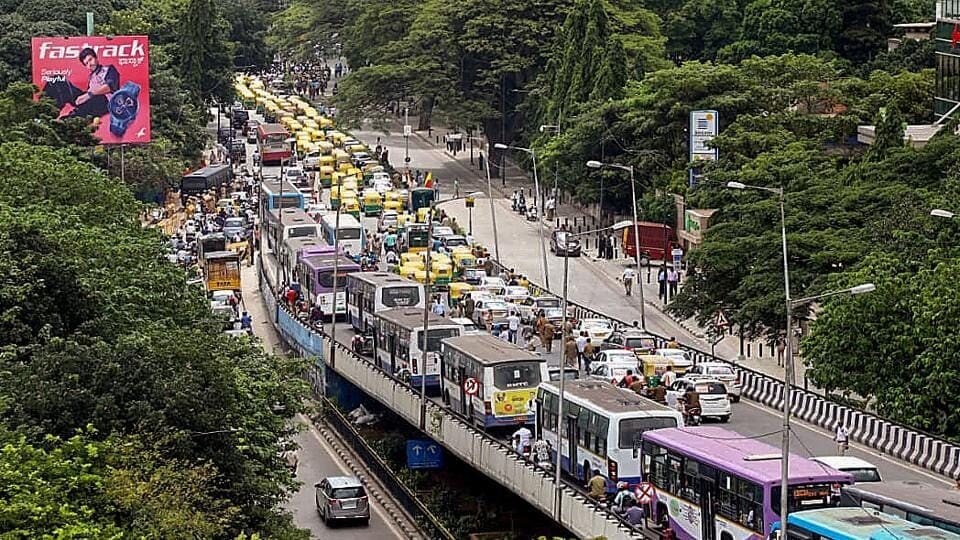
The episode has reignited debate over how Bengaluru’s rapid commercial growth continues to outpace the development of basic public infrastructure, particularly in high-density employment zones.Urban planners say the situation reflects a recurring challenge in Bengaluru’s expansion model, where private investment and office development have accelerated faster than civic infrastructure delivery. Despite housing some of India’s most valuable technology firms and startup ecosystems, several business districts continue to struggle with inadequate pedestrian access, poor drainage, broken roads, and inconsistent last-mile connectivity.The Bengaluru infrastructure gap has become increasingly visible as the city absorbs sustained migration and commercial expansion. Large office corridors that employ thousands of workers daily often rely on overstretched road networks and fragmented public spaces, forcing pedestrians to navigate unsafe or incomplete routes during peak hours.Mobility experts note that walkability remains one of the weakest aspects of urban planning across Indian technology hubs. In Bengaluru, footpaths are frequently encroached upon, disconnected, or absent altogether, limiting safe access to bus stops, metro stations, and workplaces.
The issue becomes more severe during monsoon periods, when unfinished surfaces and poor drainage create hazardous commuting conditions.Environmental and public health researchers argue that dusty, vehicle-dominated corridors also contribute to declining air quality and increased commuter stress. They stress that sustainable urban growth requires cities to prioritise pedestrian infrastructure, shaded public pathways, and integrated transport planning alongside commercial real estate expansion.The concerns arrive at a time when Bengaluru is positioning itself as a global innovation and investment destination. Urban governance specialists warn that persistent gaps in public infrastructure could gradually affect the city’s competitiveness by increasing commute inefficiencies and reducing quality of life for workers.Experts further point out that infrastructure inequality within economic zones reflects broader planning challenges in fast-growing Indian cities. While premium office developments continue to expand, surrounding civic systems such as roads, footpaths, stormwater networks, and public transit often remain underfunded or poorly coordinated between agencies.
For residents and daily commuters, the viral images have come to symbolise a deeper contradiction at the heart of Bengaluru’s urban growth story — a globally connected technology economy operating alongside fragile and incomplete public infrastructure.As Bengaluru continues to expand, planners and civic stakeholders are likely to face mounting pressure to ensure that future development focuses not only on attracting investment, but also on creating accessible, safe, and climate-resilient urban environments for the people who sustain the city’s economy.
Also Read:Bengaluru Metro Purple Line Services Face Suspension
