


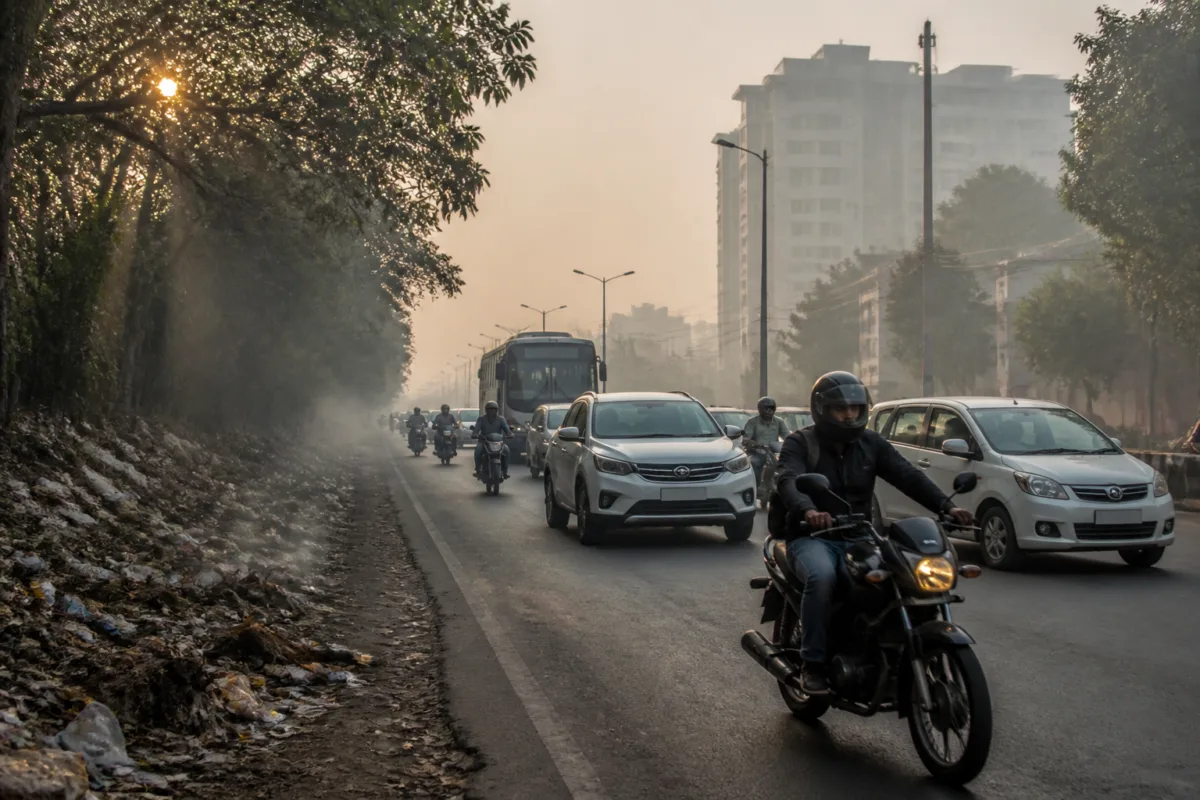
Nagpur’s air quality worsened to an AQI of 114 on October 21, with PM10 levels reaching 148 micrograms per cubic metre at two monitoring stations as dry weather, traffic, open waste burning and cracker emissions added to pollution pressures across the city.
The Central Pollution Control Board’s 4pm bulletin placed Nagpur’s AQI above Mumbai’s 111 and Chandrapur’s 97, though Pune recorded a higher reading of 118. The AQI level was classified as moderate in the report cited by the Times of India.
Pollution control board data showed the highest PM10 readings at Ambazari and Ram Nagar, both at 148 micrograms per cubic metre. Mahal recorded 146 micrograms per cubic metre, while GPO Civil Lines recorded 132 micrograms per cubic metre over the previous 24 hours.
The readings at Ambazari and Ram Nagar were notable because both areas have substantial green cover. The data indicates that local pollution sources and weather conditions can continue to affect air quality even in neighbourhoods with significant vegetation.
Hema Deshpande, regional officer of the Maharashtra Pollution Control Board, attributed the deterioration to several factors, including increased traffic, dry weather, open burning of solid waste and firecracker use. She said falling night temperatures were also contributing to the accumulation of PM10 in the city’s air.
“Enforcing agencies need to implement the graded action plan to bring air quality under control,” Deshpande said, according to the report. The graded action plan is intended to guide authorities in responding to changing pollution levels through measures linked to emission sources and public exposure.
The city’s worsening air quality comes ahead of Diwali, when firecracker emissions could add to particulate pollution. The pollution control board officer also warned that further temperature declines in November could worsen conditions by allowing pollutants to remain concentrated near the ground.
Doctors have reported respiratory effects among children, particularly those with asthma and other existing ailments. Paediatric pulmonologist Dr Vivek Charde said several patients had reported increased coughing and prolonged respiratory infections lasting 10 to 15 days.
“Air pollution particularly affects asthmatic patients. Many are reporting worsening respiratory symptoms, especially an increase in cough intensity,” Charde said. He added that some asthmatic children had to restart inhalers or increase their dosage.
Charde advised patients to avoid dusty environments and said children who had not received an influenza vaccination should consider taking it. His comments point to the immediate health implications of deteriorating air quality, especially for children with respiratory vulnerabilities.
Residents also reported frequent open burning of solid waste, particularly during the morning. AA Khan, a resident of Borgaon, said irregular lifting of dry leaves and plastic waste was forcing citizens and sanitation workers to burn it.
Nagpur Municipal Corporation public health engineering officials did not respond to calls from the Times of India for comments on waste collection and air-quality measures. The next steps depend on enforcement agencies implementing the graded action plan and addressing the sources identified by the pollution control board, including traffic emissions, waste burning and firecracker pollution.

