


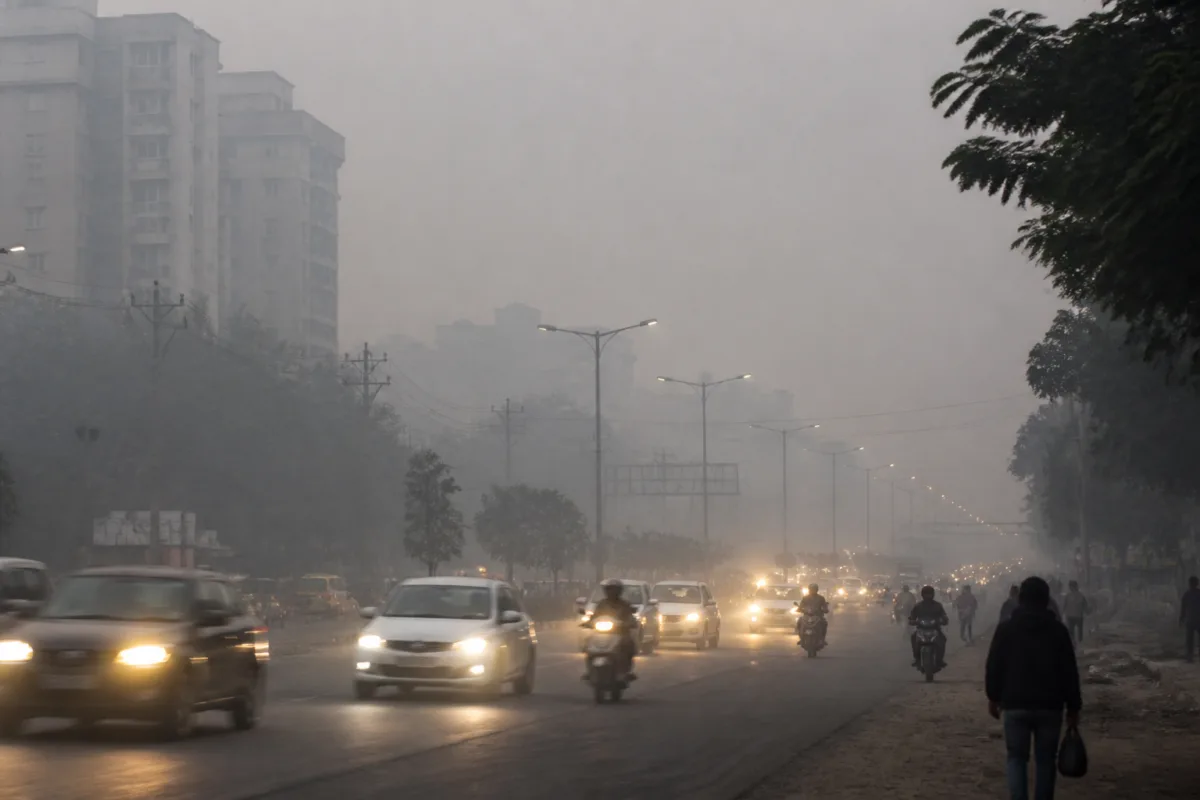
Nagpur’s air pollution reached extreme levels after Diwali celebrations, with PM2.5 and PM10 concentrations touching 500 micrograms per cubic metre at multiple monitoring stations and the city’s Air Quality Index (AQI) climbing to 272 early on Monday. Pollution levels remained in the poor category a day later, prompting doctors to warn vulnerable residents against smoke exposure and strenuous outdoor activity.
Ambazari recorded PM2.5 and PM10 concentrations of 500 µg/m³, the upper limit of the monitoring scale. At the GPO station, PM2.5 also reached 500 µg/m³ while PM10 stood at 484 µg/m³. Ram Nagar recorded PM2.5 at 500 µg/m³ and PM10 at 475 µg/m³. Mahal recorded PM2.5 at 474 µg/m³ and PM10 at 416 µg/m³.
The thick smoke reduced visibility in several parts of the city, with the impact particularly severe in Ambazari. Monitoring data cited in the report showed station-level AQI readings of 220 at Ambazari and Mahal, 318 at GPO and 278 at Ram Nagar.
The spike followed firecracker use during Diwali celebrations from Sunday evening into the early hours of Monday. Nagpur’s overall AQI crossed 200 by Sunday evening and reached 272 early Monday, indicating poor air quality. Levels gradually receded through Monday but remained adverse.
The Central Pollution Control Board’s 4pm bulletin on November 9 placed Nagpur’s AQI at 202, still in the poor category. Pune recorded an AQI of 292 and Pimpri-Chinchwad 301, categorised as very poor. Mumbai’s AQI was 172, in the moderate category, while Chandrapur recorded 204.
Doctors said the pollution posed particular risks to people with respiratory and cardiac conditions. Dr Gyanprasad Mishra, a professor at Indira Gandhi Government Medical College and Hospital, said asthma and chronic obstructive pulmonary disease exacerbations were commonly triggered by environmental smoke and pollution. He advised affected patients to remain indoors and avoid smoke exposure.
“The adverse impact of increased AQI on respiratory health may take 1–2 weeks to become clinically evident, so continue with the precautions,” Mishra said.
Dr Sushant Meshram, a professor at Government Medical College and Hospital, said fine particulate matter could irritate the respiratory tract and aggravate existing lung conditions. He said PM2.5 particles could penetrate deep into the lungs and enter the bloodstream, placing children, senior citizens and people with asthma, COPD and cardiac conditions at greater risk.
Meshram advised residents to avoid strenuous outdoor activity while pollution levels remained elevated and seek medical attention for persistent coughing, breathlessness or chest discomfort. The latest CPCB bulletin indicated that Nagpur’s air quality remained in the poor category after the sharp post-Diwali spike.

