


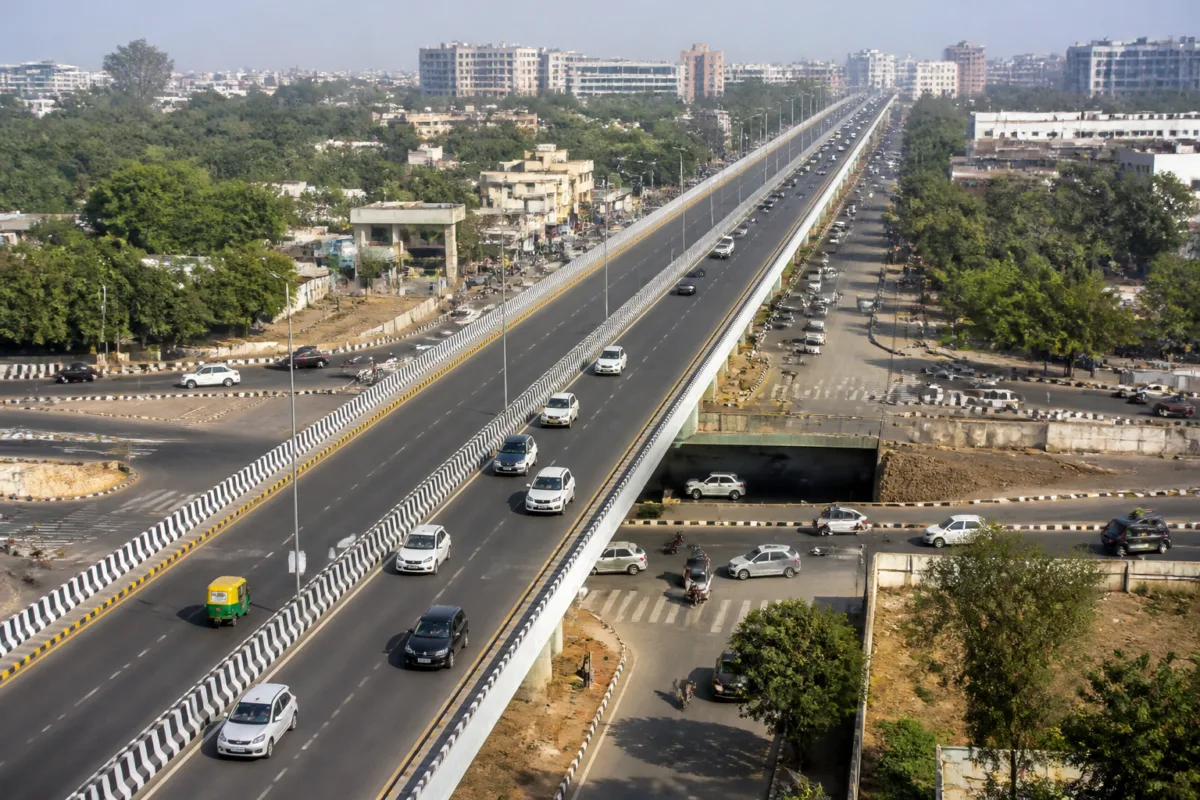
The Sarkhej-Gandhinagar bridge has enabled a 30-km drive from the Sarkhej-Sanand Cross Road to Gandhinagar Infocity in 25 minutes, according to a Divya Bhaskar drive test conducted after the new elevated connection was opened. The route included around 10 overbridges and one underpass, with no traffic signal along the tested stretch.
The bridge connecting Sarkhej-Sanand Cross Road with ISKCON Junction was opened by Union Home and Cooperation Minister Amit Shah, according to the report. The project was built at a cost of more than Rs 450 crore and is intended to provide a faster connection towards Gandhinagar through the SG Highway corridor.
During the drive test, the Divya Bhaskar team travelled by car from the Sarkhej-Sanand Cross Road towards Gandhinagar Infocity. The report said the vehicle maintained a speed of around 70 kmph and completed the 30-km journey in 25 minutes. The absence of traffic signals on the route was identified as a key reason for the shorter travel time.
The new structure forms a 4.3-km bridge between Sarkhej and ISKCON Junction. Vehicles entering the bridge from the Sarkhej-Sanand side can continue towards Gandhinagar, while route diversions are available for motorists travelling towards Pakwan Junction, Thaltej, Sola village, Gota and Vaishnodevi.
The corridor is already one of the busiest movement axes in the Ahmedabad metropolitan region. Divya Bhaskar reported that more than three lakh people currently travel below the bridge every day. Once operations are fully taken up, around two lakh people are expected to use the new bridge daily, according to the report.
The route’s design separates through traffic from movements at major junctions and connecting roads. For commuters travelling between southern and western Ahmedabad and Gandhinagar, that arrangement can reduce the number of signal-controlled interruptions on the main journey. However, the travel time recorded in the drive test reflects one observed trip and may vary with vehicle speed, traffic volume, entry and exit conditions and road operations.
The bridge also includes access points that allow motorists to leave the main route before reaching Gandhinagar. These connections are intended to serve traffic headed towards key destinations along the SG Highway and nearby urban areas, rather than forcing all vehicles to continue on the same elevated alignment.
The immediate operational significance of the project lies in its attempt to move a large volume of regional traffic above one of Ahmedabad’s heavily used road corridors. The next phase of its impact will depend on how traffic is distributed between the bridge, the roads below it and the connecting junctions as daily use increases.

