


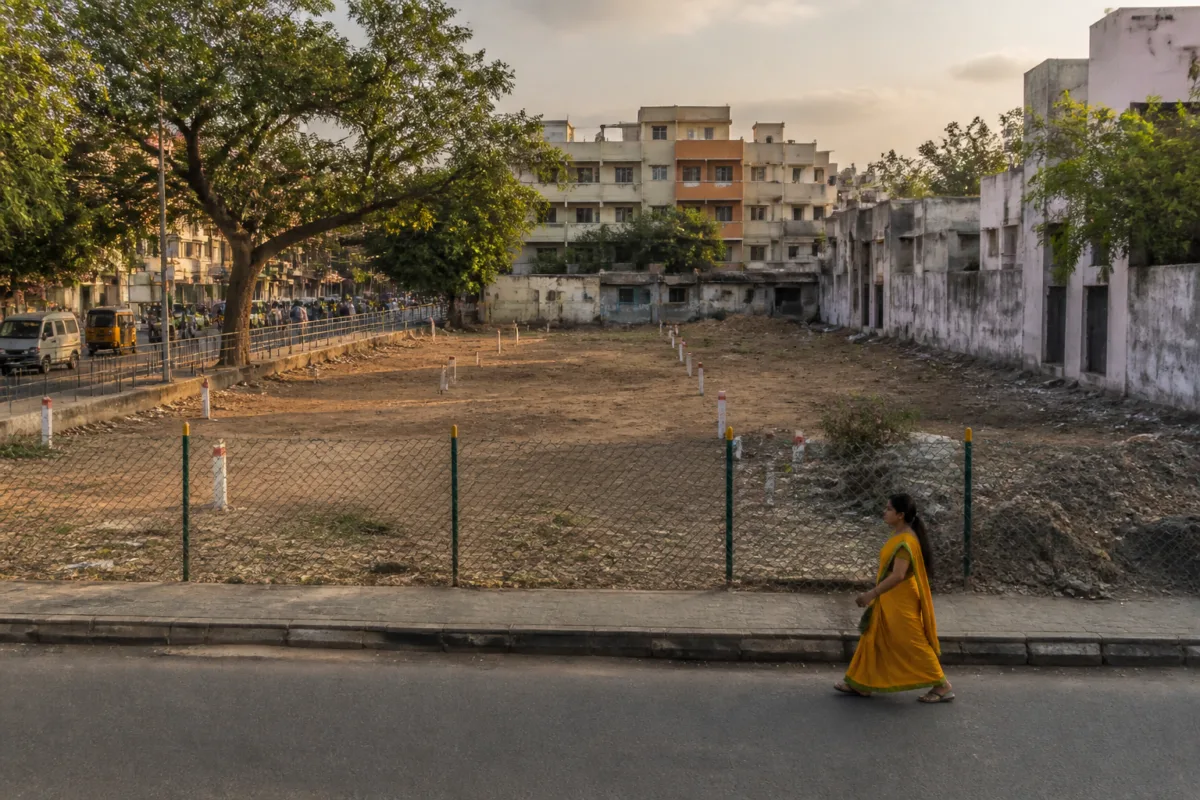
The proposed Mylapore Assembly complex has brought a basic question in public infrastructure planning to the centre of Chennai’s political and administrative debate: what evidence was used to approve a Rs.1,200-crore project before its site, need and costs were fully assessed? RTI replies obtained by local residents say the departments concerned have no records of a feasibility report, needs assessment, site-selection study, pre-feasibility study or cost-benefit analysis for the project.
The government has identified 25.55 acres in Mylapore for a new Assembly and Secretariat complex spread across 20 lakh square feet. The project is intended to bring together the Legislature and the Secretariat, which currently function from separate locations. A government order, G.O. Ms. No. 564, issued by the Public Works Department on September 8, 2026, identified the site and asked officials to submit a detailed project report within three months.
The immediate issue is not simply whether Chennai needs a larger or consolidated administrative complex. It is whether the decision to locate such a large public institution in Mylapore was supported by the preliminary work normally expected before a project of this scale moves into detailed planning. The RTI responses, as reported by Deccan Chronicle, indicate that the relevant departments could not produce that record when residents sought it.
That distinction matters because a detailed project report is generally the stage at which a project is developed in technical and financial detail. A DPR can establish design, quantities, estimates, construction phasing and implementation arrangements. But it cannot substitute for the earlier questions that determine whether a project is needed, where it should be located and whether the selected site can accommodate its institutional, transport and public-service requirements.
In this case, the Public Buildings Department reportedly said it had no feasibility report for the complex. The Chennai Circle of the Public Works Department also said it had no records of a needs assessment, site-selection study, pre-feasibility study or cost-benefit analysis. The department further stated that it had no records explaining why a feasibility study was considered unnecessary before the DPR was prepared.
These replies do not, by themselves, establish that no technical or administrative work of any kind was undertaken. They establish that the departments responding to the RTI request did not hold the specified documents. That is an important but narrower finding. The government could still clarify whether other studies, internal assessments or records exist elsewhere, and whether the government order was issued under a procedure that did not require a separate feasibility report at that stage.
The article also notes that the Tamil Nadu Budget Manual mandates site investigation and technical assessment in the preparation of major works. At the same time, whether a separate feasibility report was legally mandatory before the particular government order depends on the nature of the approval and the applicable government procedures. The available material therefore raises a serious documentation and process question without conclusively establishing a procedural violation.
The urban consequences of that distinction are significant. A Legislature and Secretariat complex is not an ordinary office building. It is a high-value public institution that would generate daily movement by elected representatives, government employees, visitors, service providers, security personnel and members of the public. Its location would influence access, traffic management, security arrangements, parking, public transport demand and the use of surrounding roads and civic infrastructure.
The 25.55-acre site and the proposed 20 lakh square feet of built-up area also make the location decision consequential beyond the project boundary. The available report does not provide a traffic study, mobility assessment, environmental assessment, parking plan, public-access plan or comparison with alternative sites. It therefore does not establish how the wider urban effects of the project were evaluated before Mylapore was selected.
That absence is precisely why residents have asked whether alternative locations were considered and whether the land was assessed for its suitability. Site selection for a major public complex is not only a matter of land availability. It requires an assessment of the site’s relationship with existing neighbourhoods, road capacity, public transport, emergency access, utilities, development controls and the operational requirements of the institution.
Mylapore is a dense and established part of Chennai rather than an undeveloped peripheral site. The supplied report does not provide detailed information about the current condition or ownership of the proposed land, the surrounding road network, existing land uses or the capacity of local infrastructure. Those facts would be necessary to judge the project’s physical suitability. Their absence from the disclosed record, as described in the RTI replies, makes the government’s explanation of the site choice particularly important.
The project also raises a public-finance question. The reported cost is Rs.1,200 crore, a figure large enough to require clear explanations of scope, cost assumptions and the basis for expenditure. The available material does not say whether the amount is an initial administrative estimate, a fixed project cost or a preliminary figure that may change during DPR preparation. It also does not identify the proposed funding source, construction schedule, procurement model or operating arrangements.
Those details are not secondary. A major public building can create costs beyond construction, including land preparation, utility relocation, access improvements, security infrastructure, maintenance and future expansion. Without the underlying assessment, the public cannot determine whether the reported project cost reflects the full financial commitment or only the headline construction estimate.
The government order’s three-month deadline for the DPR creates the next formal milestone. The DPR may provide some of the information residents say was missing before the site was identified. It may set out the project’s functional requirements, technical design, cost estimate and implementation plan. However, the usefulness of that document will depend on whether it records the alternatives considered and the evidence supporting the choice of Mylapore, rather than presenting the selected site as a settled assumption.
This is where the institutional question becomes more important than the immediate controversy. Public works are usually presented to citizens through a sequence of approvals, estimates and administrative decisions. That sequence is meant to make the project traceable: the need is identified, options are assessed, a site is selected, costs are estimated, technical issues are examined and financial approval is obtained. When the records for the early stages are unavailable, the public sees the announcement but not the reasoning that produced it.
The RTI replies expose that gap in the proposed Mylapore Assembly complex. They do not show that the project will necessarily fail, that the site is unsuitable or that the stated cost is inaccurate. They show that residents seeking the documentary basis for the decision were not provided with the studies they requested by the departments named in the report.
That is also why the government’s response will need to be specific. A broad statement that the project is necessary would not answer whether alternative sites were assessed. A statement that the DPR is pending would not explain why a needs assessment or pre-feasibility study was not available before the government order. The central issue is not opposition to a new complex in the abstract; it is whether the public can examine the chain of evidence behind a large, location-sensitive expenditure.
Residents are expected to present the RTI replies and their objections at a press conference at the Moolikuppam Srinivasapuram Fishermen Community Welfare Hall at 10 am on Thursday. The government’s subsequent disclosures, the contents of the DPR and any explanation of the applicable approval procedure will determine whether the current concern remains a documentation gap or develops into a wider challenge to the project’s planning process.
For Chennai, the case is a test of how major public buildings are planned in an already urbanised city. The available evidence confirms that key feasibility and site-selection records were not produced in the RTI replies. It does not yet establish whether those assessments were never conducted, are held by another authority or were considered unnecessary under the applicable procedure. That distinction, and the evidence eventually placed in the public domain, will shape the credibility of the Mylapore Assembly complex proposal.

