


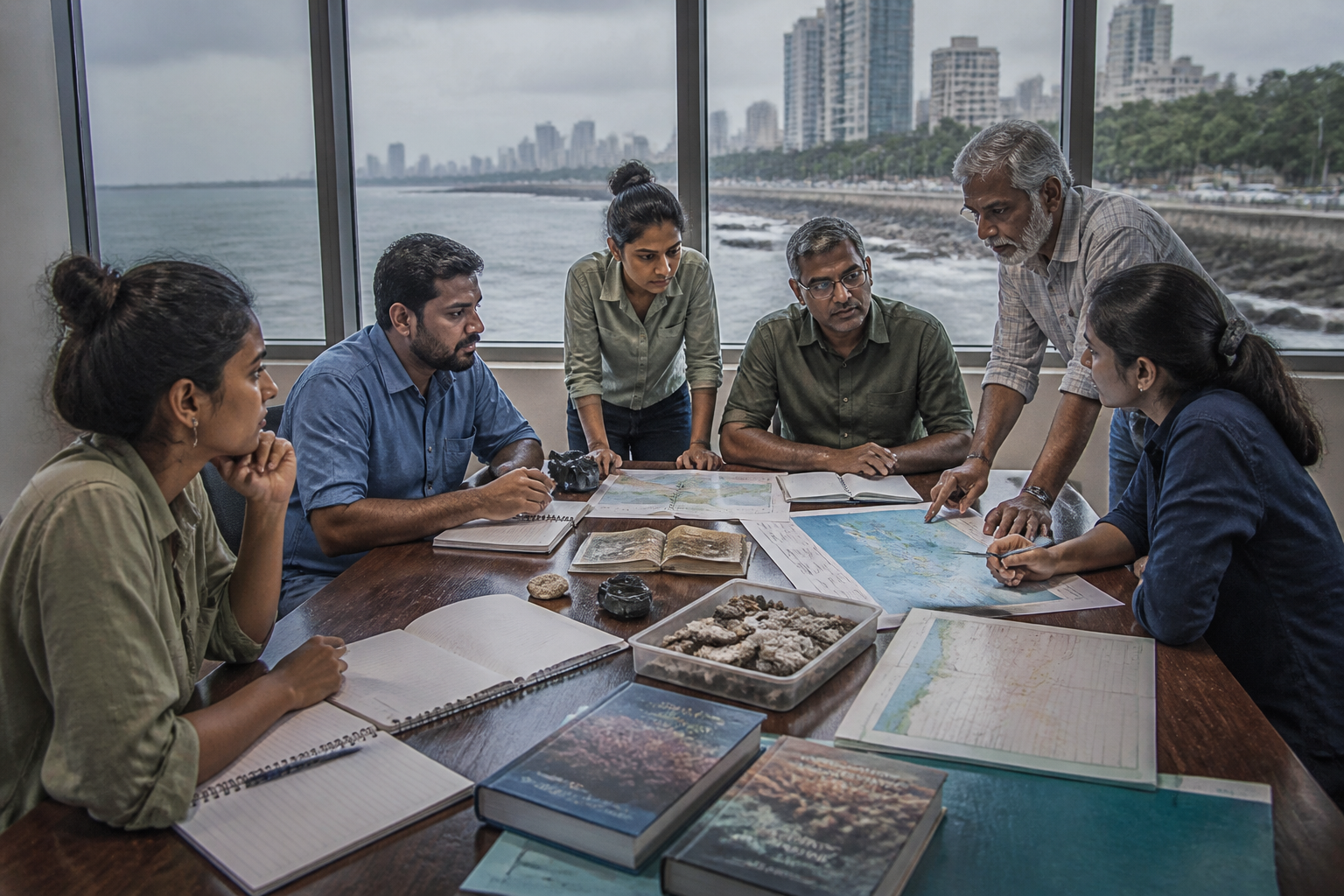
The draft Marine Mammal Conservation Action Plan for 2027–2032, presented at a two-day workshop in Mumbai, places an important but often overlooked question before India’s coastal institutions: how can marine biodiversity be protected without separating conservation from the livelihoods and sustainability of fisheries? The workshop’s central message was that protecting marine mammals and maintaining sustainable fisheries are closely connected, and that both require coordinated action rather than isolated institutional programmes.
The workshop was organised by the Fishery Survey of India at Cuffe Parade in Mumbai. It brought together experts, researchers and scientists from the Fishery Survey of India, the Wildlife Institute of India, the Indian Council of Agricultural Research, the Central Institute of Fisheries Technology, the Centre for Marine Living Resources and Ecology, the Marine Products Export Development Authority, the Bombay Natural History Society, the Council of Scientific and Industrial Research and the National Institute of Oceanography. The range of participating institutions is significant because marine conservation involves overlapping responsibilities relating to fisheries, wildlife, scientific research, marine resources, exports and coastal ecosystems.
The draft action plan is intended for the 2027–2032 period. The workshop was convened to support the development of a marine conservation policy through coordination among different institutions and stakeholder groups. The report does not state that the plan has been formally approved or notified. Its presentation should therefore be understood as a stage in the policy-development process, rather than as the announcement of a completed national programme.
That distinction matters for the way marine conservation policies take shape. A plan can establish priorities and institutional responsibilities, but its practical value depends on how those priorities are translated into surveys, research, monitoring, stock assessment and field-level coordination. The workshop’s sessions referred to national baseline surveys, institutional frameworks and stock assessment. These themes suggest that the proposed plan is being built around the need to improve the evidence available for conservation and fisheries decisions. The supplied report does not provide the proposed survey design, funding structure, implementation calendar or measurable targets.
Marine mammals occupy a complex position within the coastal system. They are part of marine biodiversity, but their conservation is also connected to fishing activity, coastal use and the condition of marine habitats. A conservation framework that considers only individual species may not fully address the institutional and ecological conditions affecting them. At the same time, a fisheries framework that focuses only on production and exports may not capture the wider biodiversity value of the marine environment. The workshop’s emphasis on the relationship between marine mammal protection and fisheries sustainability points towards the need to consider these areas together.
The institutional composition of the workshop also reveals the administrative challenge. The Fishery Survey of India, which organised the event, was joined by bodies working in wildlife conservation, agricultural research, fisheries technology, marine ecology, exports, natural history, industrial research and oceanography. Each institution brings a different area of expertise. That diversity can improve the quality of a national plan, but it also creates a need for clearly defined roles, shared data and agreed procedures for turning research findings into management action.
The presence of both fisheries and wildlife institutions is particularly relevant. Conservation decisions require information about marine species and ecosystems, while fisheries management requires information about resources, stocks and fishing practices. The workshop included presentations on India’s coasts, marine biodiversity conservation and research on marine mammals, along with other related subjects. It also included a session focused on national baseline surveys, institutional frameworks and stock assessment. Together, these subjects indicate an effort to connect ecological research with the systems used to understand and manage marine resources.
However, the available account provides no numerical assessment of marine mammal populations, no list of species covered by the draft and no details of geographic priority areas. It also does not specify whether the plan will include new protected areas, changes to fishing rules, rescue and response systems, monitoring technology or enforcement mechanisms. These omissions do not diminish the importance of the workshop, but they mark the difference between a policy conversation and an operational conservation framework. The next stages of the plan will need to make those elements clear if the document is to guide implementation across India’s coastal regions.
The two-day workshop’s location in Mumbai is also institutionally relevant. Mumbai is a major coastal city with a concentration of national research, fisheries and environmental organisations. Cuffe Parade provided a setting for representatives of multiple institutions to discuss the proposed plan, but the plan itself is national in scope. Its eventual effectiveness will depend on how recommendations developed in a national workshop are connected to conditions along different parts of India’s coastline. The report does not identify specific state-level mechanisms or local implementation arrangements.
The workshop was addressed by senior officials and experts, including Fishery Survey of India Deputy Director Dr Sijo P. Varghese, Director General Dr Srinath K. R., Dr Sanjay Pandey of the Union government’s Department of Fisheries and Dr Ravikiran Govekar, Additional Principal Chief Conservator of Forests, Wildlife-West. Their participation indicates that the proposed action plan has been discussed across scientific, fisheries and wildlife-administration circles. The supplied report does not provide detailed quotations from the officials or identify any final decisions taken during the sessions.
The reference to fisheries sustainability gives the action plan a wider policy dimension. Marine mammal conservation is not presented as a standalone wildlife concern; it is linked to the long-term condition of marine resources and the sustainability of fishing. This framing can help bring conservation into discussions about fisheries research and management. It also raises practical questions that the draft plan will have to answer: what information should be collected, which institutions should maintain it, how should findings be shared, and how should conflicts between conservation needs and fishing activity be addressed? The source report establishes the importance of collective action but does not yet provide answers to those questions.
The role of scientific and research institutions will be central to this process. The workshop included the Wildlife Institute of India, the Indian Council of Agricultural Research, the Central Institute of Fisheries Technology, the Centre for Marine Living Resources and Ecology, the Council of Scientific and Industrial Research and the National Institute of Oceanography. Their participation creates the possibility of connecting field surveys, marine science, fisheries technology and conservation research. But participation alone does not establish a permanent coordination mechanism. The draft’s institutional framework will need to show how those capacities are expected to work together beyond the workshop.
The involvement of the Marine Products Export Development Authority adds another layer to the discussion. Marine products are connected to markets and export systems, while conservation concerns the ecological base on which marine resources depend. The supplied material does not state what role the authority would play under the proposed plan. Its presence nevertheless reflects the breadth of interests that can intersect in marine policy, from biodiversity and scientific research to fisheries and the movement of marine products.
For Mumbai and other coastal cities, the larger issue is that the health of the marine environment is managed through institutions that may have different mandates and operating systems. A national action plan can create a common framework, but the quality of that framework will depend on the evidence it uses and the responsibilities it assigns. Baseline surveys and stock assessments can help establish that evidence; institutional coordination can determine whether it is used consistently. The workshop placed both requirements on the agenda, without yet disclosing the final design.
The draft 2027–2032 action plan therefore represents an important policy-development milestone, not a completed conservation outcome. What is confirmed is that a national workshop was held in Mumbai, that experts from multiple institutions participated, that sessions addressed marine biodiversity, research, baseline surveys, institutional frameworks and stock assessment, and that a draft plan was presented. What remains unclear from the available material is how the plan will be funded, when it will be finalised, which species and regions it will prioritise, and what implementation and monitoring arrangements it will establish. Those details will determine whether the proposed collective approach becomes an enforceable and measurable framework for India’s marine mammals and sustainable fisheries.
