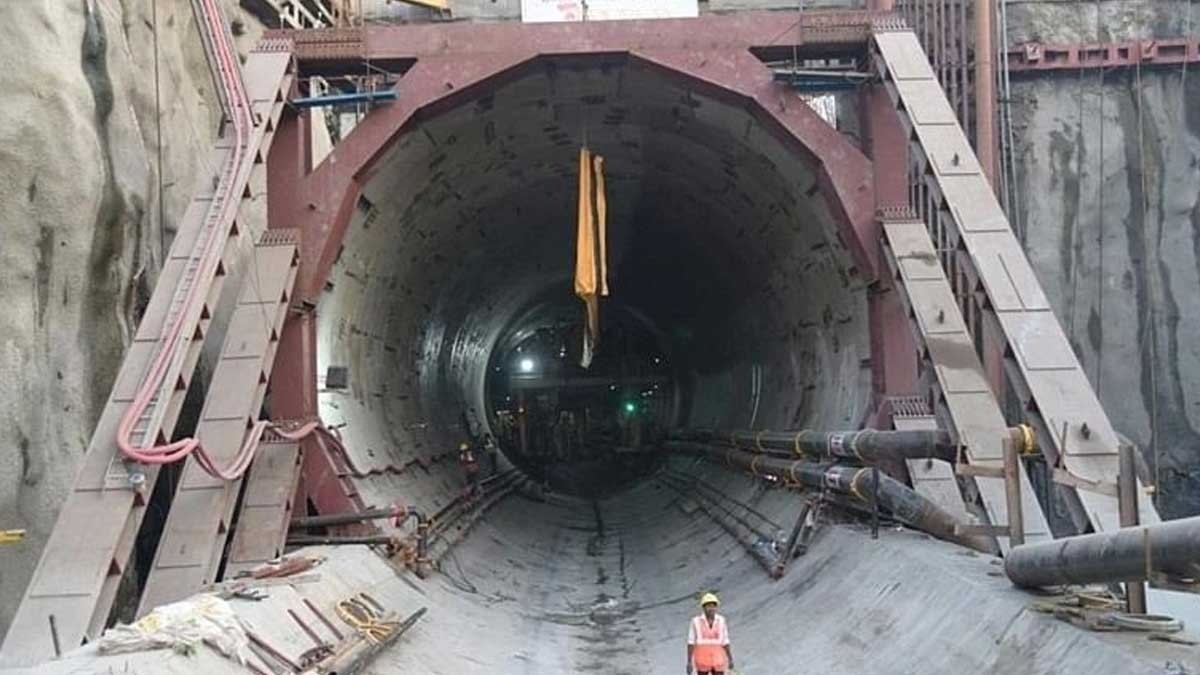
Mumbai Thane Borivali Tunnel Clears Final Land Hurdle
Mumbai’s long-planned underground road link between Thane and Borivali has moved closer to full-scale execution after authorities resolved a critical land and rehabilitation bottleneck at the western entry point. The development is expected to enable simultaneous tunnelling operations from both ends, accelerating progress on a project seen as key to easing east–west congestion across the metropolitan region. The Mumbai Thane Borivali tunnel, spanning nearly 12 kilometres beneath the Sanjay Gandhi National Park, is designed to cut travel time between the two suburbs from over an hour to roughly 15 minutes. For commuters navigating the heavily congested Ghodbunder Road, the project promises a faster and more predictable route across the city’s northern corridor.
Construction had been progressing in phases, but full deployment of tunnelling machinery on the Borivali side was delayed due to pending relocation of affected residents. With the final set of households now being cleared from the alignment zone, infrastructure teams are preparing to operationalise additional tunnel boring machines (TBMs), which will work in parallel with those already positioned on the Thane side. Engineering experts note that the Mumbai Thane Borivali tunnel represents one of the most complex urban tunnelling projects in India. The alignment passes through varying geological conditions, including hard basalt rock and mixed strata, requiring high-capacity TBMs capable of maintaining stability while minimising surface disruption. The use of deep-bore tunnelling is also intended to reduce ecological impact on the protected forest above. The project involves twin tunnels, each designed to accommodate multi-lane vehicular traffic, effectively creating a high-capacity underground corridor. Construction teams are expected to advance excavation simultaneously from both ends, improving efficiency and helping meet the targeted completion timeline later this decade.
From a planning perspective, the tunnel is expected to significantly alter mobility patterns in the Mumbai Metropolitan Region. By offering a direct east–west link, it could reduce pressure on existing arterial routes and improve connectivity between residential zones in Thane and employment hubs in the western suburbs. This has implications for real estate dynamics, as improved accessibility often reshapes demand across peripheral markets. However, urban planners highlight that large-scale infrastructure projects must balance mobility gains with social and environmental considerations. Rehabilitation of displaced residents remains a sensitive issue, requiring transparent processes and equitable outcomes. Similarly, continuous monitoring will be essential to ensure that tunnelling activities do not adversely affect the surrounding ecosystem. The Mumbai Thane Borivali tunnel is part of a broader push to expand high-capacity transport infrastructure in the region, alongside metro and road projects aimed at addressing chronic congestion. While such investments are critical for supporting economic growth, experts emphasise the importance of integrating them with sustainable mobility strategies, including public transport expansion and demand management.
As work gains pace, the focus will shift to execution efficiency and environmental safeguards. The project’s success will ultimately depend on how effectively it delivers faster connectivity while maintaining balance between urban development and ecological preservation.