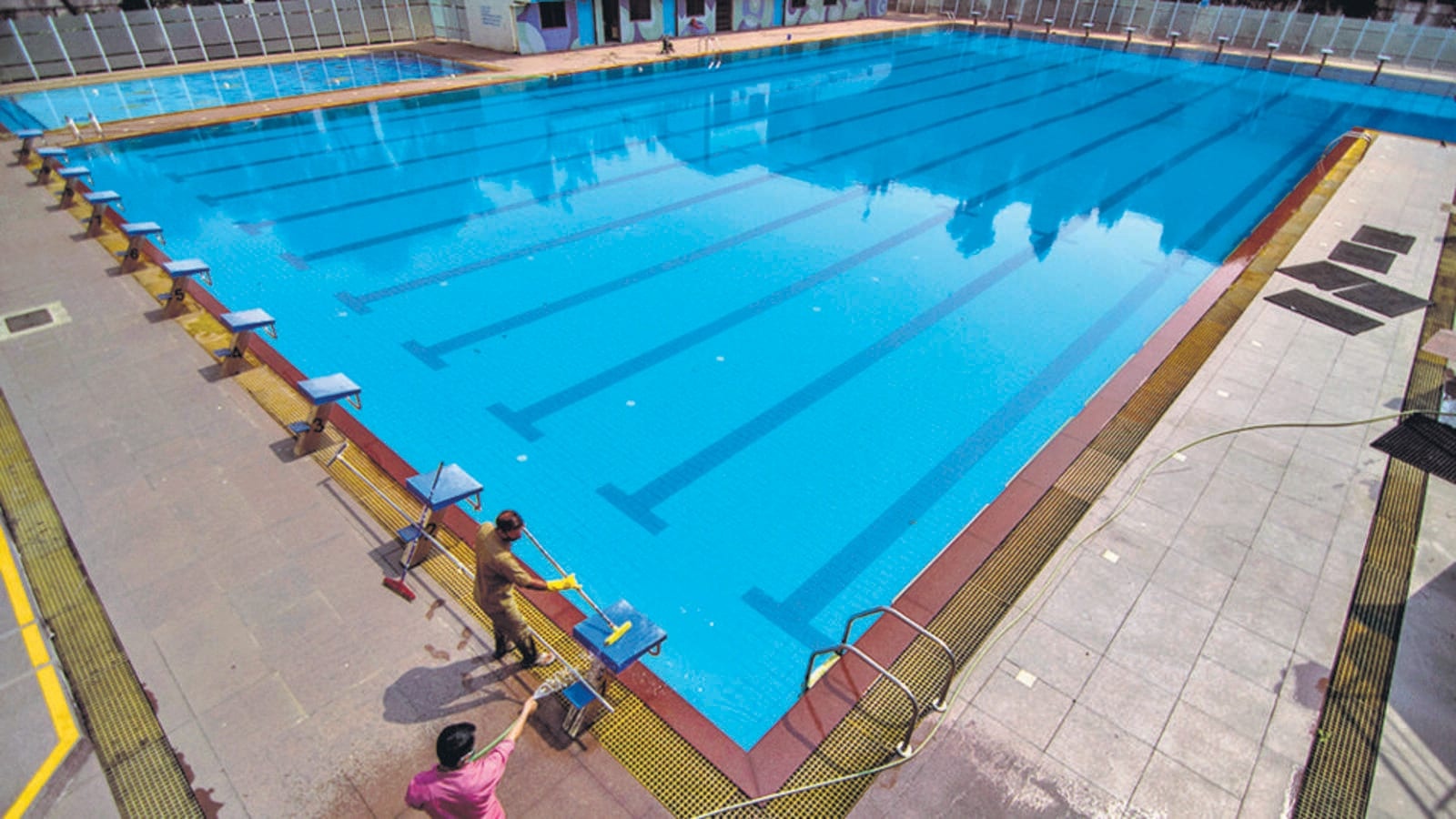
Mumbai’s shrinking access to affordable public recreational infrastructure has come into focus after multiple civic-run swimming pools across the city were temporarily shut during peak summer demand, raising broader questions around maintenance planning, urban wellness infrastructure and equitable access to public amenities. Several Brihanmumbai Municipal Corporation (BMC) swimming facilities located in eastern and western suburbs, including Mulund, Chembur and Dahisar, have been taken out of operation due to repair works, leakage concerns and technical faults. The closures have affected regular swimmers, school students and senior citizens who depend on municipal sports infrastructure as a low-cost alternative to private clubs and commercial fitness centres.
The disruption comes at a time when Mumbai is experiencing rising temperatures and increasing pressure on limited public recreational spaces. Urban planners say the availability of accessible sports and wellness infrastructure is becoming increasingly important in densely populated cities where open spaces per resident remain among the lowest globally. The affected facilities form part of the city’s civic recreational network intended to provide affordable community access to fitness and aquatic training. However, recurring shutdowns and delayed upgrades have highlighted concerns around ageing infrastructure and reactive maintenance practices within municipal systems. Residents in several suburbs have questioned why major repair work was scheduled during the summer season, when public demand for swimming facilities typically reaches its highest levels. Local community groups have also pointed to the uneven distribution of civic sports infrastructure across Mumbai, where many neighbourhoods already lack adequate playgrounds, parks and public exercise facilities. Urban development experts note that public swimming pools play a larger role beyond recreation. In high-density urban regions, such facilities contribute to preventive healthcare, youth engagement and climate adaptation by offering accessible cooling and physical activity spaces during periods of extreme heat.
The loss of such infrastructure, even temporarily, can disproportionately affect middle- and lower-income residents who may not have access to private alternatives. Civic officials maintain that the shutdowns are necessary to address structural and operational safety concerns. Industry specialists say ageing filtration systems, water leakage and deferred repairs are common challenges in older public aquatic facilities, particularly where maintenance budgets have struggled to keep pace with growing urban populations. The situation has also reignited debate around long-term investments in public urban infrastructure that directly improve liveability rather than only supporting transport or commercial growth. Analysts argue that resilient cities increasingly require neighbourhood-level recreational and social infrastructure capable of supporting physical health, social inclusion and environmental comfort. With Mumbai continuing to expand vertically and population density intensifying across suburban corridors, experts believe the city will need more decentralised and climate-responsive public amenities, including upgraded sports complexes, shaded open spaces and water-efficient recreational infrastructure.
While civic authorities are expected to reopen the affected facilities after repairs are completed, residents and urban planners alike are calling for clearer maintenance schedules, transparent infrastructure audits and stronger long-term investment in community-oriented public spaces across the metropolitan region.