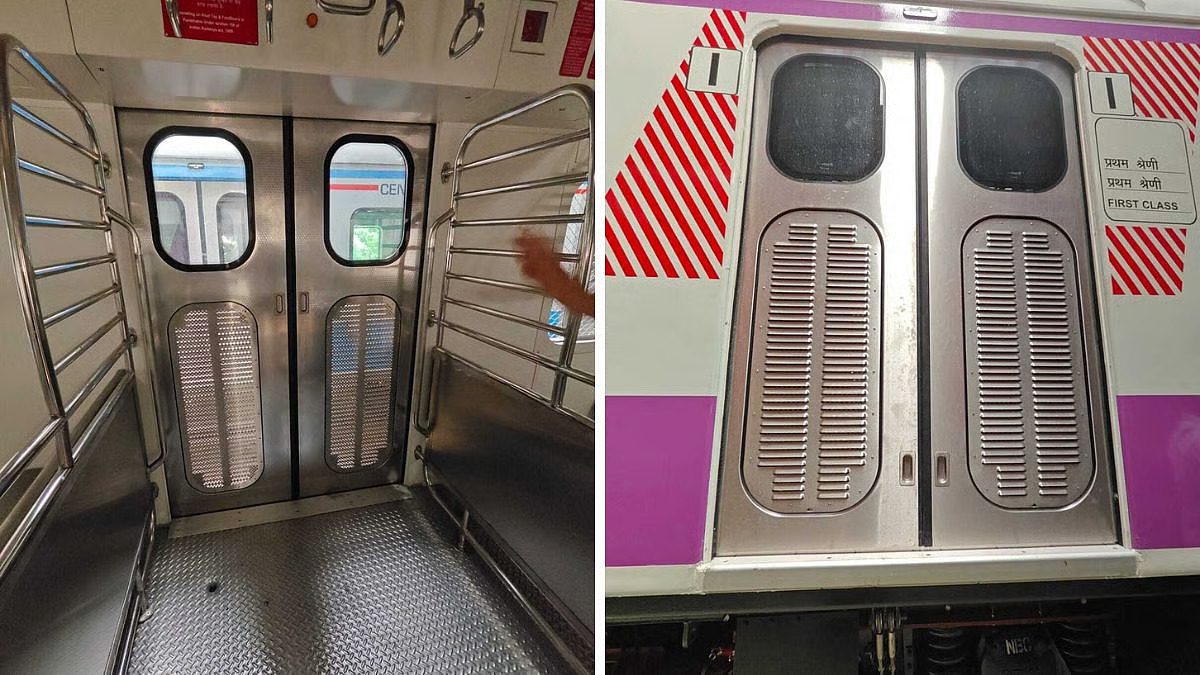
Mumbai’s suburban rail network is preparing to introduce a new generation of non-air-conditioned trains equipped with automatic door systems, marking a significant shift in commuter safety standards. However, as trial preparations begin, attention is increasingly turning to whether the upgraded design can maintain adequate ventilation under the city’s demanding peak-hour conditions.
The new 12-coach rake, recently positioned for testing at a central maintenance facility, is part of a broader effort to reduce accidents linked to overcrowding and open-door travel. Automatic door mechanisms, coupled with anti-drag safety features, are expected to minimise the risk of falls—a persistent concern across the high-density suburban rail system. Yet, the introduction of enclosed coaches in a non-AC environment brings a critical operational challenge. Unlike traditional open-door trains that rely on natural airflow, these new systems must depend on engineered ventilation to maintain passenger comfort. Officials involved in the project indicate that airflow capacity has been significantly enhanced through mechanical systems, including roof-mounted ventilation units and improved air circulation design.
The Mumbai non AC auto door train is therefore being closely evaluated not just for safety compliance but for its ability to function in real-world conditions. Urban transport experts note that theoretical airflow improvements may not fully account for the extreme passenger densities typically seen during rush hours, where hundreds of commuters occupy a single coach, generating heat and reducing air circulation efficiency. Design adjustments in the new rake also reflect a shift in capacity planning. Seating arrangements have been marginally reduced to create additional standing space, allowing higher passenger throughput. While this aligns with demand patterns in Mumbai’s suburban system, it could intensify ventilation stress, particularly during humid weather when discomfort levels rise sharply.
The debate highlights a broader tension in urban mobility systems between safety upgrades and commuter experience. While automatic doors are widely recognised as a necessary intervention to reduce fatalities, their success in a non-AC setting will depend heavily on passenger acceptance. If ventilation proves inadequate, adoption could face resistance despite the safety benefits. Transport planners suggest that comprehensive field trials, including simulated peak-load conditions, will be critical before large-scale deployment. These tests are expected to assess not only airflow efficiency but also dwell times at stations, boarding patterns, and emergency response mechanisms.
From a sustainability perspective, non-AC systems are seen as more energy-efficient compared to air-conditioned alternatives, making them a viable option for mass transit networks aiming to reduce operational energy consumption. However, maintaining comfort without significantly increasing energy use remains a complex engineering challenge. As Mumbai continues to modernise its suburban rail infrastructure, the Mumbai non AC auto door train represents a pivotal experiment in balancing safety, efficiency, and commuter well-being. The outcome of ongoing trials will likely shape the future design of urban rail systems in other high-density cities across India.
Mumbai Non AC Auto Door Train Tested For Ventilation And Safety Balance