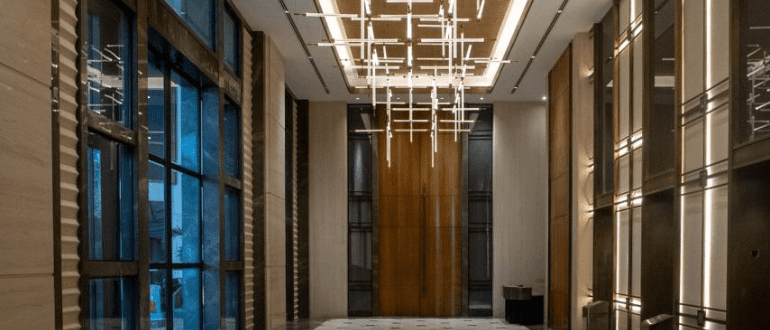
Mumbai’s premium residential market is witnessing a new milestone with the completion of a 320-metre-high skyscraper in South Mumbai, positioning itself as the tallest residential tower in the country. Beyond its vertical scale, the development signals a shift in how high-end urban housing is being conceptualised, with a growing emphasis on integrated wellness, shared spaces, and experiential living.
The project introduces large-format residential design elements rarely seen in Indian cities, including expansive ceiling heights and a central atrium structure that reimagines internal spatial planning within a high-rise environment. Urban design experts suggest that such vertical architecture reflects a broader global trend where luxury developments increasingly focus on spatial openness and natural light, even in dense metropolitan settings. A defining feature of the development is its extensive allocation for lifestyle and wellness infrastructure. Spanning multiple levels, the project incorporates over two lakh square feet of shared amenities, positioning wellness not as a supplementary offering but as a core component of residential planning. Facilities include large-scale fitness areas, spa zones, and recreational spaces designed to support both physical and mental well-being within the confines of a vertical community.
The Palais Royale Mumbai development is indicative of an evolving real estate approach where private living is complemented by expansive shared environments. Analysts note that such models aim to reduce the need for external travel by integrating leisure, work, and social interaction within a single residential ecosystem. This is particularly relevant in cities like Mumbai, where time lost to commuting remains a key urban challenge. The project also reflects changing preferences among high-income homebuyers, who increasingly prioritise curated experiences over conventional luxury markers. Dedicated spaces for indoor recreation, business interaction, and guest accommodation suggest an attempt to blend residential and hospitality functions within the same built environment. While still niche, this hybrid model is gradually gaining traction in India’s top-tier housing segment.
From a planning perspective, the rise of ultra-tall residential towers raises important questions about sustainability, infrastructure load, and equitable urban development. Experts caution that while such projects push architectural and engineering boundaries, they must be supported by robust civic infrastructure, including water supply, energy efficiency systems, and transport connectivity, to ensure long-term viability. At the same time, the integration of wellness-oriented design could contribute to improved quality of life, provided that energy consumption and resource use are managed responsibly. Large amenity zones, for instance, require careful operational planning to balance luxury with environmental efficiency.
With a limited number of residences, the development maintains exclusivity, but it also highlights the widening gap between premium and affordable housing segments in Indian cities. Urban economists argue that while such projects redefine luxury benchmarks, parallel efforts are needed to ensure inclusive growth and accessible housing solutions. As Mumbai’s skyline continues to evolve, projects like Palais Royale Mumbai may set new standards in design and lifestyle offerings. However, their long-term impact will depend on how effectively they align with broader urban sustainability and infrastructure priorities.
Indias Tallest Residential Tower To Launch Mega Wellness Amenities