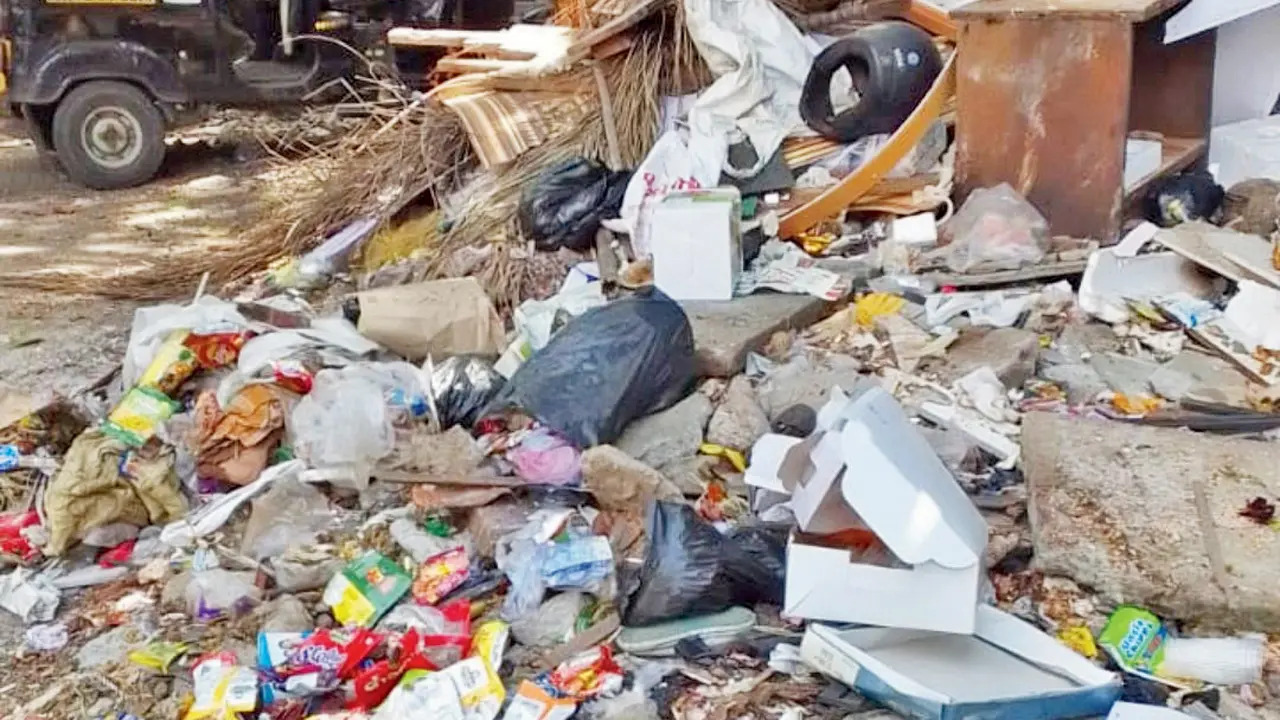
Mumbai is preparing another targeted intervention to stop solid waste from entering the Vakola waterway, with the civic administration proposing a 10-foot steel barrier along a vulnerable stretch near the Dnyaneshwar slum settlement. Estimated at ₹1.79 crore, the project reflects a wider challenge for the city: controlling waste at the point where neighbourhood dumping meets storm-water infrastructure and waterways. The proposed structure will be installed along the retaining wall of the Vakola River by the Storm Water Drains Department. Its primary purpose is to intercept waste before it reaches the water channel, particularly material thrown from nearby settlements. The approach is intended to address both everyday household waste and larger discarded objects that are difficult to remove once they enter a flowing waterway.
The intervention follows earlier use of garbage-trapping nets at other vulnerable nullahs. Civic officials have indicated that installations at Main Avenue and South Avenue nullahs helped reduce the amount of waste reaching those channels. A pilot project at P&T Colony in Bandra West in 2023 subsequently led to similar measures at additional locations. The scale of Mumbai’s drainage network makes the issue difficult to solve through barriers alone. The city has 309 major and 1,508 minor nullahs, creating thousands of points where waste can enter storm-water channels. During heavy rainfall, accumulated material can restrict water movement, increasing maintenance requirements and potentially worsening local flooding risks. That connection is particularly important in neighbourhoods close to low-lying waterways. Floating plastic, furniture and other bulky waste can become trapped against bridges, culverts and drainage structures. Clearing such material requires additional municipal labour and equipment, turning poor waste disposal into a recurring public expenditure.
The Vakola River waste control project also raises a broader urban-management question. Physical barriers can intercept waste, but they do not remove the source of dumping. Urban planners argue that lasting improvements require reliable waste collection, accessible disposal options for bulky items and consistent enforcement alongside infrastructure measures. This is especially relevant around informal settlements and densely populated neighbourhoods, where limited public space can make waste storage and disposal more difficult. A citizen-focused approach therefore needs to combine enforcement with practical services rather than treating the waterway as the final point of responsibility. For the Vakola River waste control plan to deliver measurable environmental gains, the BMC will also need to monitor what is captured, how frequently the nets require clearing and where the intercepted material ultimately goes. Without that downstream management, the barrier could simply shift the waste problem from the water to the riverbank.
The proposed project therefore offers a relatively contained response to a much larger challenge. Its effectiveness will depend on whether Mumbai can pair physical interception with better neighbourhood-level waste management and sustained protection of its urban waterways.